


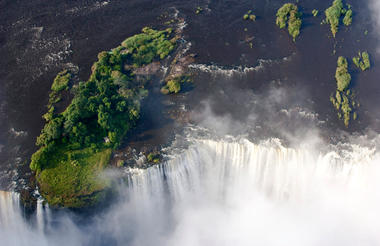
At Victoria Falls, the earth splits open and swallows one of Africa’s greatest rivers, the mighty Zambezi, creating the largest sheet of falling water on earth. As the water hits the narrow depths of the Batoka Gorge beneath, it blasts a cloud of mist skywards, lending the falls their local name ‘mosi-oa-tunya’ (the smoke that thunders). When the Zambezi is its fullest, the mist hangs a permanent raincloud above the falls, showering visitors on even the sunniest of days and visible for miles around.
Above the falls on the upper Zambezi, boats cruise the tranquil water at sunset while the distant spray catches the fading light downstream. Below the falls, the Batoka Gorge’s rocky walls funnel the lower Zambezi into a chain of world-class rapids, prime for white water rafting.
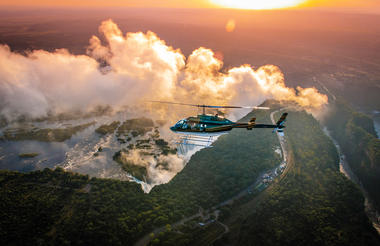
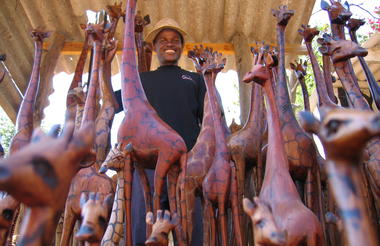
Aside from being a UNESCO world heritage site and a natural world wonder, Victoria Falls also forms a natural border between Zimbabwe and Zambia. The falls can be seen from both countries, and for the most part the same activities are offered on both sides, from helicopter scenic flights to village visits and souvenir shopping.
Whether your idea of getting away from it all is a relaxed high tea in colonial grandeur or a heart-stopping bungee jump off a bridge, Victoria Falls keeps both the faint of heart and the most insatiable of adrenalin junkies busy for days.
From Zambia, a side on view of the falls is on offer with views into the Batoka Gorge, as well as the possibility of perching yourself at the edge of the falls on the vertigo-inducing Livingstone Island.
From Zimbabwe, you’ll get a full-frontal view of three quarters of the falls’ 1.7km wide curtain of water from viewpoints and footpaths meandering through a rainforest kept hot and humid by the spray of the falls.
Located in western Zimbabwe, Hwange National Park (formerly Wankie Game Reserve) is the largest natural reserve in the country and is famous for its rich diversity of wildlife. Home to one of the biggest elephant populations in the world, as well as around 100 mammal species, the park is a wonderland for animal lovers. Several protected animals inhabit the awe-inspiring open landscapes, including the endangered wild dog, critically endangered black rhino, and rare roan and sable - along with lion, cheetah, and around 500 bird species. Adventurers can look forward to guided bush hikes, game drives, and horse riding safaris, all of which offer excellent photographic opportunities. Hwange boasts several unique natural features, most notably the natural seeps such as Nehimba and Shakwanki animals dig for water.
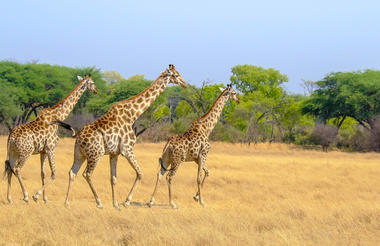
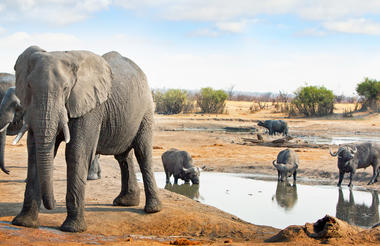
It’s hard not to be dramatic when describing the grand beauty of Mana Pools. This park in the north of Zimbabwe is a unique oasis often described as a ‘garden of Eden’. It is a remote gem that leaves you awed and humbled by the landscape, a landscape that feels both eternal and wonderfully alive. Mana Pools is a designated UNESCO world heritage site.
The name Mana means four in the Shona language and comes from a series of four pools, remnants of oxbow lakes that run parallel to the river amongst the ancient floodplains for which Mana is famous. These wide green floodplains dotted with giant Albida trees edge the Zambezi river and offer breathtaking views of the purple-hued escarpment rising dramatically across the river. The floodplains attracts huge amounts of wildlife, especially in the dry season, and you’ll quickly get the sense of being one of a privileged few to experience this wild place.
Mana is known for its immense bull elephants and the sight of an elephant standing upon its hind legs to stretch for the seedpods of a giant tree upon the floodplain has become iconic. Mana raises goosebumps and leaves you with vividly remembered impressions: the sound of clashing ivory echoing across the valley while two massive elephant bulls fight; or sunrises that coax the smell of overnight dew out of the floodplains.
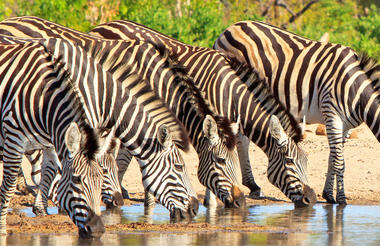
Mana Pools is not all about elephants; you can expect to see large numbers of plains game and if you are lucky the predators that follow them. Large congregations of grazing animals can be seen on the floodplains and you would be unlucky on a three-day stay to not see a predator.
Mana offers a choice of permanent camps, each with a unique perspective. Mana is wonderful location for walking and canoe safaris offering overnight stays in mobile, tented camps.


