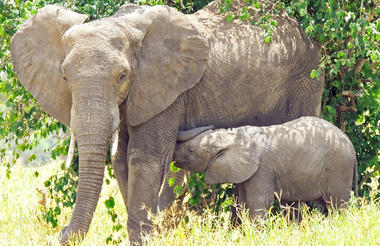
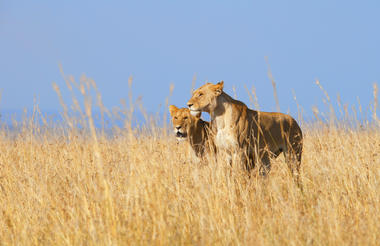
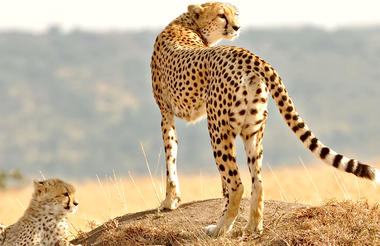
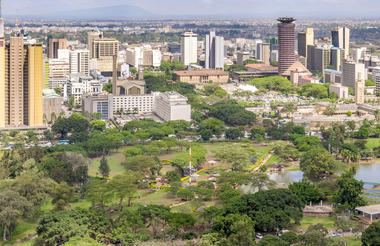
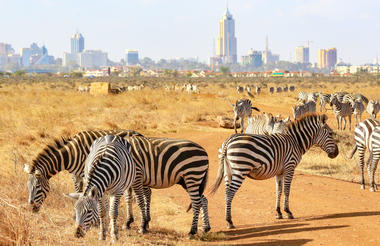
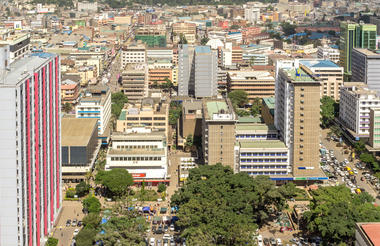
Widely regarded as one of East Africa’s most dynamic and cosmopolitan cities, Nairobi sits along the Nairobi River and serves as Kenya’s capital and largest urban centre, acting as a major gateway for safari travel across the country. The city features a growing café culture, active nightlife, and cultural landmarks such as the National Museum of Kenya and the Karen Blixen Museum. Just outside the city centre lies Nairobi National Park, where wildlife, including lions, giraffes, and buffalo, roam against a backdrop of skyscrapers — one of the rare cases in the world where a major national park borders a capital city. Visitors also often stop at the David Sheldrick Wildlife Trust elephant orphanage for close encounters with rescued calves.
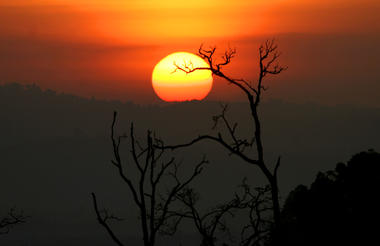
Located northeast of Nairobi, Kenya, the Aberdare National Park was created to protect the Aberdare Mountain Range, the peaks of which soar to 3930 metres. The landscape is characterised by steep forested slopes, expansive moors, and deep ravines scattered with cascading waterfalls, crystal-clear streams and rushing rivers. The park is inhabited by a variety of African wildlife such as: elephant, lion, spotted hyena, rhino, black leopard and the very elusive bongo antelope that lives in the high altitude bamboo forests. The park offers the perfect environment for picnics, camping in the moorlands, trout fishing in the rivers, and excellent bird watching with over 250 species of birds including hawks, eagles, sunbirds and plovers.
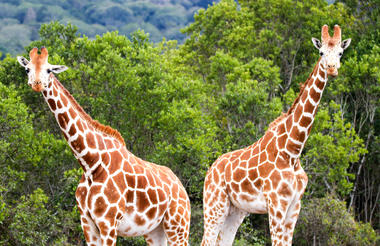
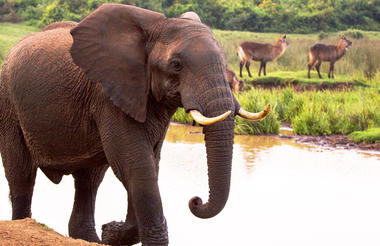
Situated in northern Kenya, Buffalo Springs National Reserve is a protected area in the Isiolo County. Buffalo Springs, along with Samburu and Shaba make up a trio of adjoining reserves. Buffalo Springs National Reserve features wildlife viewing, and is renowned for its magnificent leopard sightings. This is a remote, hot and arid landscape boasting rugged hills and undulating plains. Forming the boundary with Samburu National Park, the Ewaso Ngiro River runs through the terrain flanked by riverine forests. Visitors can look forward to spotting reticulated giraffe, the long necked gerenuk, Somali ostrich and Grevy's Zebra.


Resting at the foothills of Mount Kenya and the Aberdare Mountain Range, in central Kenya's Laikipia County, the Ol Pejeta Conservancy is the largest black rhino sanctuary in East Africa. It is also home to some of the last remaining northern white rhino in the world. Originally a working cattle ranch in colonial Kenya and now a pioneering wildlife conservancy, Ol Pejeta works to protect wildlife and provide a sanctuary for rescued chimpanzees. The Conservancy is a popular safari destination and is home to the renowned ‘Big Five’ as well as a wide selection of other African animals including zebra, giraffe, hippo, cheetah, jackal, serval, hyena, vervet monkey, and many more. Visitors can look forward to an assortment of outdoor activities such as horse rides, game walks, and nocturnal game drives.
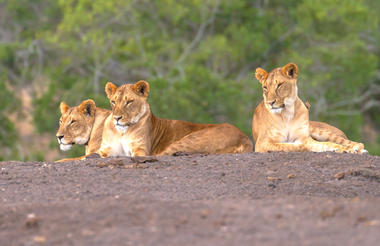
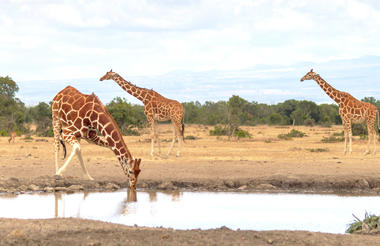
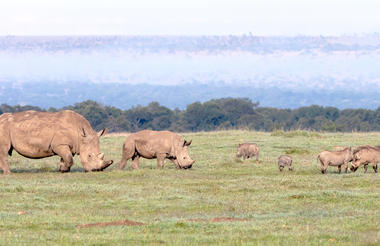
Situated in southwestern Kenya, the Masai Mara encompasses the celebrated national reserve and its surrounding community conservancies, forming part of the Greater Serengeti–Mara ecosystem. Rolling savannahs, dotted with acacia trees and crossed by the Mara River, create a rich and varied landscape. Vast herds of wildebeest, zebra, and antelope graze across the plains, while elephants, giraffes, and buffalo roam freely. The river’s lush banks support hippos and crocodiles and sustain wildlife throughout the dry season. Predators are abundant, with lions, leopards, cheetahs, and hyenas regularly seen in action. Each year, the spectacular Great Migration transforms the region, as millions of wildebeest and zebra traverse the plains. Visitors can soak up the breathtaking scenery, diverse wildlife, and Maasai cultural heritage in one of Africa’s most iconic safari destinations.