


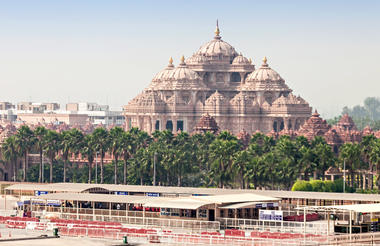
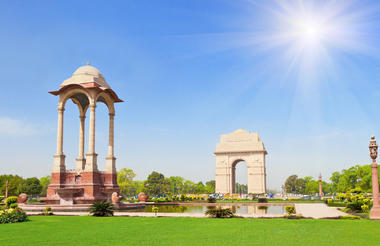
India’s capital, New Delhi, lies on the Indo-Gangetic Plain, within the National Capital Territory of Delhi. Made up of the ancient walled city of Old Delhi and the more modern sector, New Delhi, the city encompasses a staggering array of beautiful buildings, including three UNESCO World Heritage Sites – the grand, sandstone Red Fort, striking Qutab Minar, and fascinating Humayun's Tomb. Architecture enthusiasts will delight in the iconic Lotus Temple. Hear ‘qawwalis’ (devotional music) at the dargah (tomb) of the Sufi saint Nizam-ud-din Auliya; or wander through the 17th century Chandni Chowk marketplace – still one of the city’s most popular retail centres today, famous for its traditional jewellery and saris. The gorgeous Sunder Nursery and Lodi Garden provide calm, flower-filled oases for picnicking.

Set on the banks of the Yamuna River in Uttar Pradesh, Agra is a beautiful city famous for its incredible Taj Mahal building, one of the seven wonders of the world. Commissioned by the Mughal emperor Shah Jahan in the 15th century as a memorial to his beloved wife Mumtaz Mahal, this is an architectural masterpiece of exquisite craftsmanship and perfect proportions. The city boasts numerous other superb attractions, including the red-hued sandstone Agra Fort, built in the 16th century; the Shahi Jama Masjid mosque, a 17th-century congregational mosque located in the historic core of Agra, and Itmad-ud-Daulah’s tomb, with its white marble facade embellished with intricate inlaid designs, also called the' Baby Taj'.


As previously described


Resting in a lush green valley of hills and rice paddies, Bhutan’s capital city of Thimphu is the country’s commercial and religious hub, and is known for its interesting fusion of ancient and modern elements. Historical architecture and ancient traditional elements juxtapose with contemporary buildings and sensibilities. The imposing, stately 350-year-old Tashicho Dzong Fortress is currently used as the administrative centre of the county, and is also the king’s office. Visitors can explore the gold-spired Memorial Chorten, a revered Buddhist shrine; see the intricate frescoes and slate carvings at Simtokha Dzong; and discover the Bhutanese way of live through exhibits and folk dances at the fascinating National Folk Heritage Museum. The city bustles with cafes, clubs and restaurants, thereby offering the best of old- and new-world charms.


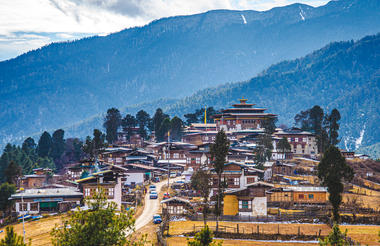
The little village of Gangtey is located in the beautiful Phobjikha Valley, within the Wangdue Phodrang District in Central Bhutan. Set at an altitude of 3000 metres, and tucked away in an ancient glacial valley of lush greenery and cultivated farmlands, it serves as the perfect base from which to explore the spectacular surrounding wilderness. The village is home to several fascinating sites, namely the 17th-century Gangtey Monastery, the only Nyingmapa monastery on the western slopes of the Black Mountains. In winter, visitors can spot endangered black-necked cranes, which migrate from the Tibetan Plateau and the vast plains of Central Asia to this warmer corner of the world. The lucky few can enjoy the famous Tshechu Festival, a lively and colourful annual celebration featuring a vibrant mix of games, costumes, dancing and drumming.
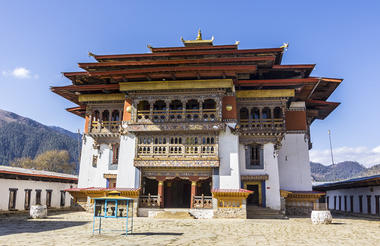
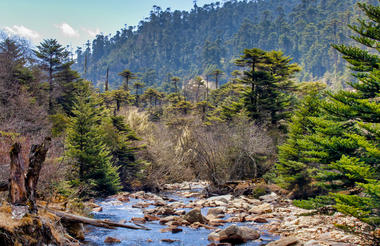
Situated in the Himalayas of Bhutan, Punakha is a historic town at the confluence of the Mo Chhu and Pho Chhu rivers, and the former capital of Bhutan. It provides a base for exploring the temple-dotted Punakha Valley, with its most prominent landmark being the riverside Punakha Dzong, a 17th-century fortress and important religious site. The dzong hosts the annual Punakha Tshechu, a festival featuring traditional masked dances, music and religious ceremonies. The surrounding valley is home to the critically endangered white-bellied heron, while nearby attractions include the mountain-top village of Talo and Chimi Lhakhang, a temple associated with Bhutan’s fertility traditions. Visitors can also enjoy Himalayan views from Dochula Pass, explore the Royal Botanical Park and discover traditional architecture in Ritsha Village.


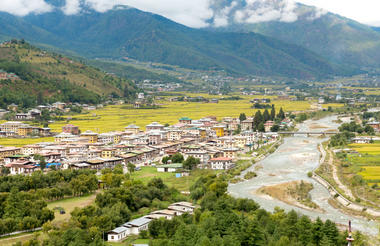
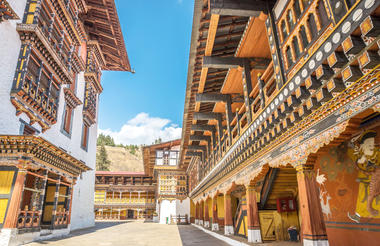
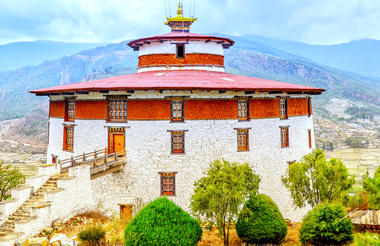
The town of Paro is set within a dramatic valley, framed by lush terraced rice fields and the winding Paro Chhu River. Rising above the town, towering mountains stand guard, their snow-capped peaks and deep gorges enhancing the area's natural beauty. Paro serves as a convenient gateway to the surrounding marvels of Paro Valley, with its vibrant main street lined with traditional wooden houses, local shops, and restaurants. Dominating the skyline, Paro Dzong, an imposing fortress built in 1644, shelters a monastery and administrative offices. Above the town, the National Museum is housed in an old watchtower, preserving relics from Bhutan’s rich past. For those seeking adventure, a trek to the Taktsang Monastery offers breathtaking views, while Paro's cultural calendar is enlivened by the Paro Tsechu festival. The surrounding valley provides ample opportunities for outdoor activities, including trekking, biking, and river rafting, with the world-renowned Snowman Trek standing as a true challenge for adventurers.
As previously described


