.png?fmt=png)


Located in southwestern Africa, Namibia boasts a well-developed infrastructure, some of the best tourist facilities in Africa, and an impressive list of breathtaking natural wonders. Visitors can explore the capital of Windhoek and discover the lovely coastal town of Swakopmund, which boasts remnants of the country’s German influence, reflected in its architecture, culture, cuisine, and the annual Oktoberfest celebrations. To properly appreciate this extraordinary country, you will have to venture out of the cities to explore the remarkable natural landscapes Namibia has to offer. These include: the impressive Fish River Canyon; the vast Etosha National Park teeming with abundant wildlife, such as lions, desert-adapted elephants and the Hartmann's Mountain Zebra; the hauntingly beautiful Kalahari Desert; and, ofcourse, the Namib Desert stretching for over 2000 km along the magnificent Atlantic Coast. Namibia is an ideal destination for travellers seeking an unforgettable African experience in a uniquely beautiful, untamed wilderness.
Encompassing the bustling capital city of Windhoek, and the laid-back seaside towns of Swakopmund and Walvis Bay, Central Namibia features an array of towns, deserts, and wildlife reserves. The landscape of this region is characterised by grasslands decorated with clusters of Acacia trees, between the Namib Desert to the west and the lush Kalahari to the east. Visitors can soak in the steaming waters of the Cross Barmen Hot Springs, view a wide variety of wildlife, and explore the untouched beauty of the beautiful Erongo Mountains with the breathtakingly beautiful Spitzkoppe, which offers some of the best stargazing opportunities in the country. Divers and snorkellers will enjoy the incredible marine life just off the coast of Walvis Bay. Art lovers should make sure to visit the little town of Okahandja, famous for its fine wood carving and vibrant markets.


Situated in southwestern Namibia at the edge of the world-renowned Namib Desert, the Tiras Mountains provide the perfect backdrop for visitors who venture to this red granite wonderland and immerse themselves in the natural beauty of this region. Namibian landscapes are synonymous with tranquility, serenity and endless open spaces and the magnificent Tiras Mountains encapsulate this quiet charm. Nature lovers flock here for an off-the-beaten-track experience in one of Namibia's most beautiful areas. Visitors can enjoy thrilling 4X4 mountain and dune tours, nature walks, game and bird viewing as well as excursions through quiver tree forests and to ancient rock paintings on granite rocks. Visitors can relax at one of the luxurious farm lodges after a wonderful day of activities, or get up close with nature while camping in this beautiful desert wilderness.


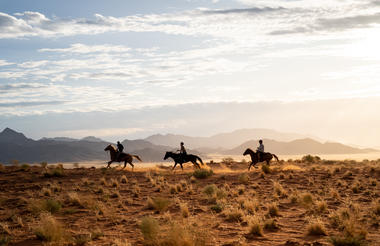
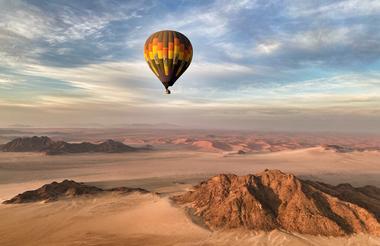
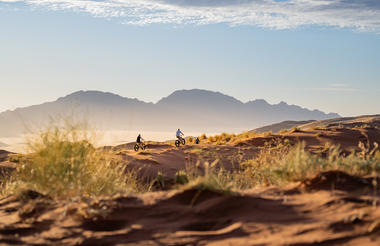
Spanning more than 172,000 hectares and encompassing several distinct desert ecosystems, the NamibRand Nature Reserve in southern Namibia is one of the largest private nature reserves in Southern Africa. Founded to conserve the unique ecosystem and biodiversity of the Namib Desert, the reserve's mix of dunes, mountains, rocky outcrops, sandy flats, and gravel plains provides habitats for a diversity of mammals, including hyenas, jackals, foxes, antelopes, and various wild cats. The reserve is also home to numerous bird species, reptiles, insects, and amphibians, alongside an array of plant species. Discover the mysterious fairy circles, enigmatic bare patches in the desert landscape whose origins remain the subject of scientific debate, or enjoy a night of sublime stargazing; as Africa's first International Dark Sky Reserve, it is one of the least light-polluted areas in the world.
.png?fmt=png)

