


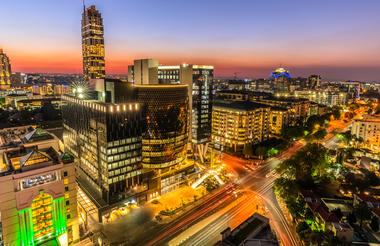
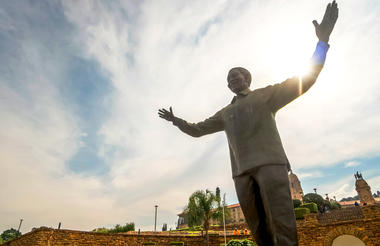
The South African province of Gauteng – 'the place of gold' – is home to one of Africa's most vibrant cities, Johannesburg, South Africa's administrative capital, Pretoria, the renowned township of Soweto, the Magaliesberg Mountains and the World Heritage-listed Cradle of Humankind. Johannesburg is also anchored by Sandton, widely regarded as Africa’s richest square mile and a major financial and business district that reinforces the city’s role as the continent’s economic hub. While it is the smallest of South Africa's provinces, it serves as the country's economic powerhouse. Gauteng is known for its multicultural population, diverse heritage, and jacaranda-lined cities, which contrast with the surrounding grasslands, nature reserves, and mountain landscapes. Visitors can enjoy walking and hiking trails, discover South Africa's best-known township and explore one of the world's most significant centres of human ancestry.
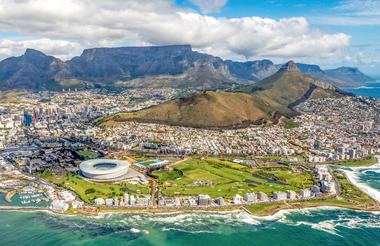
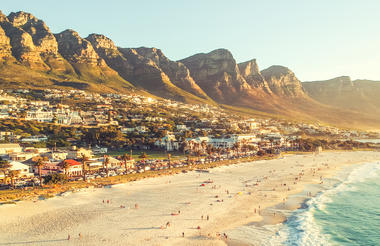
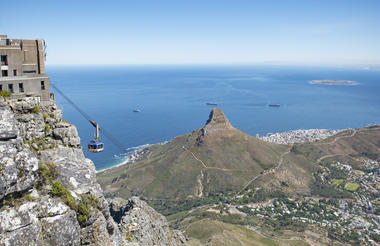
Set at the confluence of the Indian and Atlantic oceans and backed by the iconic Table Mountain, the bustling city of Cape Town presents an alluring combination of drawcards. Incredible powdery white beaches, highly acclaimed wine routes, and astonishingly beautiful mountain trails surround a cosmopolitan hub. This diverse metropolis is filled with superb shops and restaurants, extraordinary heritage monuments, a multitude of entertainment venues, and a spectacular, chic waterfront harbour. Highlights include the Zeitz Museum of Contemporary African Art; Table Mountain's jaw-dropping views; Boulders Beach, where penguins might swim right up to you in the warm Indian ocean waters; the Kirstenbosch Botanical Gardens, where you can walk along a treetop canopy among incredible native flora or watch an open-air concert at the base of the mountain; Robben Island, where visitors can see the cell where Nelson Mandela was imprisoned for 18 years; and many more.
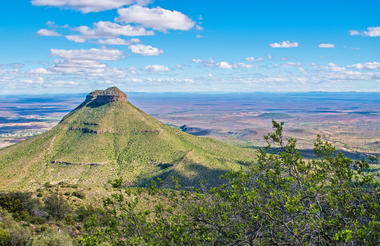
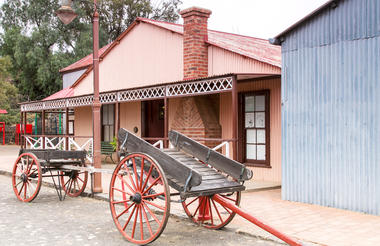
Set in the wide, arid landscapes of the Karoo along South Africa’s historic railway line, Matjiesfontein is a remarkably preserved Victorian village with a quiet, time-capsule atmosphere. Once a fashionable spa stop in the late 1800s, it now draws visitors with its heritage buildings, old-world charm and sense of isolation beneath vast open skies. Travellers can explore the village museum, ride in a vintage London bus or spend the night in the grand Lord Milner Hotel, where creaking wooden floors and antique décor recall another era. The desert air, distant train whistles and golden evening light create a distinctly nostalgic mood. Although small and slower paced than larger destinations, Matjiesfontein offers a memorable glimpse into South Africa’s colonial and railway history.


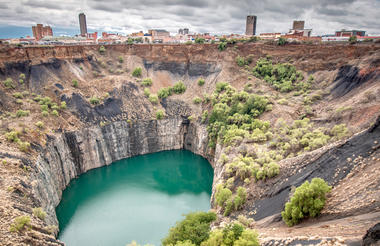
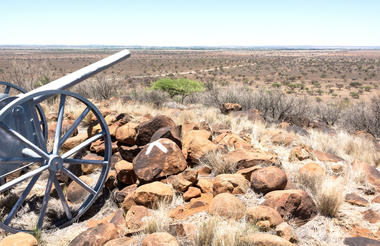
Synonymous with the birth of the international diamond trade, Kimberley lies in South Africa’s Northern Cape on flat, semi-arid plains marked by old mine workings and sparse scrubland. Its historic core is defined by early diamond excavations, most notably the Big Hole and surrounding mine buildings that preserve the memory of the late nineteenth-century rush. A street tram links the Kimberley Mine Museum with restored mining precincts, where reconstructed streets and preserved machinery recreate aspects of the working settlement. The McGregor Museum and nearby Anglo-Boer War sites record the Siege of Kimberley, with former defensive positions mapped around the town. Rail lines and highways connect Kimberley to Johannesburg and Cape Town, crossing open terrain dotted with farm settlements and dry vegetation, while walking routes lead through former diggings, railway yards, Victorian-era streets, and key battle sites that fringe the city.
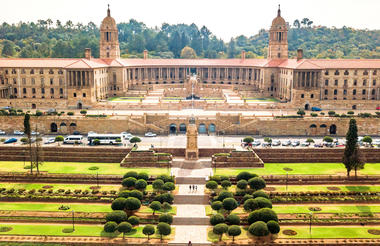
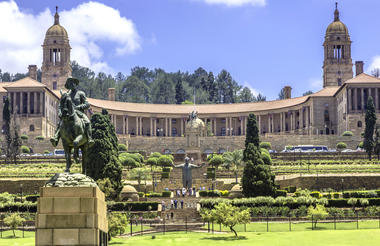
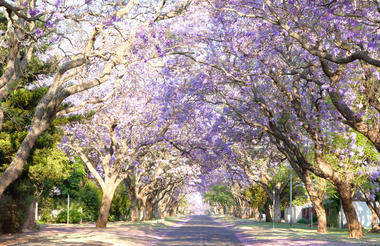
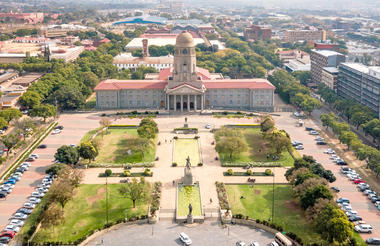
The cosmopolitan city of Pretoria, also known as ‘Tshwane’, is situated in the province of Gauteng and functions as one of three capitals of South Africa. Pretoria has been dubbed ‘The Jacaranda City’, which is owed to the annual bloom of magnificent purple blossom trees that adorn the wide avenues of the city. Discover several historic monuments, fine government buildings, and fascinating museums, and explore several interesting cultural sites. The Transvaal Museum is a natural history museum showcasing an ancient dinosaur fossil found at the nearby Cradle of Humankind; the Pretoria Botanical Gardens offers visitors a glimpse of different biomes, and the Voortrekker Monument is a famous National Heritage Site. Don’t miss the nearby Austin Roberts Bird Sanctuary as well as the beautiful Wonderboom and Groenkloof Nature Reserves.
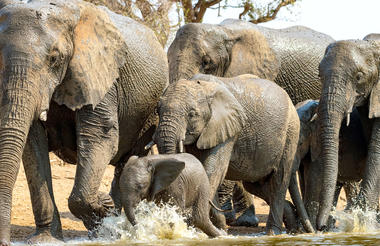
Located in South Africa’s North West Province, close to the border with Botswana, Madikwe Game Reserve is one of the country’s largest wildlife reserves and a renowned malaria-free safari destination. Set within a landscape of open grasslands, rocky hills and acacia-dotted bushveld, it offers a quieter and more exclusive atmosphere than some of South Africa’s better-known parks. Guided game drives offer opportunities to spot the Big Five, as well as endangered African wild dogs, cheetahs, and rare species such as the brown hyena. Early mornings bring crisp air and the distant calls of wildlife, while golden afternoon light transforms the savannah. As sightings can never be guaranteed, patience is part of the experience, but Madikwe’s diverse ecosystems and rich wildlife make every safari memorable.


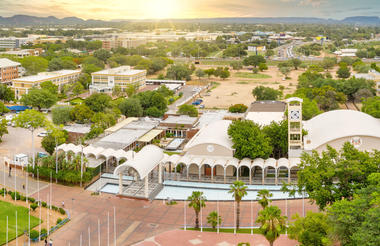
Located in the southeastern corner of Botswana, approximately 15 kilometres from the South African border, Gaborone is the country's capital and largest city. A modern commercial and administrative centre, it offers a wide range of hotels, restaurants, shopping centres, and entertainment venues. Cultural attractions include the National Museum, which showcases Botswana's history, art, and heritage, while the Gaborone Dam and Gaborone Game Reserve provide opportunities for outdoor recreation and wildlife viewing. Within easy reach of the city, visitors can explore attractions such as the St Clair Lion Park, the Thamaga Pottery Village, and the ancient rock engravings of Matsieng, making Gaborone an excellent base from which to discover southeastern Botswana.


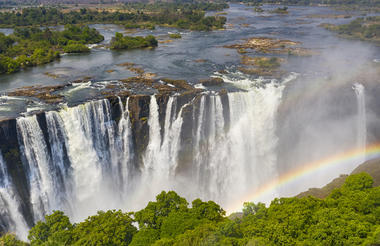
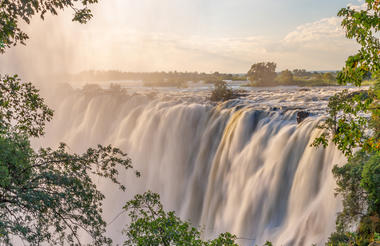
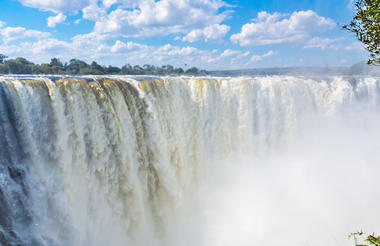
Known locally as Mosi-oa-Tunya—“The Smoke That Thunders”—Victoria Falls is one of the world’s great natural landmarks. Straddling the Zambezi River between Zambia and Zimbabwe, it forms a vast curtain of water that fills the air with mist and sound. The Zimbabwean side grants the most dramatic views, where mist rises like ghostly curtains and rainbows arc through the spray. Measuring about 1,708 metres across, it is regarded as the largest single continuous sheet of falling water on Earth. The adjacent town of Victoria Falls provides a convenient base for exploring the region, with a wide range of activities from scenic flights and microlight trips to white-water rafting, bungee jumping, kayaking, and safaris into Chobe National Park.
Makambako, a stopover town along the acclaimed Tazara railway line, is a small but charming town located within the Njombe Region of wonderful Tanzania. Geographically, Makambako, marks the end of the wondrous Eastern Arc Mountain Range and the start of the bird watching and hiking haven of the Southern Highlands. Travellers to Makambako can meander along its lively streets, sample the delicious local cuisine or interact with locals at one of the bustling markets. With its charming small-town feel, this highland town acts as the perfect base for exploring the surrounding scenic landscapes, including the unique flora and fauna of the flourishing Mpanga-Kipengere Game Reserve.
In Tanzania's far south-east, spread across the Coast and Lindi regions, the Selous Game Reserve remains one of Africa's last great wildernesses. Although much of the historic reserve became Nyerere National Park in 2019, what remains is still Tanzania's largest game reserve. Proclaimed as a protected area in 1896, formally established in 1922 and named after British explorer, hunter and conservationist Frederick Courteney Selous, it became a UNESCO World Heritage Site in 1982. Miombo woodland stretches across the reserve, intersected by the Rufiji, Ulanga and Matandu rivers, whose lagoons and sandbanks draw elephant, buffalo, hippo and crocodile through the dry months. The wider Selous–Nyerere landscape also supports one of the continent's most significant populations of the endangered African wild dog. With photographic tourism concentrated along the river corridors, the reserve offers one of East Africa's most secluded safari experiences.


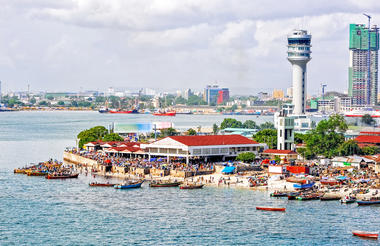
Dar es Salaam, Tanzania’s largest city, principal port, and former capital, is a vibrant coastal metropolis that serves as the country’s economic, transport, and cultural hub. Situated along the Indian Ocean and positioned on key maritime trade routes, the city blends modern development with a rich history reflected in its diverse architecture and bustling markets. Visitors can explore cultural attractions such as the National Museum and House of Culture, stroll through the city's Botanical Gardens, or experience the lively atmosphere of Oyster Bay. Dar es Salaam also serves as a gateway to some of Tanzania’s most popular destinations, including Pemba Island and Zanzibar’s Unguja Island, as well as nearby national parks and beautiful stretches of coastline.


As previously described


Just off the north-east coast of Tanzania, Mnemba Island is a private island surrounded by the turquoise waters of the Zanzibar Archipelago and its encircling coral reef. The atmosphere is quiet and exclusive, with powder-soft sand, rustling palms and little beyond the sound of waves and traditional fishing boats in the distance. Renowned for its clear waters and vibrant marine life, the island offers exceptional snorkelling and diving, where dolphins, green sea turtles and shoals of reef fish are frequently seen, along with occasional rays and reef sharks. Days unfold slowly between barefoot beach walks, dhow cruises and ocean swims. While access is limited and accommodation is intentionally understated in scale, the island’s appeal lies in its seclusion, natural beauty and unhurried coastal atmosphere.


