


INFORMATION FOR THE VISITOR TO NAMIBIA
This information is provided by Namibia Tracks & Trails as a guideline for your upcoming visit to the country.
TRAVEL DOCUMENTS
Since the 1st of April 2025 a VISA must be applied to enter Namibia.
We recommend applying online before arrival (max. 30 days) - ONLINE VISA ON ARRIVAL -
This link will take you immediately to the website of the "Ministry of the Interior and Entry"
E-Services: Ministry of Home Affairs, Immigration, Safety and Security | E-Services Portal
https://eservices.mhaiss.gov.na/visaonarrival
- Log onto the website
- Register your email address
- Once you receive a response email from MHAISS to confirm your email address
- Ensure you have a scanned copy of your passport bio page and a passport photo
- Select VISA online on Arrival application
- Complete form and submit passport and photo
- Once submitted you will be notified via email if your VOA is approved
- On approval log back into the system and make your payment (
Per adults N$ 1600.00
Per child 6-11y N$ 800.00
Younger <6y free of charge
- Once payment is made you will be able to download your approved VOA
Please print out your approved VOA and provide it at the entry to Namibia with the following documents:
- proof of onward travel (if required)
- Health / Travel Insurance – Coverage for medical expenses.
- Details of 1st Accommodation / Itinerary / Invitation - Hotel booking, host invitation and copy of the itinerary (if applicable)
- Funds – Proof of financial means for your stay
You can also apply for the VISA upon entry directly at the border or airport, for this you need the following documents:
- completed visa application form (Provided on flight by airline before landing or at counters on arrival)
- proof of onward travel (if required)
- Health / Travel Insurance – Coverage for medical expenses.
- Details of 1st Accommodation / Itinerary / Invitation - Hotel booking, host invitation and copy of the itinerary (if applicable)
- Funds – Proof of financial means for your stay.
- Payment for Visa on Arrival must be made via credit card or cash Nam Dollar. The cost is N$1,600 per person, with an additional N$400 fee for applications submitted manually.
The Namibian Government mandates that all visitors to Namibia must have at least six fully blank pages in their passports upon arrival in the country. Additionally, passports should be valid for at least six months beyond the intended departure date from Namibia.
Namibia Tracks & Trails cannot be held responsible for the refusal of entry into a country for any reason whatsoever.
MINORS TRAVELLING TO NAMIBIA
Minors under the age of 18 traveling to Namibia must possess an unabridged birth certificate. Additionally, when traveling:
With an adult who is not their biological parent: An affidavit from both parents, providing consent for the minor to travel with the adult, is required.
With an adult other than a parent/legal guardian: Copies of the legal guardian's/parent's passports or identity documents are required, along with contact details of the parents/legal guardians.
With a parent: An affidavit from the other parent, granting consent for the minor to travel, is necessary. If one parent is deceased, a death certificate should be provided.
Unaccompanied: An affidavit from the parents/legal guardians, consenting to the minor's travel, is required. Additionally, a letter containing the contact details and residential information of the person receiving the minor passenger, a copy of the identity document, valid passport, or permanent residence permit of the receiving person, and the contact details of the minor's parents/legal guardians are necessary.
IMPORTANT CONTACT NUMBERS
Ambulance Emergency: +264 (61) 21-1111
AEMS +264 61 300 118 (international)
963 (National free)
EMed24 +264 83 924 (international)
924 (National free)
Police: +264 (61) 10111
Deutsche Botschaft Windhoek: + 264 (0) 61 273 100
SWAKOPMUND
Ambulance Emergency: +264 (64) 40-5731
EMed24 +264 83 924 (international)
924 (National free)
Police: +264 (64) 10111
NAMIBIA TRACKS & TRAILS +264 824 416 820 (8:00-17:00 Uhr) AH +264 (0) 81 269 7271


Windhoek, Namibia’s capital, lies in the heart of the country amid the rolling Khomas Highlands, where wide skies and dry savannah frame a compact, orderly city. It blends German colonial heritage with contemporary African identity, creating a calm, understated atmosphere rather than a bustling metropolis. Landmarks such as Christuskirche and the Tintenpalast sit alongside modern civic buildings, while lively markets and cafés reveal everyday Namibian life. Visitors can explore museums, stroll shaded streets, or use the city as a gateway to the surrounding wilderness and safari regions. The air is often dry and clear, carrying the scent of dust and jacaranda blossoms, while distant hills glow at sunset. Windhoek offers a gentle introduction to Namibia’s landscapes and culture, with space, light and quiet defining its appeal.
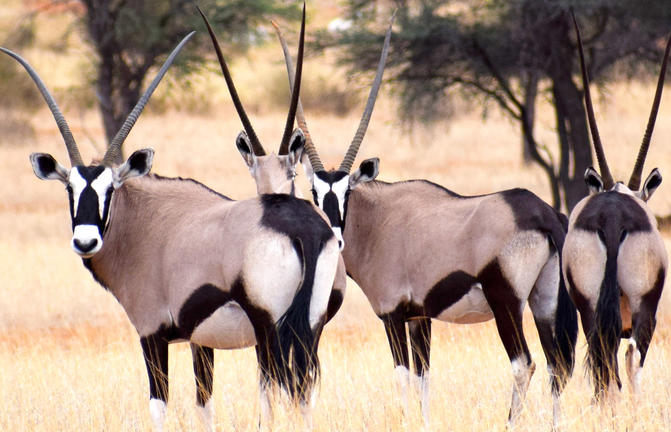
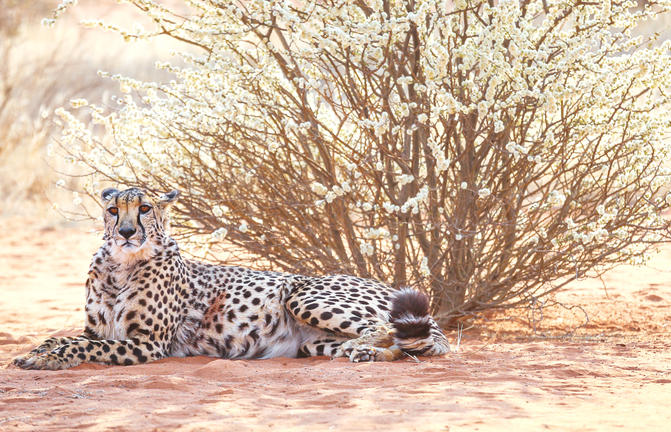
Spreading across Botswana, South Africa and Namibia, the Kalahari, meaning 'the great thirst', is an exceptionally beautiful living desert. The landscape is characterised by a large semi-arid sandy savannah, draped over a gently rolling inland sea of sand that covers most of Botswana and large parts of Namibia and South Africa. It is inhabited by the indigenous San people, with the modern world having enveloped all the other areas they once roamed. The Namibian portion is made up of red sands covered in thin, wispy, mostly golden grass and dotted with acacia trees and wide-ranging wildlife, including gemsbok, impala, jackals and cheetah.




Sesriem is a small settlement and natural, 1km-long canyon in the Namib Desert, functioning as the primary gateway to the renowned Sossusvlei sand dunes and Deadvlei. Formed by the Tsauchab River, the 30-meter deep canyon features pools that hold water, with its name Afrikaans for "six thongs," referring to the ropes used to draw water.
At Sesriem you will find to Entry-Gate to the Sossusvlei.
Set between the rolling dunes of the Namib Desert and the icy Atlantic coastline, Swakopmund is a relaxed seaside town in western Namibia known for its German colonial architecture, cool coastal climate, and adventurous spirit. Palm-lined streets, historic buildings, and ocean fog create an atmosphere unlike anywhere else in the country. Travellers visit for desert activities such as quad biking, sandboarding, and scenic flights over vast dunes and shipwreck-strewn shores. Cafés, bakeries, and small museums add to the town's laid-back charm, though the Atlantic waters are brisk rather than tropical. With its striking desert-meets-ocean setting and mix of adventure and history, Swakopmund is one of Namibia's most distinctive destinations.


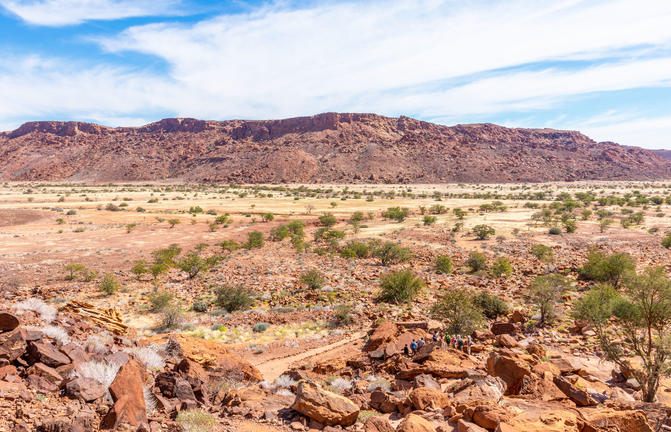
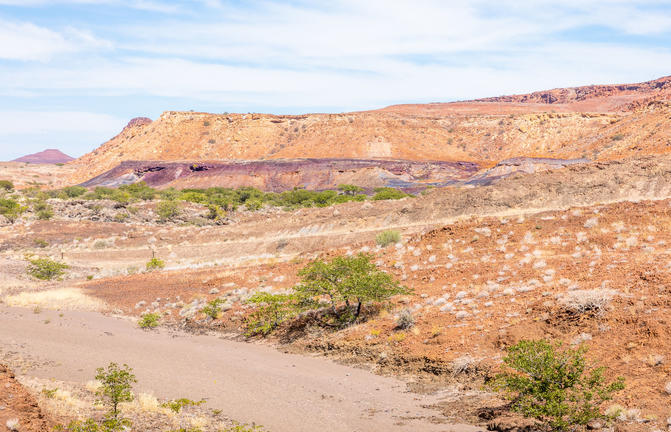
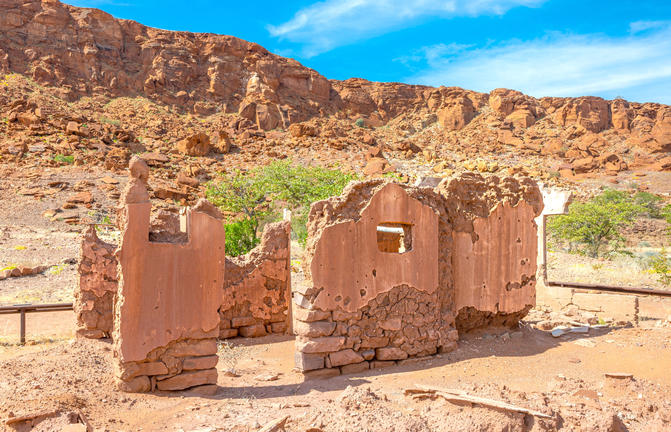
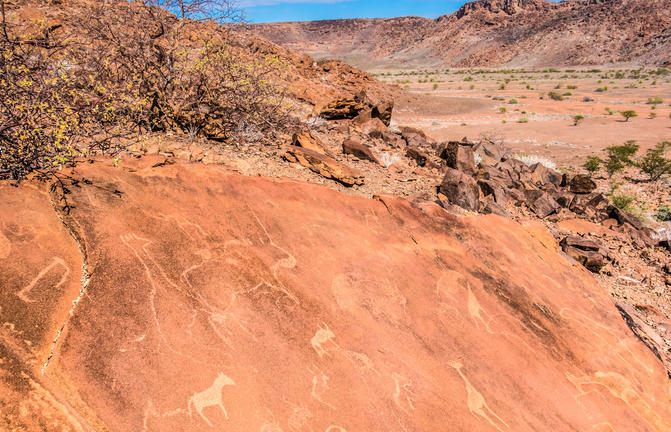
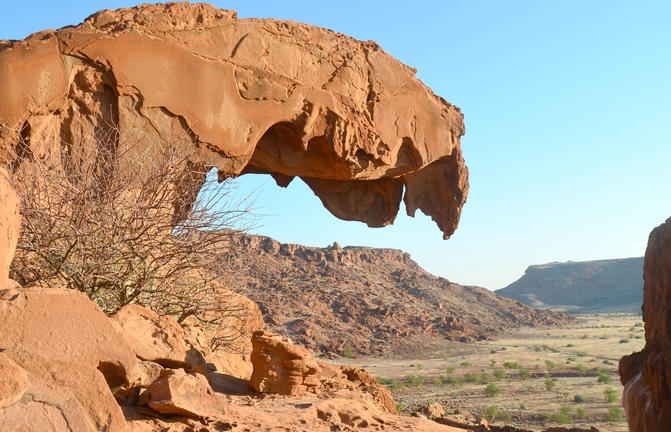

Situated in the Kunene Region of northwestern Namibia, on the edge of the Huab Valley, Twyfelfontein is a remarkable archaeological and geological site renowned for its exceptional collection of ancient rock engravings. Designated a UNESCO World Heritage Site, it is home to more than 2000 petroglyphs created over thousands of years by hunter-gatherer communities, making it one of Africa's most significant concentrations of prehistoric rock art. Guided walks lead visitors through dramatic sandstone outcrops to view engravings depicting wildlife, human figures and symbolic motifs, while the surrounding desert landscape is known for its striking scenery and adapted wildlife, including desert elephants that occasionally roam the region. Nearby attractions include the Organ Pipes, Burnt Mountain and the Damara Living Museum.
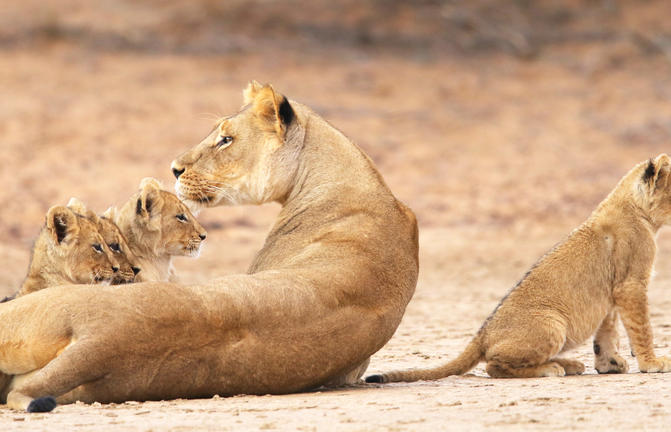
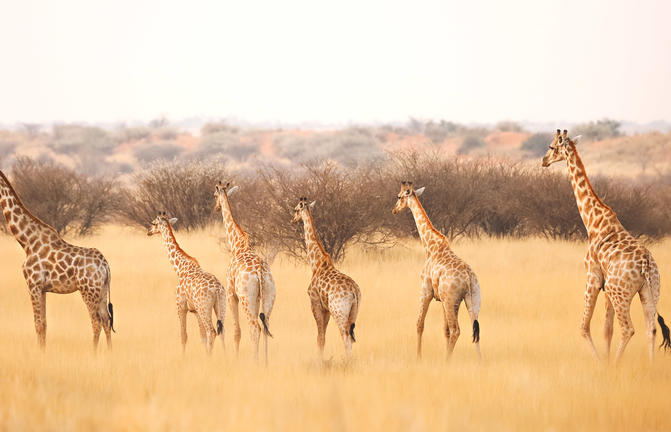
Situated along the southern boundary of Etosha National Park in northwestern Namibia, Etosha South encompasses the park's southern safari region and a collection of private game reserves and lodges. The park is accessed via Andersson Gate, placing visitors within easy reach of renowned waterholes and excellent wildlife viewing. Lions, elephants, giraffes, white and black rhinos, and a wide variety of antelope are among the species commonly seen. Guided 4×4 game drives are the main attraction, with half- and full-day safaris available, some including picnic lunches in the bush.


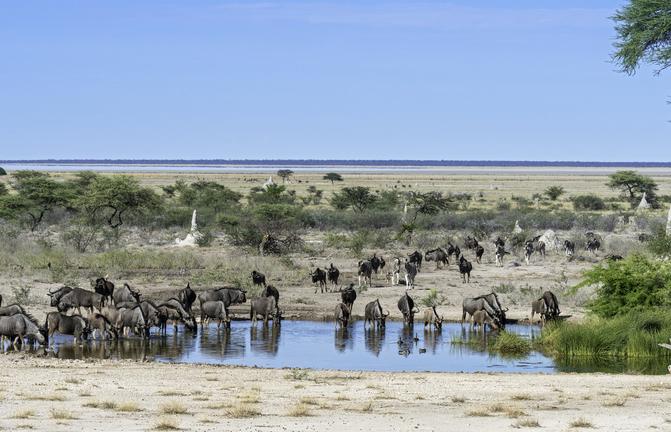
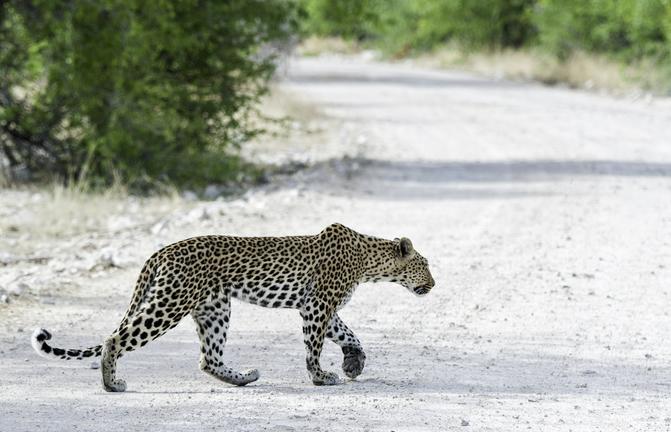
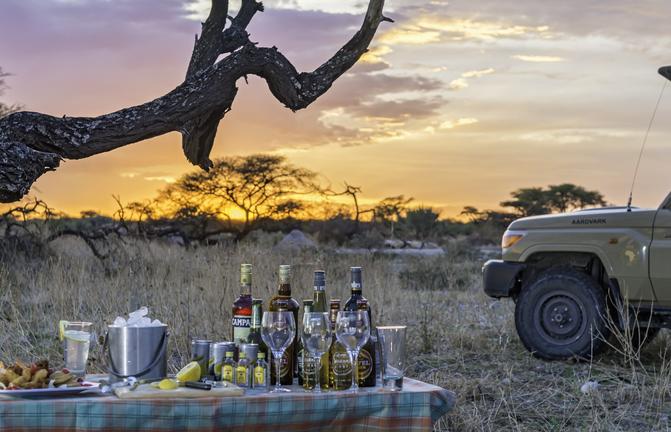
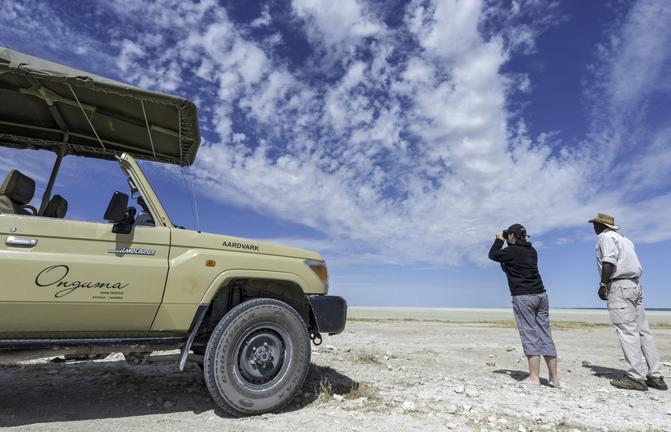
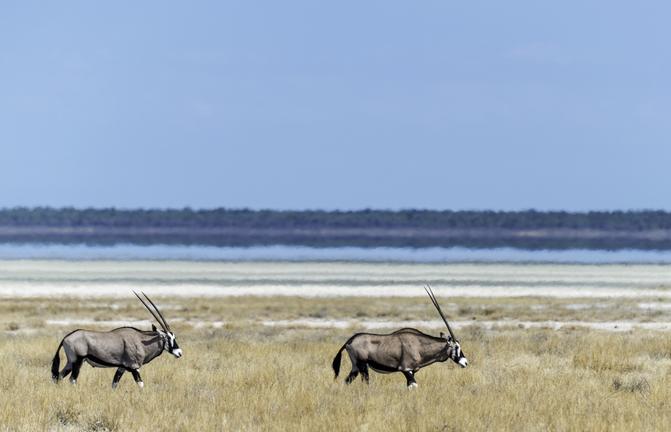
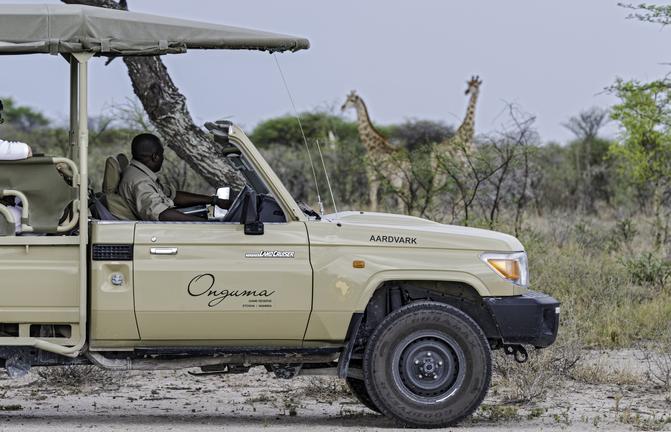
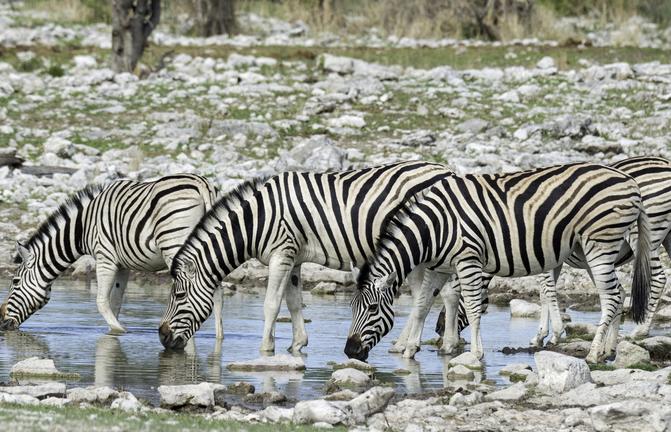
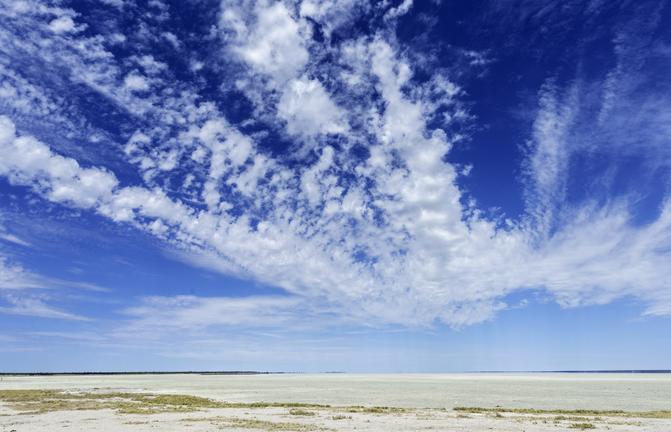
Situated east of Etosha, bordering Fisher's Pan, Onguma Game Reserve is one of Namibia's best-kept secrets. The reserve offers visitors the opportunity to experience Africa in all her beauty and diversity. Onguma Game Reserve features over 35 480 hectares of protected land scattered with a variety of wildlife including plains game, black rhino, kudu, giraffe, zebra, lion, cheetah, leopard and more than 300 bird species. The seasonal rains attract thousands of migrating birds to the Fisher’s Pan wetland area. The neighbouring Etosha National Park is home to a rich array of wildlife, including 4 of the Big 5. Visitors can enjoy game drives, guided walks and rhino research drives within the private reserve as well as wildlife safaris into Etosha National Park to view abundant game in the largest national park in Namibia.


