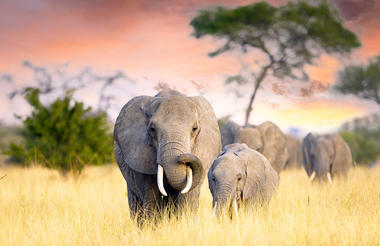
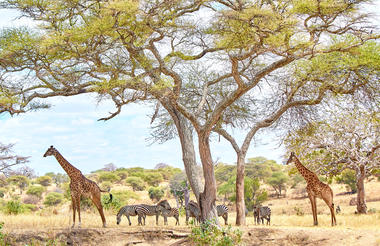
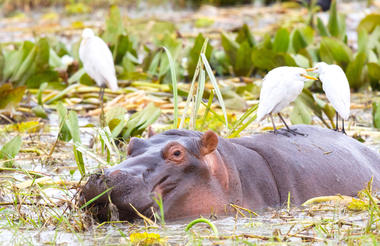
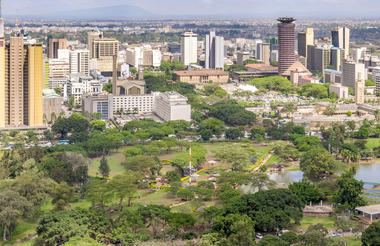
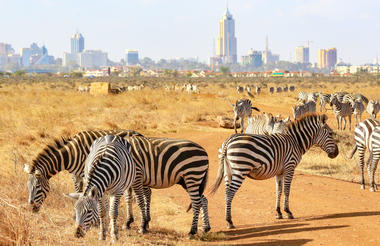
Widely regarded as one of East Africa’s most dynamic and cosmopolitan cities, Nairobi sits along the Nairobi River and serves as Kenya’s capital and largest urban centre, acting as a major gateway for safari travel across the country. The city features a growing café culture, active nightlife, and cultural landmarks such as the National Museum of Kenya and the Karen Blixen Museum. Just outside the city centre lies Nairobi National Park, where wildlife, including lions, giraffes, and buffalo, roam against a backdrop of skyscrapers — one of the rare cases in the world where a major national park borders a capital city. Visitors also often stop at the David Sheldrick Wildlife Trust elephant orphanage for close encounters with rescued calves.

Spanning over thousands of hectares of vast open savannah grasslands in northern Kenya, Lewa Wildlife Conservancy is home to the world’s largest population of Grevy’s zebra. Renowned as a pioneer and leader in responsible tourism, Lewa Wildlife Conservancy actively advances and develops community engagement and wildlife conservation. It has been declared a UNESCO World Heritage Site and serves as an important sanctuary for a large selection of wildlife including the endangered black rhino as well as the white rhino. Lewa offers visitors the opportunity to have close encounters with these prehistoric creatures against an unspoilt backdrop, making it one of Kenya’s top game-viewing destinations. Boasting one of the highest wildlife densities in Kenya, the park is also inhabited by elephants, lions, buffalo, wild dogs, giraffes, cheetahs, and over 400 bird species.
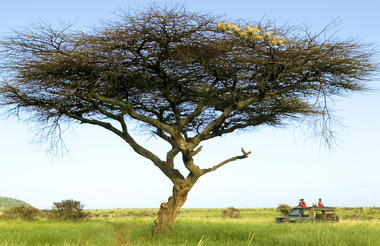
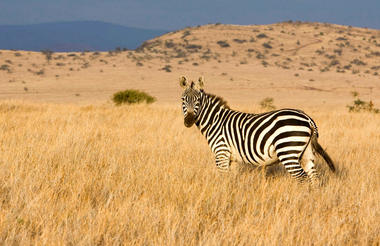
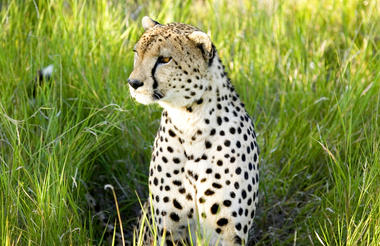
The Olare Motorogi Conservancy is an 85 square kilometre expanse of prime private wilderness in southwest Kenya; part of the Maasai Mara-Serengeti ecosystem and wildlife dispersal zone. The conservancy lies immediately to the northwest of the main Maasai Mara Reserve. Tourism is limited to a maximum of 94 beds which maximizes the client's wilderness experience and minimizes the environmental impact of tourism. Open hills provide a habitat for a diverse range of grazers, including giraffes, zebras, hartebeests, and warthogs. These herds attract large numbers of predators, including lions, cheetahs, hyenas, and jackals. In between the hills run a number of small seasonal streams, fringed by stretches of forest which are home to a broader range of species including baboons, elephants, buffaloes, hippos, and leopards.
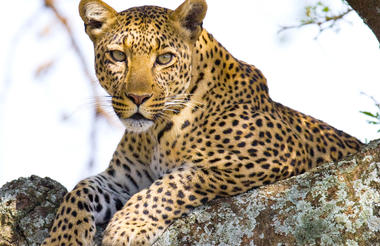
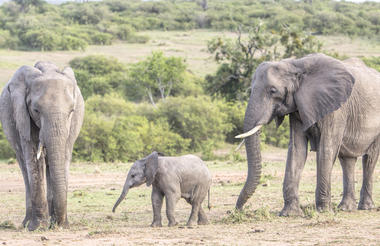
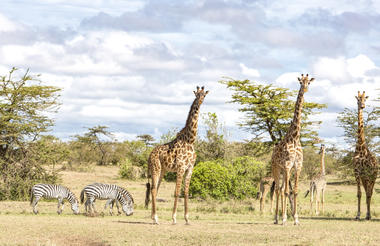
Singita Serengeti Grumeti is located adjacent to the Western Corridor of the Serengeti, bordering the national park, and encompasses 350,000 acres of magnificent unrivalled wilderness. Vast river valleys meander through the plains, grasslands, woodland, and forest. The area forms part of the famous migratory route, which is travelled by hundreds of thousands of animals every year through the Serengeti-Mara ecosystem. Called The Greatest Wildlife Show on Earth it has, since time immemorial, been the dramatic backbone of this enormous wilderness. Visitors can look forward to seeing all members of the ‘Big Five’, as well as large herds of wildebeest and zebra and numerous bird species. Activities on offer include game drives, guided walks and more.
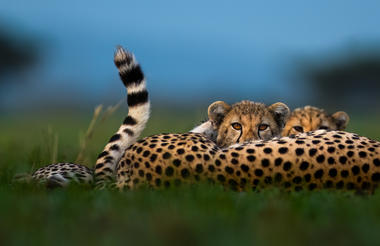
Located in Tanzania’s scenic northern highlands, Karatu is a small, colourful town surrounded by rolling green hills and fertile farmland. Travellers heading for the Serengeti National Park and Ngorongoro Crater often pass through Karatu, which lies beneath the towering Ol Deani Volcano. The town serves as a popular overnight stop for visitors exploring the region’s many game parks. Karatu offers a variety of activities, including browsing bustling local markets, sampling beer at a local brewery, visiting traditional homesteads, or taking guided walks through the Ngorongoro Forest in search of waterfalls and caves. Whether seeking cultural experiences, hiking and biking opportunities, or simply a relaxing break between safari drives, visitors will find plenty to enjoy in this welcoming town.


The Chem Chem concession lies in the renowned migration corridor between the famed Lake Manyara and Tarangire National Parks, covering over 20 000 hectares. The landscapes here are characterized by vast grasslands dotted with ancient baobab trees, inhabited by a variety of wildlife including herds of elephant, zebras, wildebeest, buffalo, impalas, and over 400 species of bird. Visitors can look forward to dining under the African night sky, day and night wildlife safaris, and visiting a traditional Maasai village. Other popular activities include horse riding, bird watching, fishing, guided bush walks, 4x4 trails, hiking, picnicking, and game drives.