Botswana is well known for having some of the best wilderness and wildlife areas on the African continent. With almost 40% of its land area devoted to national parks, reserves and wildlife management areas you can travel through many parts of the country has the feeling of moving through an immense Nature wonderland. The first – and most lasting impressions – will be of vast expanses of uninhabited wilderness stretching from horizon to horizon, the sensation of limitless space, astoundingly rich wildlife and bird viewing, night skies littered with stars and heavenly bodies of an unimaginable brilliance, and stunning sunsets of unearthly beauty. Experience here the stunning beauty of the world’s largest intact inland Delta – the Okavango; the unimaginable vastness of the world’s second largest game reserve – the Central Kalahari Game Reserve; the isolation and other-worldliness of the Makgadikgadi – uninhabited pans the size of Portugal; and the astoundingly prolific wildlife of the Chobe National Park. Botswana is the last stronghold for a number of endangered bird and mammal species, making your safari experience even more memorable, and at times you will feel simply surrounded by wild animals.
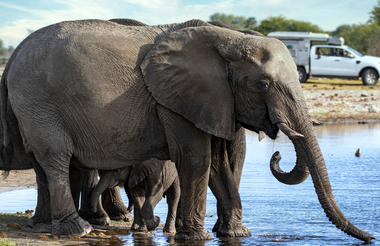
North-eastern Botwana’s Boteti River, within the Makgadikgadi Pans National Park, lies on the grounds of an ancient lake, within a region where some of the first ‘homo sapiens’ (humans) lived. This area is an essential part of the massive annual migration - visitors can look forward to seeing enormous herds of oryx, wildebeests, impalas, zebras, and springbok as well as elephants and hippopotamuses along the riverbank. The river also provides prime bird-watching opportunities, with large flocks of flamingos and numerous other species calling it home. Besides the usual nature reserve activities, try taking a small chartered plane for the best views of the herds; go quad biking across salt flats and sleep there under the stars, or take a cultural tour to see ancient tribal sites.
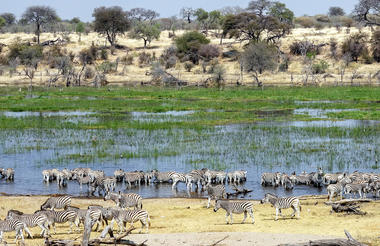
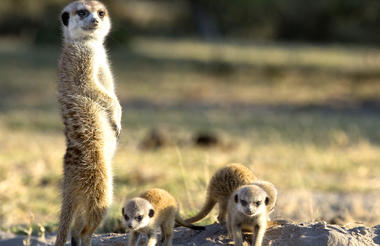
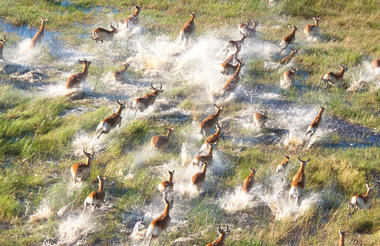
The amazing foresight of Chief Moremi created one of the world's most famous reserves, conserving part of the Okavango Delta and the plains to its east. The reserve covers more than 4871 square kilometres of pristine wilderness, and the varied terrain includes savannah, winding waterways, and thick forest. This diversity supports an incredibly wide spectrum of wildlife, ranging from large herds of buffalo, wildebeest and zebra, to the rare sitatunga and lechwe antelope, and lion, cheetah and packs of wild dog in the open grasslands. The birdlife is prolific and includes most of the 550 bird species recorded on the Botswana national bird list.
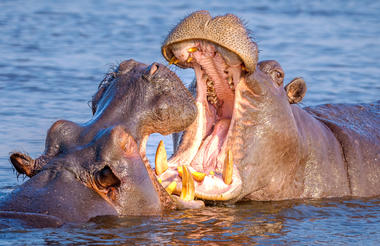
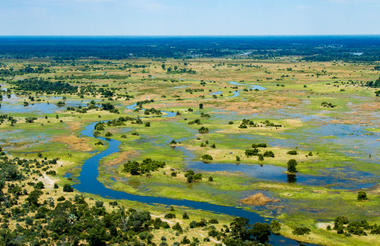
Lying in the middle of the largest expanse of sand on earth the Okavango Delta is one of Africa’s most amazing, sensitive and complex environments supporting a spectacle of wilderness and wildlife. Unique as one of the world’s few inland deltas, the placid waters and lush indigenous forests offer a safe haven for innumerable bird and wildlife species. The Okavango Delta offers a number of activities for the visitor; game viewing, birding and fishing are all on offer. One can experience this magical world of islands and waterways from land, air and water. Highlights include the elusive Sitatunga antelope which has found refuge in this pristine wetland ecosystem, while birds such as the African fish eagle, Pel's fishing owl and many others provide a spectacular display.
As previously described


In the heart of Botswana’s Chobe National Park lies a dynamic wilderness, a sweeping expanse of savannah brooded over by several rocky outcrops which guard a relic marsh and the Savuti channel. It has a fascinating history of flooding and drying up independently of good rainy seasons and flood levels elsewhere. In 2008, the Savuti Channel, having been dry for many years, once more became a deep, clear waterway harbouring Hippo and other aquatic life with a large variety of waterbirds. Wildlife, from plains game to predators, has had to adapt to a new source of water and all the opportunities and menaces it has brought with it. How long will it be before the water dries up again? Judging from historical records it could be more than a hundred years or less than ten. Nature has the final say in such matters.
The dead Camelthorn trees on the Savuti Marsh have become one of the most prominent features of the landscape – skeletons of trees drowned in the flood-waters at least 40 years ago. Another part of the Savuti is characterised by the Gubatsa Hills, which were formed millions of years ago during volcanic movement. These hills rise to a height of about 90 meters out of an otherwise completely flat landscape.
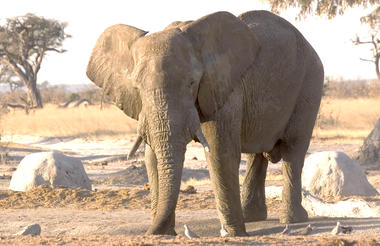
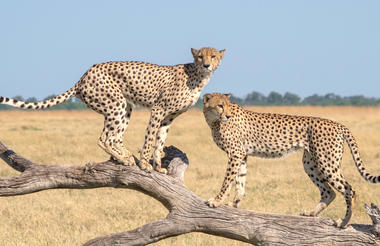
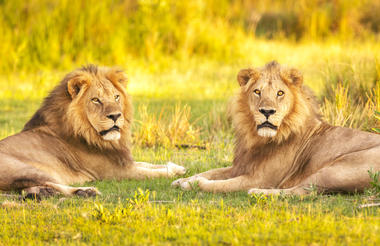
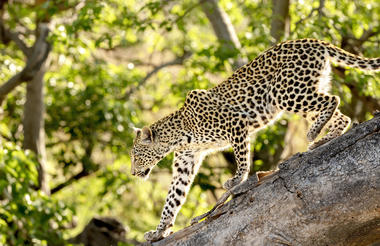
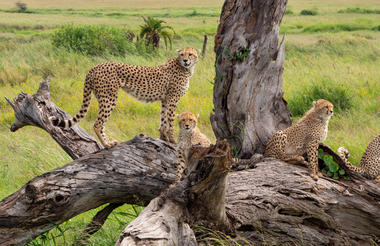
The Savuti area offers great game viewing with resident game consisiting on large prides of lion and the annual Zebra migration. Good sightings of Cheetah and Leopard are possible and the endangered Wild Dog also occurs here. Savuti is famous for its large concentrations of Elephants that congregate around the waterholes, making game-viewing exceptional.
Birdlife is also amazing, with Secretary Birds and Kori Bustards often seen around the Savuti Marsh. Summer migrants and water birds include Abdim’s Storks, Carmine Bee-eaters, Fish Eagles. Red-billed Queleas, which gather in their thousands, are a spectacular sight as they wheel and turn in unison.