Zimbabwe is a landlocked country located in southern Africa. It is bordered by Zambia to the northwest, Mozambique to the northeast, South Africa to the south, and Botswana to the west and southwest. The capital and largest city of Zimbabwe is Harare.
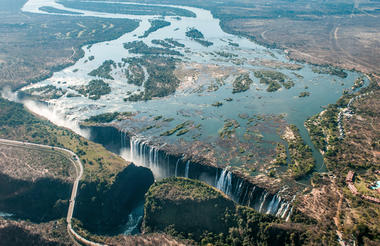
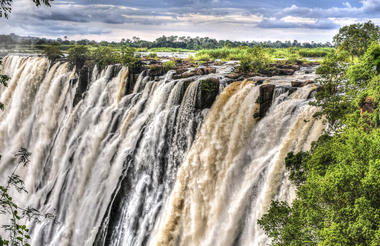
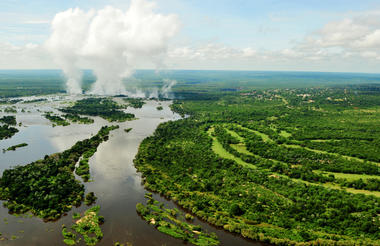
Victoria Falls, one of the most famous natural attractions in Africa, is located on the Zambezi River, on the border between Zambia and Zimbabwe. The falls are known locally as Mosi-oa-Tunya, which means "The Smoke that Thunders." This UNESCO World Heritage Site is renowned for its breathtaking beauty and is considered one of the largest and most spectacular waterfalls in the world.
Key facts about Victoria Falls and its connection to Zimbabwe include:
Location: Victoria Falls is situated on the Zambezi River, forming the border between Zimbabwe to the south and Zambia to the north.
Size: The falls have a width of about 1,708 meters (5,604 feet) and a height of around 108 meters (354 feet), making them the largest curtain of falling water in the world.
Activities: Visitors to Victoria Falls can engage in various activities, including guided tours, wildlife viewing, and adventurous activities such as bungee jumping and white-water rafting. The surrounding area is rich in biodiversity, and the national parks on both the Zimbabwean and Zambian sides offer opportunities for safaris and wildlife encounters.
Victoria Falls Town: The town of Victoria Falls in Zimbabwe is a popular base for tourists exploring the falls. The town offers accommodation, restaurants, and various services catering to visitors.
Access: Victoria Falls can be accessed by air through the Victoria Falls International Airport in Zimbabwe. The falls are also accessible by road from various neighboring countries.
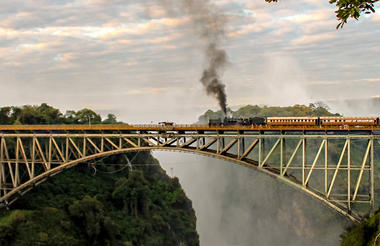
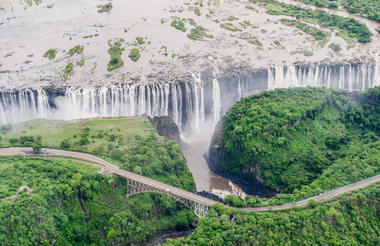
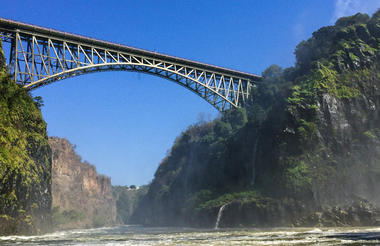
Tourism: The falls attract tourists from around the world, and the surrounding region is a hub for ecotourism and adventure tourism. The Victoria Falls Bridge, connecting Zimbabwe and Zambia, is a notable landmark and offers stunning views of the falls.
Zimbabwe and Victoria Falls, in particular, contribute significantly to the tourism industry in the region, providing economic benefits and showcasing the natural beauty of southern Africa.
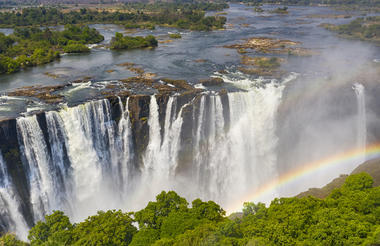
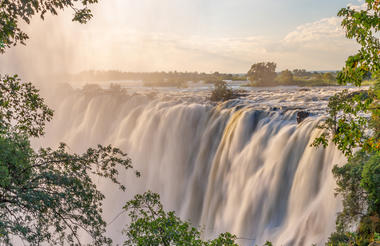
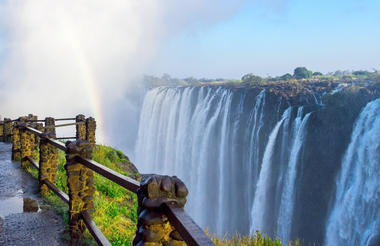
Known locally as Mosi-oa-Tunya—“The Smoke That Thunders”—Victoria Falls is one of the world’s great natural landmarks. Straddling the Zambezi River between Zambia and Zimbabwe, it forms a vast curtain of water that fills the air with mist and sound. The Zimbabwean side grants the most dramatic views, where mist rises like ghostly curtains and rainbows arc through the spray. Measuring about 1,708 metres across, it is regarded as the largest single continuous sheet of falling water on Earth. The adjacent town of Victoria Falls provides a convenient base for exploring the region, with a wide range of activities from scenic flights and microlight trips to white-water rafting, bungee jumping, kayaking, and safaris into Chobe National Park.
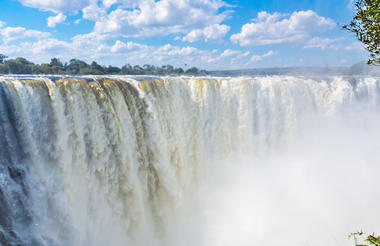
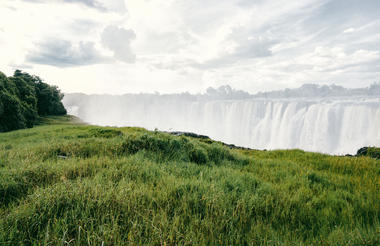
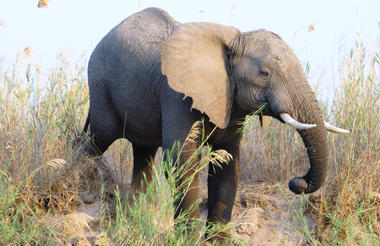
Located in the heart of Southern Africa, Zambia offers visitors an authentic African experience complete with thrilling adventure activities, rich cultural heritage and abundant wildlife found within its vast national parks and wilderness areas. Spend your evenings admiring the spectacular Victoria Falls, one of the world's largest waterfalls, after an exhilarating day of white-water rafting on the mighty Zambezi River. For a more relaxed experience, cruise the tranquil waters of Lake Kariba aboard a houseboat, watching elephants gather along the shoreline while trying your hand at catching the elusive tigerfish. From unforgettable safari adventures to breathtaking landscapes and warm hospitality, Zambia offers an exceptional blend of natural beauty and adventure. Whatever your interests, this remarkable country is sure to leave a lasting impression and a desire to return.
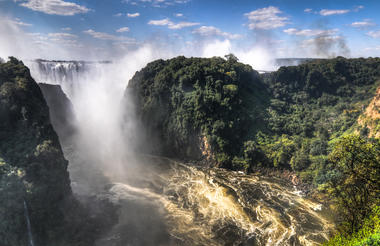
Situated on the Zambia–Zimbabwe border along the Zambezi River, Victoria Falls is experienced from the Zambian side within Mosi-oa-Tunya National Park, where walkways trace the cliff edge above a vast basalt gorge. Knife Edge Bridge pushes visitors into the spray line for a close view of the Main Falls, a continuous curtain of water, and the Eastern Cataract, where the flow breaks into narrower channels across the far side. Rainbow Falls, the highest section of the cascade, often reveals shifting arcs of colour in fine mist when light breaks through the spray. The Boiling Pot viewpoint looks directly into a deep whirlpool where the river is forced into the Batoka Gorge. Upstream, boat access reaches Livingstone Island, a rocky outcrop on the lip of the falls, and the seasonal Devil’s Pool, a natural rock pool at the edge of Victoria Falls that becomes safely accessible during low water when river levels drop and currents weaken. Activities extend beyond the rim, including white-water rafting through gorge rapids, kayaking, ziplining across the chasm, bungee jumping from the bridge, bridge swings, sunset cruises, game viewing along the riverbanks, and visits to the local market.
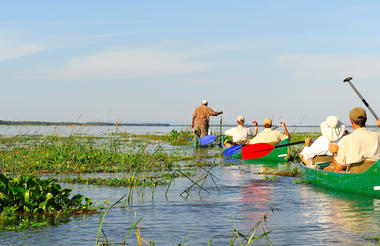
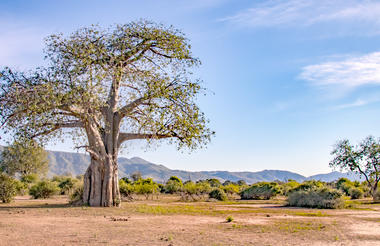
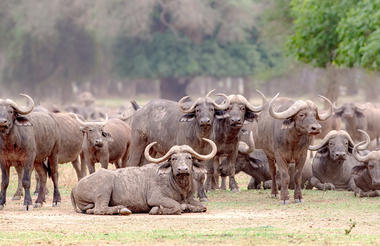
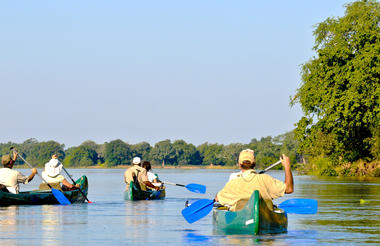
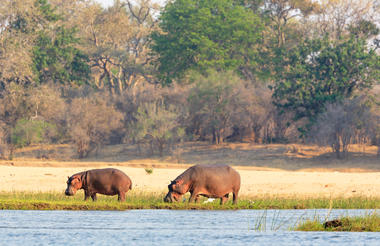
Located in southern Zambia along the border with Zimbabwe, the Lower Zambezi region is renowned for its spectacular wilderness and the wildlife-rich Lower Zambezi National Park. One of Africa’s most unspoilt safari destinations, the area is characterised by vast floodplains, indigenous woodlands, and the mighty Zambezi River, which supports an abundance of wildlife. Visitors can expect to see elephants, hippos, buffalo, crocodiles, fish eagles, and a variety of other species in their natural habitat. The region offers a diverse range of safari experiences, including game drives, guided walking safaris, canoe excursions along the river, and some of the finest tiger fishing opportunities in Africa.