Hwange National Park is Zimbabwe’s largest game reserve and one of its most diverse. The north-western and northern sections of the park highlight this variety particularly well. The north-west features open grasslands, mopane woodland, and wide views stretching toward the Botswana border. These open plains support regular movements of elephant and buffalo, and attract consistent predator activity, especially lions during the dry months when grazers concentrate around water points.
Further north, the landscape becomes more rocky and broken, marked by sandstone outcrops, seasonal streams, and natural springs. These springs hold water long after other areas have dried, drawing wildlife into the region late into the season. This area also carries significant history, with the Bumbusi National Monument, stone ruins, and rock engravings offering insight into early settlement in the park.
Together, these regions show Hwange’s gradual shift from open plains to more rugged, water-dependent terrain, each supporting its own wildlife patterns and habitats.
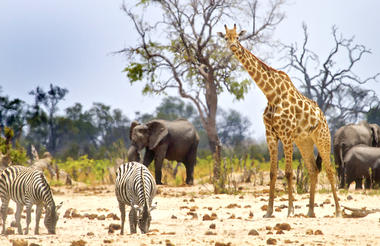
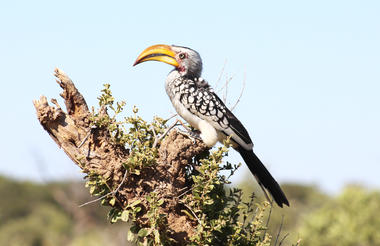
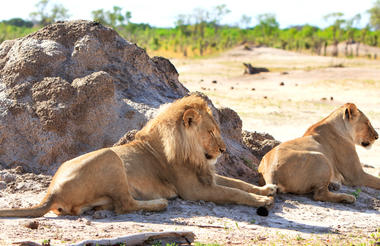
Located on the banks of the mighty Zambezi River, just upstream from Victoria Falls, Zambezi National Park offers a quieter, more intimate safari experience in north-western Zimbabwe. Stretching across riverine forest, teak woodland and open grassland, the park is home to elephant, buffalo, giraffe, zebra and a variety of predators, while abundant birdlife fills the air with colour and song. Game drives and river-based activities reveal ever-changing perspectives of the landscape, from golden sunsets reflected on the water to wildlife gathering along the river's edge. Less visited than some of southern Africa's flagship reserves, the park rewards travellers with a genuine sense of wilderness, spectacular scenery and the chance to experience the untamed beauty of the Zambezi at a more relaxed pace.


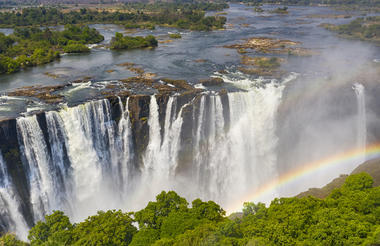
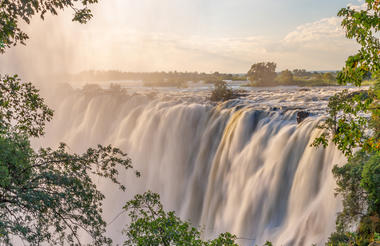
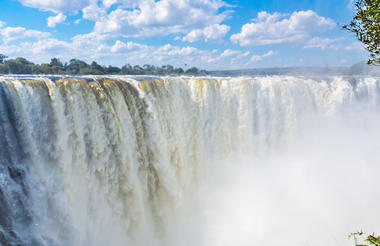
Known locally as Mosi-oa-Tunya—“The Smoke That Thunders”—Victoria Falls is one of the world’s great natural landmarks. Straddling the Zambezi River between Zambia and Zimbabwe, it forms a vast curtain of water that fills the air with mist and sound. The Zimbabwean side grants the most dramatic views, where mist rises like ghostly curtains and rainbows arc through the spray. Measuring about 1,708 metres across, it is regarded as the largest single continuous sheet of falling water on Earth. The adjacent town of Victoria Falls provides a convenient base for exploring the region, with a wide range of activities from scenic flights and microlight trips to white-water rafting, bungee jumping, kayaking, and safaris into Chobe National Park.