



Uganda – The Pearl of Africa
Nicknamed the “Pearl of Africa” by Winston Churchill, Uganda is a land of extraordinary beauty and diversity. From the golden plains of Queen Elizabeth National Park to the misty peaks of the Rwenzori Mountains and the lush, tropical forests of Bwindi, Uganda embodies the heart and soul of Africa. It is a country where dramatic landscapes, warm hospitality, and remarkable wildlife come together to create an unforgettable experience.
Famed for its mountain gorillas, tree-climbing lions, and the source of the Nile, Uganda offers a perfect balance of adventure, serenity, and cultural richness.
Location and Geography
Situated in East Africa, Uganda shares borders with Kenya to the east, Tanzania and Rwanda to the south, South Sudan to the north, and the Democratic Republic of Congo to the west. Its landscape is defined by rolling savannahs, crater lakes, and the mighty Nile River flowing northward from Lake Victoria, the largest lake in Africa.
To the west, the Rwenzori Mountains — the fabled “Mountains of the Moon” — rise dramatically, capped with glaciers and mist. The fertile central and southern regions are covered in dense forests and farmlands, while the northern plains are more open and arid, ideal for wildlife safaris.
Top Attractions and Experiences
Uganda offers travellers a blend of thrilling wildlife encounters, cultural heritage, and scenic adventure:
1. Gorilla Trekking and Forest Adventures
Bwindi Impenetrable National Park and Mgahinga Gorilla National Park are home to more than half of the world’s remaining mountain gorillas. Guided treks through the rainforest provide a once-in-a-lifetime opportunity to observe these majestic creatures up close.
2. Wildlife Safaris
Queen Elizabeth National Park is renowned for its tree-climbing lions, hippos, elephants, and flamingos along the Kazinga Channel.
Murchison Falls National Park offers breathtaking views where the Nile River surges through a narrow gorge, creating one of the world’s most powerful waterfalls.
Kidepo Valley National Park, in the remote north, is one of Africa’s last true wilderness areas — raw, untamed, and spectacular.
3. Adventure and Outdoor Activities
The Nile River at Jinja is Africa’s adrenaline capital, offering white-water rafting, kayaking, bungee jumping, and quad biking.
The country’s crater lakes, volcanic hills, and mountain ranges invite hiking, birdwatching, and nature exploration.
4. Culture and Cities
Kampala, Uganda’s bustling capital, blends modern urban life with deep-rooted tradition. It’s known for its vibrant nightlife, music, and dining.
Visitors can also experience traditional village life, colourful markets, and cultural performances that reflect the country’s over 50 ethnic groups, including the Baganda, Banyankole, Basoga, and Acholi.
People and Culture
Ugandans are celebrated for their warmth and friendliness — a hallmark that has earned the country the title of “Africa’s friendliest nation.” The population is ethnically diverse yet united through a shared love of music, dance, and storytelling.
The influence of traditional African heritage, British colonial history, and modern East African culture has created a dynamic society. Local cuisine is hearty and flavourful, featuring dishes such as matoke (plantains), luwombo (stewed meat or fish), and rolex (a rolled omelette with chapati).
Best Time to Visit
Dry Season (June – September, December – February): Ideal for gorilla trekking, safaris, and outdoor activities. Wildlife is easiest to spot during these months.
Wet Season (March – May, October – November): The landscape turns lush and green, birdwatching is at its best, and parks are quieter with fewer visitors.
Why Visit Uganda
Uganda is a destination of rare authenticity — wild, welcoming, and deeply soulful. Whether tracking gorillas in the misty forests of Bwindi, cruising the Nile at sunset, or exploring the savannahs of Queen Elizabeth National Park, every journey is filled with awe and wonder.
With its mix of adventure, wildlife, and cultural richness, Uganda stands as one of Africa’s most rewarding and unspoiled travel destinations — a true Pearl of Africa.
Key Highlights
Bwindi Impenetrable Forest – Home to half the world’s mountain gorillas
Queen Elizabeth National Park – Tree-climbing lions and flamingo-filled lakes
Murchison Falls – The Nile’s most dramatic and powerful waterfall
Jinja – Source of the Nile and Africa’s adventure capital
Rwenzori Mountains – Snow-capped “Mountains of the Moon”
Warm, Welcoming People – Over 50 ethnic groups united in hospitality
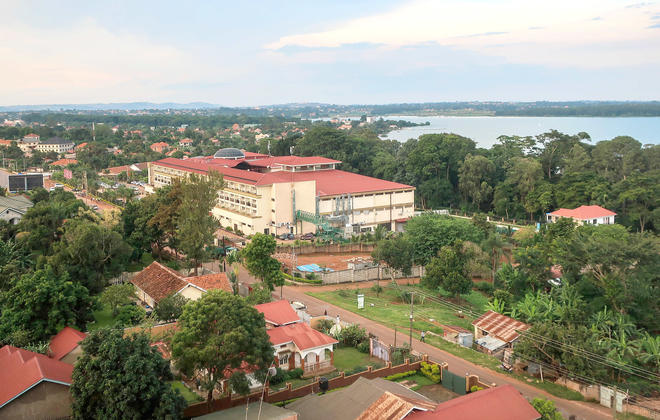
Entebbe – Uganda’s Gateway on Lake Victoria
Nestled on the shores of Lake Victoria, Entebbe lies just 40 kilometres south of Kampala, serving as both Uganda’s main international gateway and a tranquil introduction to the country’s natural beauty.
This charming lakeside town blends colonial-era ambience, lush tropical scenery, and rich biodiversity, making it an ideal base for visitors arriving or departing on their Ugandan adventure.
Location – Central Uganda
Entebbe is located on a picturesque peninsula along Lake Victoria, Africa’s largest freshwater lake.
Home to Entebbe International Airport, Uganda’s primary point of entry, the town enjoys a peaceful setting with wide, tree-lined streets, gardens, and gentle lake breezes that create a relaxed atmosphere — a striking contrast to the energy of nearby Kampala.
Unique Features
Lakeside Charm: Entebbe’s waterfront location offers stunning lake views, sandy beaches, and serene sunsets. The town’s proximity to Lake Victoria allows visitors to enjoy a range of water-based activities including boat cruises, fishing, and island excursions.
Botanical Heritage: The Entebbe Botanical Gardens, established in 1898, are among the oldest in Africa. Spanning 40 hectares, they showcase a variety of plant species — from indigenous tropical forest to ornamental gardens — and serve as a haven for birds, butterflies, and primates.
Wildlife & Nature: The area around Entebbe supports rich biodiversity, from the black-and-white colobus monkeys in the gardens to the shoebill storks of the nearby Mabamba Swamp, one of the world’s best birding sites.
Peaceful Gateway City: Unlike the bustling capital, Entebbe offers a calm lakeside retreat with quality hotels, restaurants, and cultural sites — perfect for travellers before or after safari adventures.
Activities in the Area
Entebbe offers a wide variety of activities combining nature, wildlife, and culture:
Entebbe Botanical Gardens: Stroll through lush landscapes home to palm nut vultures, giant kingfishers, black-and-white colobus monkeys, and an array of tropical flora.
Mabamba Swamp Birding Excursion: Just west of town lies the Mabamba Wetland, a designated Ramsar Site and prime habitat for the rare shoebill stork. Explore by dugout canoe for an unforgettable birdwatching experience.
Ngamba Island Chimpanzee Sanctuary: Visit this 40-hectare island on Lake Victoria, home to over 50 orphaned chimpanzees cared for by the Jane Goodall Institute. Watch them feed, play, and roam freely in a protected environment.
Lake Victoria Cruises & Fishing Trips: Enjoy scenic sunset cruises, fishing excursions for Nile perch, or relaxing boat rides along the lake’s edge.
Uganda Wildlife Conservation Education Centre (UWEC): Formerly known as the Entebbe Zoo, UWEC is a rescue and rehabilitation centre for native wildlife, providing educational experiences for visitors.
Cultural & Historical Tours: Explore colonial landmarks, craft markets, and local fishing villages to get a taste of Entebbe’s heritage and daily life.
Travel Information
How to Get There
By Air: Entebbe International Airport is Uganda’s main aviation hub, serving direct flights from major cities across Africa, the Middle East, Europe, and beyond.
By Road: Entebbe is a scenic 45-minute drive (40 km) from Kampala, connected via the Entebbe Expressway, a modern toll highway that ensures smooth access to the city.
Travel Distances
Kampala → Entebbe: ~45 minutes (40 km)
Entebbe → Jinja: ~2.5 hours (120 km)
Entebbe → Lake Mburo National Park: ~4 hours (250 km)
Entebbe → Murchison Falls National Park: ~6 hours (305 km)
Entebbe → Queen Elizabeth National Park: ~8 hours (410 km)
Best Time to Visit
Dry Season (June – September & December – February): Ideal for birdwatching, chimpanzee excursions, and lake cruises with minimal rainfall.
Wet Season (March – May & October – November): The gardens and wetlands are lush and vibrant, with peak bird activity and fewer crowds.
Why Include Entebbe in Your African Safari Itinerary
Entebbe is the perfect arrival or departure point for any Uganda safari — offering comfort, relaxation, and a gentle introduction to the country’s natural splendour.
Its combination of wildlife experiences, botanical beauty, and accessibility makes it more than just a transit stop — it’s a destination in itself.
Whether it’s a birding excursion at Mabamba, a chimpanzee encounter at Ngamba Island, or a sunset cruise on Lake Victoria, Entebbe provides a serene and scenic start or finish to your East African adventure.
Key Attractions
Lake Victoria – Africa’s largest freshwater lake
Entebbe Botanical Gardens – established in 1898, a paradise for flora, birds, and primates
Mabamba Swamp – Ramsar Wetland and shoebill hotspot
Ngamba Island Chimpanzee Sanctuary – protected home for rescued chimps
Uganda Wildlife Education Centre (UWEC) – conservation and education hub
Beaches & Cruises – relaxing lakeside escapes
Cultural Markets & Fishing Villages – local life and craft shopping


Mgahinga Gorilla National Park – Where Gold Meets Silver
Mgahinga Gorilla National Park, located in southwestern Uganda’s Kisoro District, is a breathtaking wilderness sanctuary that protects the endangered mountain gorillas and the rare golden monkeys of the Virunga Mountains.
Forming part of the larger Virunga Conservation Area, which straddles Uganda, Rwanda, and the Democratic Republic of Congo, this compact park is a landscape of towering volcanoes, dense montane forest, and rich biodiversity — a place where “Gold Meets Silver.”
Covering just 33.7 square kilometres, Mgahinga is Uganda’s smallest national park, yet it offers some of the most dramatic scenery and rewarding wildlife encounters in East Africa.
Location – Uganda
Mgahinga Gorilla National Park lies in Kisoro District, about 510 kilometres (8–9 hours) southwest of Kampala and near the borders of Rwanda and the DRC.
The park forms part of the Virunga Range, a chain of eight volcanic mountains shared by the three countries. Within the Ugandan section rise three extinct volcanic cones — Mount Muhavura (4,127 m), Mount Gahinga (3,474 m), and Mount Sabyinyo (3,669 m) — each offering spectacular hiking opportunities and panoramic views across the Rift Valley.
Unique Features
Mountain Gorillas: Mgahinga was established primarily to protect the endangered mountain gorilla, which roams freely between Uganda, Rwanda, and the Congo. Visitors can track the Nyakagezi family, the park’s habituated gorilla group known for its playful silverbacks.
Golden Monkeys: The park is also one of the few places on Earth where visitors can see the endangered golden monkey, a vibrant and agile primate endemic to the Virunga volcanic slopes.
The Virunga Volcanoes: The three extinct volcanoes — Muhavura, Gahinga, and Sabyinyo — dominate the landscape and offer exhilarating treks through bamboo forest and afro-alpine vegetation.
Shared Ecosystem:Mgahinga forms part of the transboundary Virunga Conservation Area, which includes Rwanda’s Volcanoes National Park and Congo’s Virunga National Park, ensuring critical protection for the region’s rare species.
Rich Biodiversity: Beyond gorillas and monkeys, the park hosts buffalo, elephants, bushbucks, and over 180 bird species, including Rwenzori turaco and white-starred robin.
Activities in the Area
Mgahinga Gorilla National Park offers a range of thrilling adventures and cultural experiences:
Gorilla Trekking: Track the Nyakagezi gorilla group through thick montane forest and spend an unforgettable hour observing their behaviour in the wild.
Golden Monkey Tracking: Follow experienced guides in search of these colourful and rare primates found only in the Virunga range.
Volcano Hiking: Climb one of the park’s three majestic volcanoes:
Mount Muhavura (4,127 m): “The Guide” — challenging trek with sweeping views into Rwanda and the Congo.
Mount Sabyinyo (3,669 m): “Old Man’s Teeth” — stand in three countries at once on its summit.
Mount Gahinga (3,474 m): Easier ascent through scenic bamboo forest.
Birdwatching: Spot Albertine Rift endemics such as Rwenzori batis, dusky crimsonwing, and olive pigeon.
Batwa Cultural Trail: Walk with the Batwa Pygmies, the forest’s original inhabitants, as they share ancient traditions, hunting techniques, and spiritual sites.
Scenic Nature Walks: Explore the Gorge Trail or the Sabinyo Gorge, with views of lush vegetation, forest streams, and wildlife.
Travel Information
How to Get There
By Road: Approximately 510 km (8–9 hours) from Kampala via Kabale and Kisoro; the park is also easily accessed from Bwindi Impenetrable Forest (3–4 hours’ drive).
By Air: Scheduled and charter flights from Entebbe or Kajjansi Airstrip land at Kisoro Airstrip, just 14 km (45 minutes) from the park.
Travel Distances
Kampala → Mgahinga Gorilla National Park: ~8–9 hours (510 km)
Entebbe → Mgahinga (by air): ~1.5 hours
Mgahinga → Bwindi Impenetrable Forest: ~3–4 hours (140 km)
Mgahinga → Lake Bunyonyi: ~2 hours (80 km)
Mgahinga → Volcanoes National Park (Rwanda): ~1 hour (30 km)
Best Time to Visit
Dry Season (June – September & December – February): Best for gorilla and golden monkey trekking — trails are drier and easier to hike.
Wet Season (March – May & October – November): The forest is lush and green, with fewer visitors and excellent birdwatching conditions.
Why Include Mgahinga Gorilla National Park in Your African Safari Itinerary
Mgahinga Gorilla National Park is a rare jewel — a compact, scenic, and peaceful destination that combines mountain gorilla encounters, volcano trekking, and golden monkey tracking in one place.
Its dramatic volcanic backdrop and cultural richness offer an unforgettable complement to Bwindi Impenetrable Forest and Rwanda’s Volcanoes National Park, making it an essential stop on any southwestern Uganda safari circuit.
Key Attractions
Mountain Gorilla Trekking – home to the Nyakagezi gorilla family
Golden Monkey Tracking – rare primates of the Virunga slopes
Volcano Hiking – ascend Muhavura, Gahinga, or Sabyinyo peaks
Batwa Cultural Trail – authentic forest heritage experience
Birdwatching – Albertine Rift endemics and montane species
Scenic Forest Walks – lush trails through bamboo and montane forest


Bwindi Impenetrable Forest National Park – The Realm of the Mountain Gorillas
Bwindi Impenetrable Forest National Park is one of Africa’s most remarkable natural sanctuaries — a mystical world of mist-shrouded hills, towering trees, and rare wildlife.
Located in southwestern Uganda, this ancient rainforest is believed to be over 25,000 years old, making it one of the continent’s oldest ecosystems.
Renowned globally for its exceptional mountain gorilla trekking, Bwindi shelters half of the world’s remaining mountain gorillas, offering one of the most intimate and unforgettable wildlife encounters on Earth.
Location – Uganda
Nestled along the Albertine Rift Valley escarpment, Bwindi lies at the junction of mountain and lowland forest, creating an extraordinary diversity of habitats within its 331 square kilometres.
The park is approximately 460 kilometres (8–9 hours’ drive) southwest of Kampala, bordering Democratic Republic of Congo’s Virunga National Park.
The terrain is rugged and dramatic — a labyrinth of steep ridges, deep valleys, cascading waterfalls, and sparkling streams, all cloaked in dense tropical vegetation that truly defines the word impenetrable.
Unique Features
Mountain Gorilla Encounters: Bwindi is home to around 20 habituated gorilla families, offering safe, guided trekking experiences that bring visitors face-to-face with these gentle giants in their natural habitat.
Africa’s Oldest Rainforest: Estimated to be over 25,000 years old, the forest predates the last Ice Age, surviving as a biodiversity refuge through millennia of climatic change.
UNESCO World Heritage Site: Recognised for both its biological richness and breathtaking natural beauty, Bwindi boasts more than 400 plant species and supports an exceptional range of mammals, birds, and butterflies.
Biodiversity Hotspot: The park harbours over 120 mammal species, 340 bird species, and 200 butterfly species, including several Albertine Rift endemics found nowhere else on earth.
Cultural Encounters: Surrounding communities include the Batwa Pygmies, who share fascinating insights into traditional forest life, medicine, and music.
Activities in the Area
Bwindi Impenetrable Forest offers an unforgettable mix of adventure, nature, and culture:
Gorilla Trekking: Follow experienced rangers through dense forest to observe mountain gorillas up close — a profound and moving experience.
Birdwatching: With over 340 bird species, including African green broadbill, grauer’s rush warbler, and black bee-eater, Bwindi is one of Africa’s finest birding destinations.
Nature Walks & Waterfalls: Explore scenic forest trails leading to Munyanga Falls, Rushura Hill, and the Ivi River Trail, alive with butterflies, primates, and exotic flora.
Cultural Visits: Visit Batwa community villages for traditional performances, storytelling, and insights into their ancient hunter-gatherer lifestyle.
Hiking & Photography: Trek through rugged terrain with breathtaking viewpoints across the forest canopy and surrounding mountains.
Excursions to the Virunga Volcanoes: Extend your adventure to the nearby Virunga Volcanoes, three of which remain active — offering dramatic scenery and outstanding photographic opportunities.
Travel Information
How to Get There
By Road: Approximately 460 km (8–9 hours) southwest of Kampala, accessible via Kabale or Kisoro. Roads are scenic but winding, passing through beautiful terraced hills.
By Air: Scheduled flights operate from Entebbe or Kajjansi Airstrip to Kihihi or Kisoro Airstrips, followed by a 1–2-hour drive to the park’s various trailheads (Buhoma, Ruhija, Nkuringo, or Rushaga).
Travel Distances
Entebbe → Bwindi: ~1.5 hours by air / 8–9 hours by road
Bwindi → Queen Elizabeth National Park: ~4–5 hours
Bwindi → Lake Mburo National Park: ~6 hours
Bwindi → Kigali (Rwanda): ~4–5 hours via Cyanika or Gatuna border crossings
Best Time to Visit
Dry Season (June – September & December – February): Ideal for gorilla trekking, as trails are drier and easier to navigate.
Wet Season (March – May & October – November): The forest is lush and vibrant, with excellent birdwatching and fewer visitors.
Why Include Bwindi Impenetrable Forest in Your African Safari Itinerary
A visit to Bwindi Impenetrable Forest is a life-changing experience — combining close encounters with endangered mountain gorillas, untouched rainforest beauty, and a deep sense of tranquillity found nowhere else in Africa.
Whether you’re trekking gorillas, birdwatching, or exploring cultural traditions, Bwindi offers the perfect balance of wild adventure and natural wonder.
Its proximity to Queen Elizabeth National Park and Rwanda’s Volcanoes National Park makes it an essential inclusion on any East African safari circuit.
Key Attractions
Mountain Gorilla Trekking – Half of the world’s gorillas in one forest
Africa’s Oldest Rainforest – A UNESCO World Heritage treasure
Birdwatching & Butterflies – Over 340 bird and 200 butterfly species
Batwa Cultural Encounters – Authentic community experiences
Scenic Trails & Waterfalls – Lush forest walks and viewpoints
Virunga Volcano Excursions – Breathtaking mountain landscapes


