


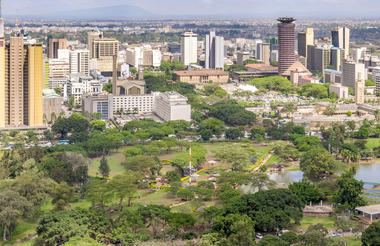
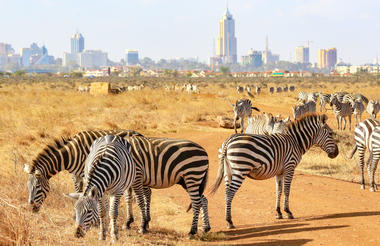
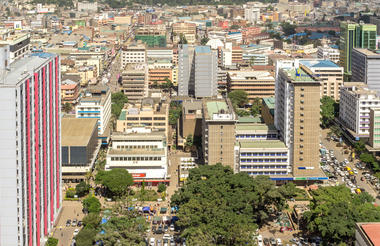
Widely regarded as one of East Africa’s most dynamic and cosmopolitan cities, Nairobi sits along the Nairobi River and serves as Kenya’s capital and largest urban centre, acting as a major gateway for safari travel across the country. The city features a growing café culture, active nightlife, and cultural landmarks such as the National Museum of Kenya and the Karen Blixen Museum. Just outside the city centre lies Nairobi National Park, where wildlife, including lions, giraffes, and buffalo, roam against a backdrop of skyscrapers — one of the rare cases in the world where a major national park borders a capital city. Visitors also often stop at the David Sheldrick Wildlife Trust elephant orphanage for close encounters with rescued calves.
Situated in southwestern Kenya, the Masai Mara encompasses the celebrated national reserve and its surrounding community conservancies, forming part of the Greater Serengeti–Mara ecosystem. Rolling savannahs, dotted with acacia trees and crossed by the Mara River, create a rich and varied landscape. Vast herds of wildebeest, zebra, and antelope graze across the plains, while elephants, giraffes, and buffalo roam freely. The river’s lush banks support hippos and crocodiles and sustain wildlife throughout the dry season. Predators are abundant, with lions, leopards, cheetahs, and hyenas regularly seen in action. Each year, the spectacular Great Migration transforms the region, as millions of wildebeest and zebra traverse the plains. Visitors can soak up the breathtaking scenery, diverse wildlife, and Maasai cultural heritage in one of Africa’s most iconic safari destinations.
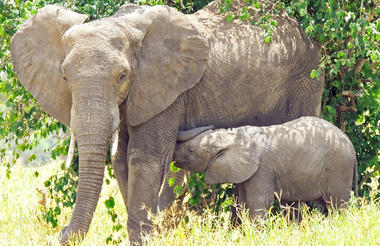
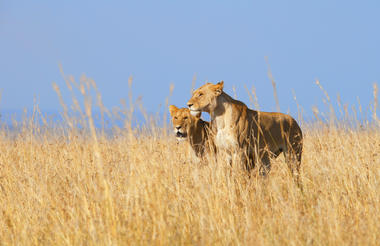
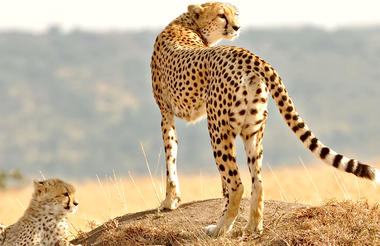
Situated in Kenya’s Great Rift Valley, around 90 kilometres north-west of Nairobi, Naivasha is a lively town that serves as the gateway to Lake Naivasha, one of the country's most important freshwater lakes. The surrounding Lake Naivasha basin is a popular base for exploring volcanic landscapes, nature reserves and national parks. Visitors can take boat trips across the water to spot hippos and a wide variety of birdlife, walk among free-roaming giraffes, zebras and antelope on Crescent Island, or explore the dramatic gorges and cliffs of Hell’s Gate National Park on foot or by bicycle. Surrounded by acacia woodland and Rift Valley escarpments, the region offers a distinctive blend of outdoor adventure, wildlife encounters and natural beauty.


Resting at the foot of Mount Meru, the city of Arusha is known as the gateway to northern Tanzania's safari circuit. It serves as an excellent base from which to explore the surrounding region, including Mount Kilimanjaro, Lake Manyara National Park, Tarangire National Park and the Ngorongoro Conservation Area. Thanks to its elevation, Arusha enjoys a pleasant climate with moderate temperatures throughout the year. Visitors can explore the wildlife-rich Serengeti and Arusha National Parks or take on the challenge of climbing Mount Meru, Africa's fifth-highest mountain.
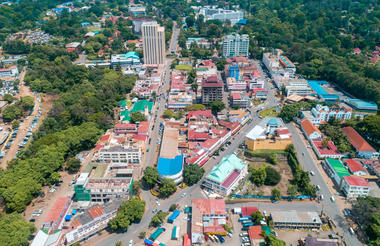
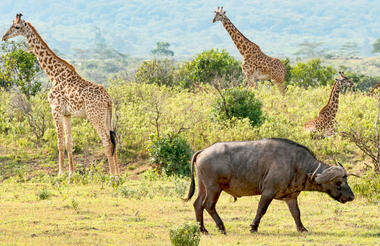
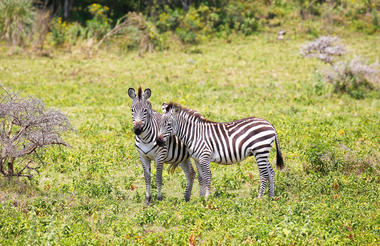
The Seronera region, in the central Serengeti, is set directly on the Great Migration route and offers excellent viewing of this incredible annual phenomenon, when countless wildebeest flood the area and move across the plains. While migratory game populations fluctuate seasonally, Seronera is still a wildlife hotspot at other times of the year, sheltering the Big Five, among many other species. A number of small campsites provide accommodation and visitors can enjoy hot air balloon trips and walking safaris as well as guided game drives.


Not to be confused with the Kenyan lake of the same name set only a hundred kilomtres away, the Tanzanian Lake Magadi is an exquisite soda lake in the Ngororongo crater, named the Swahili word for salt. This is a wonderful destination for nature photographers, a scene that changes exquisitely through the seasons, moving through lush greens into striking oranges and bright pinks. Along with the changes come captivating, changing groups of animals including rhino, eland and lion, as well as golden jackals who come to hunt the flamingos. Spread over 11.2 square kilometres, the lake cultivates a unique ecosystem with its blue-green algae, which nourishes the plants and small creatures here. The surrounding crater is filled with incredible other natural attractions and a much wider variety of wildlife.
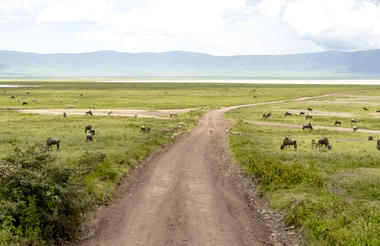
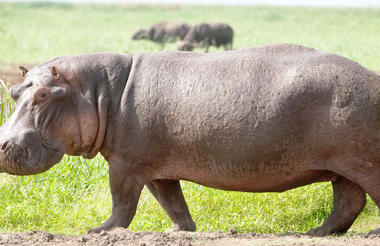

Bordering the Lake Manyara National Park in the Arusha Region of Tanzania, the village of Mto wa Mbu lies the East African Rift Valley. It serves as a convenient stopover for tourists visiting the Serengeti National Park, Ngorongoro Crater, and Tarangire National Park. Visitors can look forward to an authentic cultural experience which could include visiting a traditional home, sampling banana beer, enjoying a delicious Tanzanian meal, and browsing the weekly Maasai Market. The village is set within two wildlife corridors and a variety of animals can be spotted in the area. Look out for giraffe, elephant, hippo, wildebeest, baboon, zebra, and monkey. Other popular activities include walking, hiking, and biking tours.


