


Kigali sits among rolling hills at the heart of East Africa, offering a remarkably clean, green and orderly urban landscape. The city blends contemporary development with a strong cultural identity, where polished avenues give way to lively neighbourhood markets and hillside communities. Visitors can explore the Kigali Genocide Memorial for a powerful insight into the country’s history, browse vibrant crafts at Kimironko Market, or enjoy a growing café culture shaped by locally grown coffee. Panoramic viewpoints reveal soft, undulating hills under wide skies, while the hum of motorbikes and the scent of roasted coffee define the city’s everyday atmosphere. Kigali also serves as a gateway to Rwanda’s national parks and unforgettable mountain gorilla encounters, making it both a meaningful stop and a base for wider exploration.

Situated in Uganda, Lake Mutanda is a small freshwater lake sandwiched between the Bwindi Impenetrable Forest and the Mgahinga Gorilla National Park in the Virunga Mountains. Set against a misty mountain backdrop, the picturesque lake is dotted with islands, and the surrounding landscape is scattered with wetland ecosystems and lakeside forests stretching up the mountain slopes which provide a safe habitat for the endangered mountain gorilla. Visitors can look forward to gorilla tracking, bird watching, lake lounging, volcano hiking, and paddling in a traditional dugout canoe.
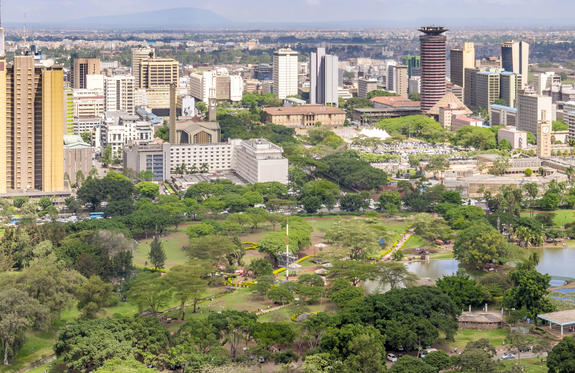
Widely regarded as one of East Africa’s most dynamic and cosmopolitan cities, Nairobi sits along the Nairobi River and serves as Kenya’s capital and largest urban centre, acting as a major gateway for safari travel across the country. The city features a growing café culture, active nightlife, and cultural landmarks such as the National Museum of Kenya and the Karen Blixen Museum. Just outside the city centre lies Nairobi National Park, where wildlife, including lions, giraffes, and buffalo, roam against a backdrop of skyscrapers — one of the rare cases in the world where a major national park borders a capital city. Visitors also often stop at the David Sheldrick Wildlife Trust elephant orphanage for close encounters with rescued calves.

Situated in southwestern Kenya, the Masai Mara encompasses the celebrated national reserve and its surrounding community conservancies, forming part of the Greater Serengeti–Mara ecosystem. Rolling savannahs, dotted with acacia trees and crossed by the Mara River, create a rich and varied landscape. Vast herds of wildebeest, zebra, and antelope graze across the plains, while elephants, giraffes, and buffalo roam freely. The river’s lush banks support hippos and crocodiles and sustain wildlife throughout the dry season. Predators are abundant, with lions, leopards, cheetahs, and hyenas regularly seen in action. Each year, the spectacular Great Migration transforms the region, as millions of wildebeest and zebra traverse the plains. Visitors can soak up the breathtaking scenery, diverse wildlife, and Maasai cultural heritage in one of Africa’s most iconic safari destinations.


