


Siem Reap is the gateway to the temples of Angkor, but it’s much more than a base for sightseeing. This lively, welcoming town combines ancient history, good food, boutique hotels, craft shops, galleries and a growing creative scene, making it one of Cambodia’s most rewarding places to spend several days.
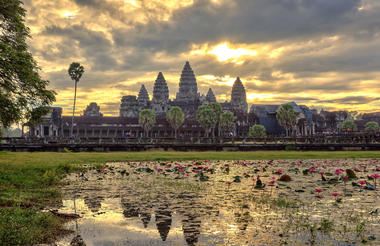
The great highlight is, of course, Angkor Archaeological Park, home to some of the most extraordinary temple sites in Asia. Angkor Wat is the icon, especially beautiful at sunrise, while Bayon is unforgettable for its serene carved faces and Ta Prohm for the way trees and ancient stone seem to have grown together. Beyond these famous sites, quieter temples such as Preah Khan, Banteay Srei and Beng Mealea add depth and variety, especially with a knowledgeable guide.
Back in town, Siem Reap has a relaxed, easy-going feel. The riverside is pleasant for a wander, while the Old Market, Made in Cambodia Market and small independent boutiques are good for local crafts, textiles and gifts. In the evening, the town comes alive with restaurants, cocktail bars and street food stalls, but it’s still easy to find quieter corners away from the bustle.
Siem Reap is also a good place for authentic local experiences, from Khmer cooking classes and countryside cycling to visits with artisans, village workshops and floating communities on Tonlé Sap.
Most travellers should allow at least three nights, with four giving a better pace. The temples are magnificent, but Siem Reap’s real appeal is the way it combines Cambodia’s ancient past with warm, creative and very human present-day life.
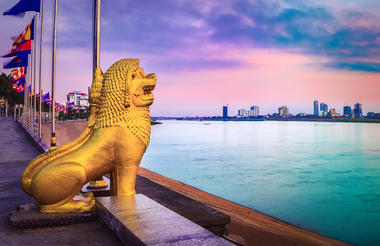
Phnom Penh is Cambodia’s capital and its most important city, set at the meeting point of the Mekong, Tonlé Sap and Bassac rivers. It’s a city of contrasts, where royal palaces, saffron-robed monks, busy markets, French colonial buildings, modern cafés and riverside life all sit alongside the country’s more difficult recent history.
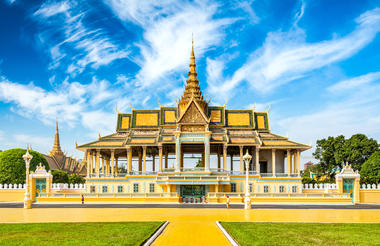
The city is best explored with time and context. The Royal Palace and Silver Pagoda give a glimpse of Cambodia’s royal traditions, with elegant Khmer architecture, gilded roofs and peaceful courtyards in the heart of the city. Nearby, the National Museum of Cambodia is one of the best places to understand the artistic and spiritual heritage of the Khmer world, especially before or after visiting Angkor.
Phnom Penh also asks visitors to engage with Cambodia’s 20th-century history. The Tuol Sleng Genocide Museum and Choeung Ek Killing Fields are deeply sobering, but important for understanding the resilience of the country and its people. These visits are best done with a thoughtful guide and enough time afterwards to pause and reflect.
For a lighter side of the city, wander the riverside promenade, explore Central Market or Russian Market, or stop at one of the city’s growing number of independent cafés, galleries and social enterprise shops. Phnom Penh is also one of the best places in Cambodia for food, from classic Khmer dishes to contemporary restaurants and lively street stalls.
Phnom Penh works well at the start or end of a Cambodia itinerary. It’s busy and sometimes confronting, but it’s also warm, engaging and essential to understanding Cambodia properly.
Oudong was Cambodia’s royal capital for more than two centuries before the court moved to Phnom Penh in the 19th century. Set around 40 kilometres northwest of the capital, it makes an interesting and atmospheric excursion for travellers wanting to understand more of Cambodia’s royal and Buddhist history without travelling far from the city.
The main focus is Phnom Oudong, a ridge of low hills topped with stupas, shrines and pagodas. A long staircase leads up from the base, passing local vendors and pilgrims before opening onto wide views across rice fields, sugar palms and village rooftops. The climb is steady rather than difficult, and the reward is both the scenery and the quiet sense of history at the top.
The hill is dotted with memorials and royal stupas containing the remains of former kings. Some structures are beautifully restored, while others feel older and more weathered, giving the site a layered, lived-in atmosphere. On weekends and Buddhist holy days it can be lively with Cambodian families and worshippers, while weekdays tend to be quieter.
Oudong is often visited as a half-day trip from Phnom Penh, sometimes combined with a stop at a local village, market or silversmithing workshop along the way. It’s best to visit in the morning or late afternoon, when the heat is gentler and the light over the countryside is softer.
Oudong suits travellers who enjoy history, gentle walking and places where local devotion still feels very present. It’s not as grand as Angkor, but it gives a valuable glimpse into Cambodia’s royal past and spiritual life.


Kep Province is Cambodia’s smallest province, set on the south coast close to the Vietnamese border. It has a calm, old-fashioned charm, with sea views, forested hills, French colonial remnants and a slower rhythm that feels quite different from the busier beach areas around Sihanoukville.
The main town, Kep, was once a favourite seaside retreat for Cambodia’s elite, and traces of that past remain in its weathered villas and quiet coastal roads. Today it’s a gentle place to pause, especially for travellers who enjoy fresh seafood, soft sea breezes and understated coastal scenery rather than a polished resort scene.
The province is especially known for the Kep Crab Market, where baskets of blue swimmer crabs are hauled in from the water and cooked nearby with fragrant Kampot pepper. It’s one of the most enjoyable food experiences on Cambodia’s coast, particularly at lunchtime or late afternoon when the market is at its liveliest.
Nearby Kep National Park offers easy walking trails through forested hills, with viewpoints across the coast, offshore islands and the surrounding countryside. For a simple beach excursion, Koh Tonsay, often called Rabbit Island, can be reached by local boat and offers a rustic, low-key escape with hammocks, seafood shacks and warm shallow water.
Kep Province works well after Kampot or as a quiet coastal extension after Phnom Penh and Siem Reap. It’s not a destination for nightlife or large-scale beach resorts, but for good seafood, gentle walks and a nostalgic seaside atmosphere, Kep has a quiet appeal that lingers.


