Located in south-western Africa, Namibia boasts a well-developed infrastructure, some of the best tourist facilities in Africa, and an impressive list of breath-taking natural wonders. Visitors can explore the capital of Windhoek and discover the lovely coastal town of Swakopmund boasting remnants of the country’s German influence, reflected in the architecture, culture, cuisine and the annual Oktoberfest celebrations. To appreciate this extraordinary country appropriately, you will have to venture out of the cities to explore the remarkable natural landscapes Namibia has to offer. These include: the impressive Fish River Canyon; the vast Etosha National Park teeming with abundant wildlife, such as lions, desert-adapted elephants and the Hartmann's Mountain Zebra; the hauntingly beautiful Kalahari Desert; and of course the Namib Desert stretching for over 2000 km along the magnificent Atlantic Coast. Namibia is an ideal destination for travellers seeking an unforgettable African experience in a uniquely beautiful untamed wilderness.
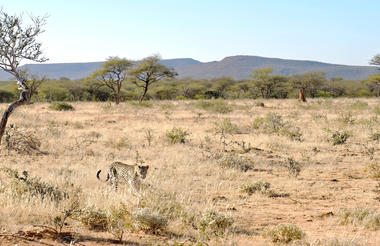
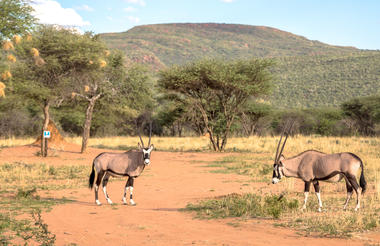
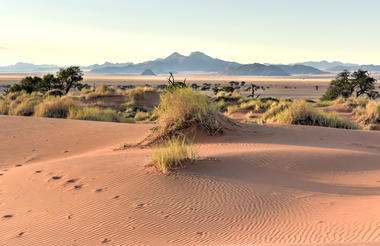
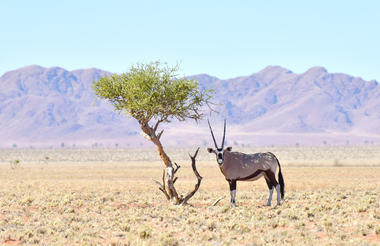
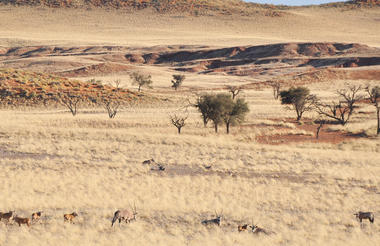
Spreading across Botswana, South Africa and Namibia, the Kalahari meaning 'the great thirst' is an exceptionally beautiful living desert. The landscape is characterised by a large semi-arid sandy savannah draped over a gently rolling inland sea of sand covering most of Botswana and large parts of Namibia and South Africa. It is also the last bastion of the indigenous San people with the modern world having enveloped all the other areas they once roamed. The Namibian portion is made up of red sands covered in thin, wispy, mostly golden grass and dotted with acacia trees and wide-ranging wildlife including gemsbok, impala, jackals and cheetah.

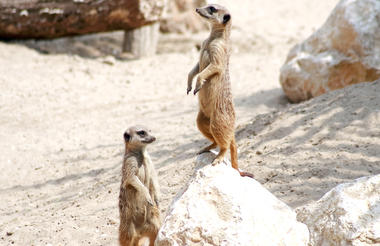

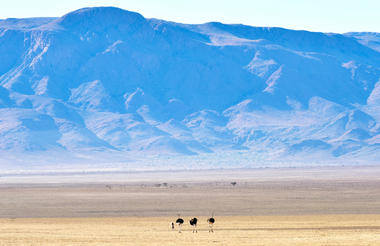
Spanning more than 172,000 hectares and encompassing several distinct desert ecosystems, the NamibRand Nature Reserve in southern Namibia is one of the largest private nature reserves in Southern Africa. Founded to conserve the unique ecosystem and biodiversity of the Namib Desert, the reserve's mix of dunes, mountains, rocky outcrops, sandy flats, and gravel plains provides habitats for a diversity of mammals, including hyenas, jackals, foxes, antelopes, and various wild cats. The reserve is also home to numerous bird species, reptiles, insects, and amphibians, alongside an array of plant species. Discover the mysterious fairy circles, enigmatic bare patches in the desert landscape whose origins remain the subject of scientific debate, or enjoy a night of sublime stargazing; as Africa's first International Dark Sky Reserve, it is one of the least light-polluted areas in the world.
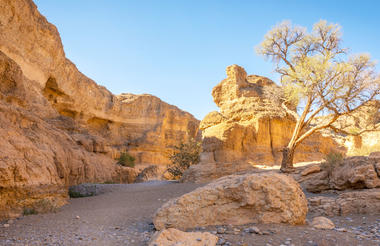
As there is no accommodation at Sossusvlei, visitors to this desert wilderness can stay at Sesriem, 65 kilometres away, where camps and lodges serve as a base from which to explore the dunes. Sesriem Canyon, a deep chasm carved through the rocks by water, is a striking natural feature of the area that is best explored on foot. Stony walls rise up sharply on both sides of the canyon, while birds roost in its crags and lizards dart along the ledges. The canyon’s name was coined when early settlers used it as a water source, using six lengths of leather (‘ses riem – six thongs) tied together to lower buckets into the water at the base of canyon.)
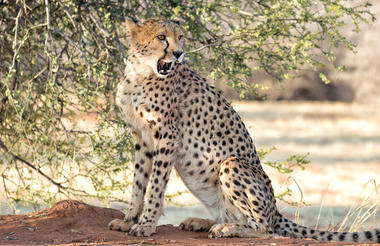
Situated in the Khomas region of Central Namibia, the desert town of Solitaire serves as an oasis in the Namib Desert. The town provides an important stop on the way to the ancient dunes of Sossusvlei, allowing travellers to stock up on essentials as they make their way further into the wilderness. Solitaire also has a small bar and is renowned for its famous apple pie - said to be the best in the country. Enjoy a scenic sundowner with views of the spectacular Namib desert, hike and bike through the unspoilt natural surroundings, or visit the wonderful local Cheetah Sanctuary.
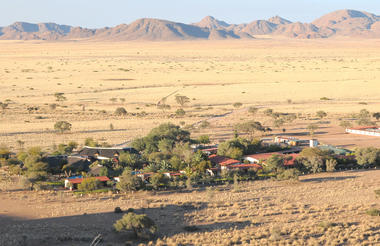
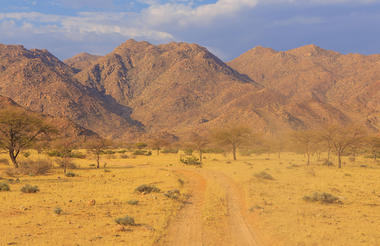
Set between the rolling dunes of the Namib Desert and the icy Atlantic coastline, Swakopmund is a relaxed seaside town in western Namibia known for its German colonial architecture, cool coastal climate, and adventurous spirit. Palm-lined streets, historic buildings, and ocean fog create an atmosphere unlike anywhere else in the country. Travellers visit for desert activities such as quad biking, sandboarding, and scenic flights over vast dunes and shipwreck-strewn shores. Cafés, bakeries, and small museums add to the town's laid-back charm, though the Atlantic waters are brisk rather than tropical. With its striking desert-meets-ocean setting and mix of adventure and history, Swakopmund is one of Namibia's most distinctive destinations.

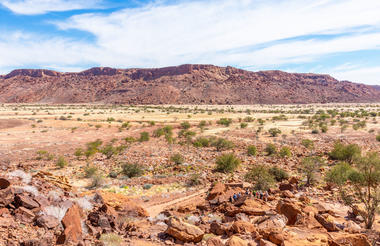
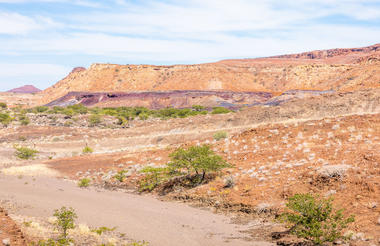
Situated in the Kunene Region of northwestern Namibia, on the edge of the Huab Valley, Twyfelfontein is a remarkable archaeological and geological site renowned for its exceptional collection of ancient rock engravings. Designated a UNESCO World Heritage Site, it is home to more than 2000 petroglyphs created over thousands of years by hunter-gatherer communities, making it one of Africa's most significant concentrations of prehistoric rock art. Guided walks lead visitors through dramatic sandstone outcrops to view engravings depicting wildlife, human figures and symbolic motifs, while the surrounding desert landscape is known for its striking scenery and adapted wildlife, including desert elephants that occasionally roam the region. Nearby attractions include the Organ Pipes, Burnt Mountain and the Damara Living Museum.

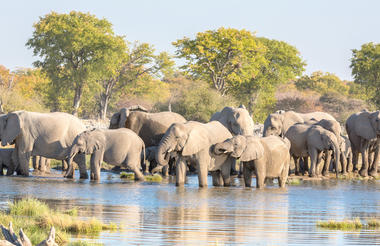
Situated in north-western Namibia, the Etosha National Park offers a premier game viewing experience. The park’s diverse vegetation ranges from dense bush to open plains attracting a variety of wildlife. Located in the heart of the park is the Etosha Pan - a shallow depression that covers an area of 5000 square kilometres. Dry and shimmering for most of the year, the pans fill up with water after seasonal rains, making it the perfect habitat for wildlife. In the dry season, the wildlife is attracted to the perennial springs and waterholes that makes for excellent game viewing. Visitors can look forward to excellent game viewing including a variety of large mammals such as lion, elephant, leopard, rhino, zebra, giraffe, a diversity of birdlife such as flamingos and pelicans.
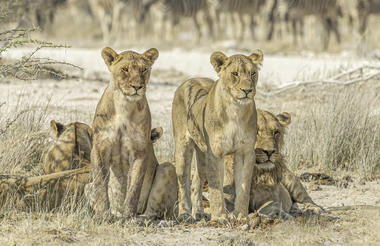

Situated east of Etosha, bordering Fisher's Pan, Onguma Game Reserve is one of Namibia's best-kept secrets. The reserve offers visitors the opportunity to experience Africa in all her beauty and diversity. Onguma Game Reserve features over 35 480 hectares of protected land scattered with a variety of wildlife including plains game, black rhino, kudu, giraffe, zebra, lion, cheetah, leopard and more than 300 bird species. The seasonal rains attract thousands of migrating birds to the Fisher’s Pan wetland area. The neighbouring Etosha National Park is home to a rich array of wildlife, including 4 of the Big 5. Visitors can enjoy game drives, guided walks and rhino research drives within the private reserve as well as wildlife safaris into Etosha National Park to view abundant game in the largest national park in Namibia.


Situated between Namibia’s capital city of Windhoek and the renowned Etosha National Park, Okonjima Nature Reserve is a 22,000-hectare wilderness sanctuary celebrated for its conservation efforts and exceptional wildlife experiences. The reserve is home to the renowned AfriCAT Foundation, which focuses on the protection and rehabilitation of Namibia’s carnivores, particularly leopards, cheetahs, and other threatened species. Set against a backdrop of rolling plains, rocky outcrops, and acacia woodland, Okonjima offers visitors the opportunity to gain unique insight into conservation initiatives while enjoying outstanding game viewing. Activities include guided carnivore tracking excursions, leopard-spotting safaris, off-road night drives, birdwatching, and cultural experiences along the Bushmen Trail. Accommodation ranges from luxury lodges and private villas to intimate bush camps, providing a memorable base from which to explore this remarkable reserve.