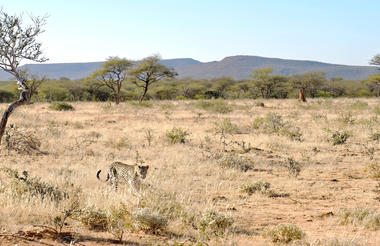
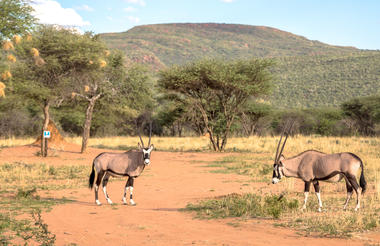
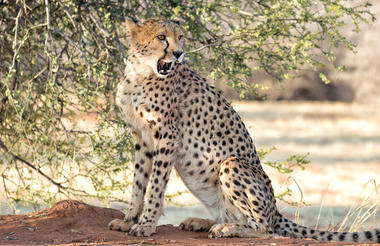
Encompassing the bustling capital city of Windhoek, and the laid-back seaside towns of Swakopmund and Walvis Bay, Central Namibia features an array of towns, deserts, and wildlife reserves. The landscape of this region is characterised by grasslands decorated with clusters of Acacia trees, between the Namib Desert to the west and the lush Kalahari to the east. Visitors can soak in the steaming waters of the Cross Barmen Hot Springs, view a wide variety of wildlife, and explore the untouched beauty of the beautiful Erongo Mountains with the breathtakingly beautiful Spitzkoppe, which offers some of the best stargazing opportunities in the country. Divers and snorkellers will enjoy the incredible marine life just off the coast of Walvis Bay. Art lovers should make sure to visit the little town of Okahandja, famous for its fine wood carving and vibrant markets.
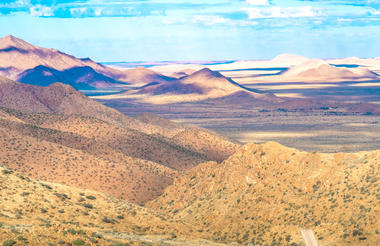


Spreading across Botswana, South Africa and Namibia, the Kalahari meaning 'the great thirst' is an exceptionally beautiful living desert. The landscape is characterised by a large semi-arid sandy savannah draped over a gently rolling inland sea of sand covering most of Botswana and large parts of Namibia and South Africa. It is also the last bastion of the indigenous San people with the modern world having enveloped all the other areas they once roamed. The Namibian portion is made up of red sands covered in thin, wispy, mostly golden grass and dotted with acacia trees and wide-ranging wildlife including gemsbok, impala, jackals and cheetah.

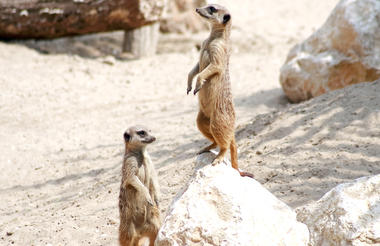

The Namib Desert is the world’s oldest desert, and although it stretches along the entire length of Namibia’s coastline into southern Angola and even the northern Cape Province of South Africa, the Namib commonly refers to the vast sea of sand extending from Luderitz to Swakopmund. This vast expanse of breathtakingly beautiful sandy desert features remarkably varied scenery including, the massive red dunes of the world-renowned Sossusvlei, the moonscapes of the Namib-Naukluft Park, the stark beauty of the Atlantic Coast and a diversity of fauna and flora. This windswept, arid, ancient landscape is teeming with desert-adapted wildlife such as endemic chameleons, brown hyenas, gemsbok, jackals and seals along the coastline and a variety plantlife including the famous welwitschia plant, a unique living fossil. Other highlights of the Namib include: Fish River Canyon, Kolmanskop ghost town, Luderitz, Cape Cross seal colony and the Skeleton Coast.

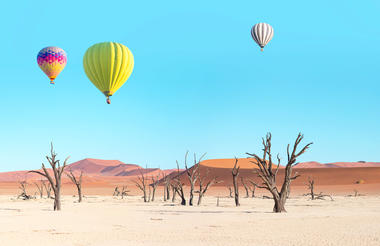
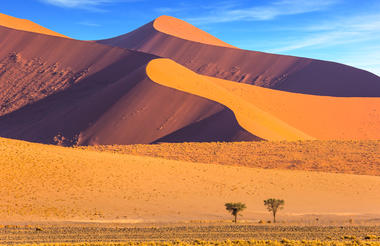
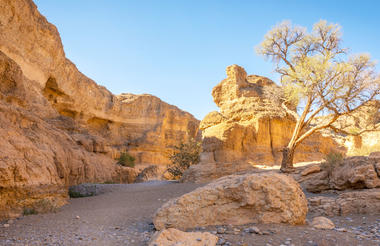
As there is no accommodation at Sossusvlei, visitors to this desert wilderness can stay at Sesriem, 65 kilometres away, where camps and lodges serve as a base from which to explore the dunes. Sesriem Canyon, a deep chasm carved through the rocks by water, is a striking natural feature of the area that is best explored on foot. Stony walls rise up sharply on both sides of the canyon, while birds roost in its crags and lizards dart along the ledges. The canyon’s name was coined when early settlers used it as a water source, using six lengths of leather (‘ses riem – six thongs) tied together to lower buckets into the water at the base of canyon.)
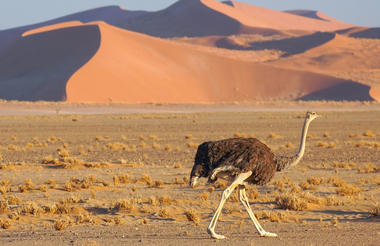
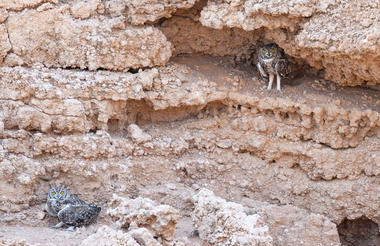
Set between the rolling dunes of the Namib Desert and the icy Atlantic coastline, Swakopmund is a relaxed seaside town in western Namibia known for its German colonial architecture, cool coastal climate, and adventurous spirit. Palm-lined streets, historic buildings, and ocean fog create an atmosphere unlike anywhere else in the country. Travellers visit for desert activities such as quad biking, sandboarding, and scenic flights over vast dunes and shipwreck-strewn shores. Cafés, bakeries, and small museums add to the town's laid-back charm, though the Atlantic waters are brisk rather than tropical. With its striking desert-meets-ocean setting and mix of adventure and history, Swakopmund is one of Namibia's most distinctive destinations.

Situated in the Kunene Region of northwestern Namibia, on the edge of the Huab Valley, Twyfelfontein is a remarkable archaeological and geological site renowned for its exceptional collection of ancient rock engravings. Designated a UNESCO World Heritage Site, it is home to more than 2000 petroglyphs created over thousands of years by hunter-gatherer communities, making it one of Africa's most significant concentrations of prehistoric rock art. Guided walks lead visitors through dramatic sandstone outcrops to view engravings depicting wildlife, human figures and symbolic motifs, while the surrounding desert landscape is known for its striking scenery and adapted wildlife, including desert elephants that occasionally roam the region. Nearby attractions include the Organ Pipes, Burnt Mountain and the Damara Living Museum.

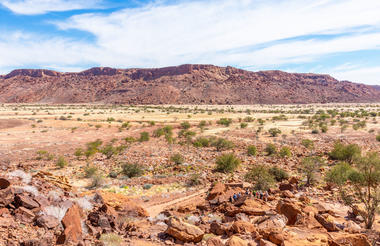
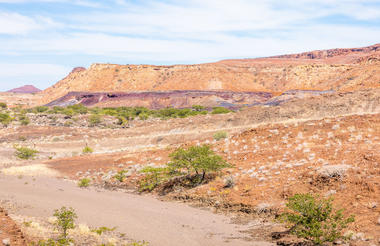
Situated in northwestern Namibia, stretching from the Skeleton Coast inland towards the Angolan border, Kaokoveld is a vast and remote wilderness region known for its rugged landscapes, dramatic mountains and ancient desert valleys. This sparsely populated area is home to small Himba communities, free-roaming desert-adapted wildlife and some of Namibia’s most spectacular scenery. Travellers can explore remote landscapes by 4x4, visit traditional Himba settlements, track desert elephants, and search for black rhinos in rugged terrain. Among the region’s most iconic sights are Hartmann’s Valley and Marienfluss, two spectacular wilderness valleys renowned for their sweeping landscapes, as well as the legendary Van Zyl’s Pass, the dramatic Kunene River, and the picturesque Epupa Falls. With limited infrastructure and challenging conditions, Kaokoveld appeals to adventurous travellers seeking solitude and untouched wilderness.


Ongava Game Reserve shares its southern boundary with Etosha National Park and is widely regarded as one of Namibia’s premier private wildlife reserves. Spanning approximately 30,000 hectares, it is internationally recognised for its conservation efforts, ecological research and immersive safari experiences. The landscape is defined by open savannah plains, scattered salt pans and a rich diversity of wildlife. Its location allows easy access into Etosha through Andersson’s Gate, making it an ideal base for combined safari experiences. Ongava is also known for its luxury lodges, thoughtfully designed using natural materials to blend into the surrounding environment. A highlight of the reserve is its healthy population of black and white rhino, offering guests exceptional viewing opportunities. Activities include guided game drives, night safaris, birdwatching and walking safaris, creating an intimate and rewarding encounter with Namibia’s wilderness.


Situated east of Etosha, bordering Fisher's Pan, Onguma Game Reserve is one of Namibia's best-kept secrets. The reserve offers visitors the opportunity to experience Africa in all her beauty and diversity. Onguma Game Reserve features over 35 480 hectares of protected land scattered with a variety of wildlife including plains game, black rhino, kudu, giraffe, zebra, lion, cheetah, leopard and more than 300 bird species. The seasonal rains attract thousands of migrating birds to the Fisher’s Pan wetland area. The neighbouring Etosha National Park is home to a rich array of wildlife, including 4 of the Big 5. Visitors can enjoy game drives, guided walks and rhino research drives within the private reserve as well as wildlife safaris into Etosha National Park to view abundant game in the largest national park in Namibia.


Situated between Namibia’s capital city of Windhoek and the renowned Etosha National Park, Okonjima Nature Reserve is a 22,000-hectare wilderness sanctuary celebrated for its conservation efforts and exceptional wildlife experiences. The reserve is home to the renowned AfriCAT Foundation, which focuses on the protection and rehabilitation of Namibia’s carnivores, particularly leopards, cheetahs, and other threatened species. Set against a backdrop of rolling plains, rocky outcrops, and acacia woodland, Okonjima offers visitors the opportunity to gain unique insight into conservation initiatives while enjoying outstanding game viewing. Activities include guided carnivore tracking excursions, leopard-spotting safaris, off-road night drives, birdwatching, and cultural experiences along the Bushmen Trail. Accommodation ranges from luxury lodges and private villas to intimate bush camps, providing a memorable base from which to explore this remarkable reserve.