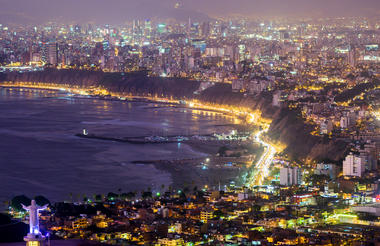
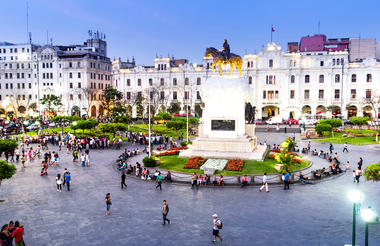
Peru’s capital is a fantastic city to tour, dotted with a multitude of cultural sites and beautifully preserved architecture. Founded by the conquistador Francisco Pizarro in 1535, Lima was first named ‘City of Kings’ – a biblical reference to the ‘Three Wise Men of the East’ – before its name was changed by the Spanish colonialists. The most significant historical buildings are located around the Plaza Mayor, the most notable being the Government Palace, where one can still observe the changing of the guard performed by the Húsares de Junín. The beautiful Cathedral and the various small palaces and colonial balconies also play also their part in the beauty of the city. Another highlight is the famed Larco Herrera Museum, documenting the millennial cultures that preceded the Inca civilization and containing a priceless collection of pre-Columbian artifacts, including some of South America's finest pre-Inca erotic pottery.

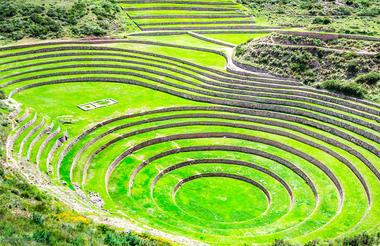
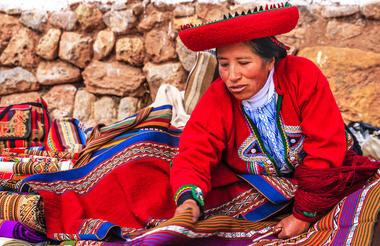
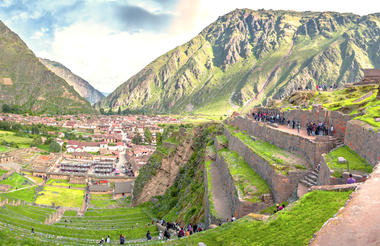
Also known as Urubamba Valley, the Sacred Valley of the Incas is located in the Peruvian Andes, beneath the world-famous site of Machu Picchu and not far from Cuzco, the unofficial Inca capital. This fertile valley is fed by a network of waterways and encompasses a wealth of archaeological sites, including Ollantaytambo, renowned for its extensive Inca ruins; Tipon, which features ancient agricultural terracing and a working irrigation system; and Pisac, with its ancient vestiges and colourful weekly market.
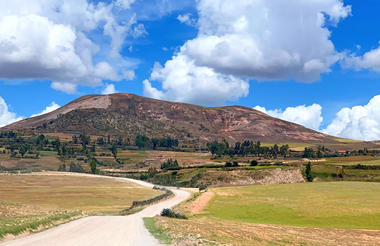
Perched high up in the Andes, Machu Picchu Pueblo is a riverside town known for its proximity to the famous Machu Picchu ruins. This cloud-forest town is encircled by towering forested cliffs and boasts an endless array of hotels, restaurants, markets and labyrinthine streets. Machu Picchu Pueblo, also known as Aguas Calientes, serves as an excellent base to explore the renowned ancient archaeological site of Machu Picchu. Visitors can enjoy various other activities, including having a relaxing massage after a long day of exploring, taking a stroll through lush rainforest to the Mandor Waterfalls, embarking on an adventurous hike up the Putucusi Mountain or soaking in the relaxing thermal baths with the Andes as your backdrop. Don’t miss the Machu Picchu Museum and Botanical Gardens, displaying the area’s history and diversity of indigenous flora.
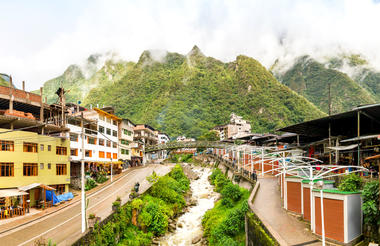
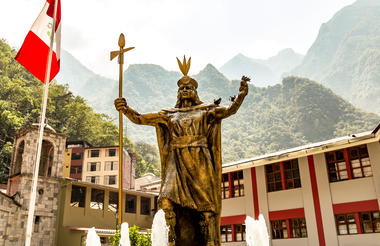
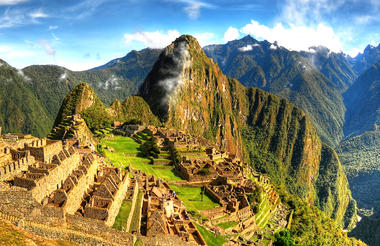
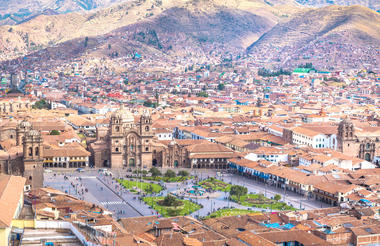
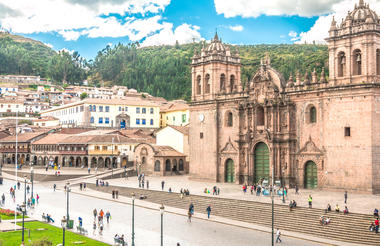
Once called the ‘Navel of the World’ by the Incas, Cusco rises in the southern Andes of Peru, where colonial grandeur meets the enduring stonework of the Inca Empire. A UNESCO World Heritage Site, it serves as the main gateway to Machu Picchu, the Sacred Valley, and surrounding ruins. At its centre, the Plaza de Armas—once Huacaypata—remains alive with cafés, arcades, and the 16th-century Cusco Cathedral, built from Sacsayhuamán’s stones. Nearby, the San Blas district unfolds with whitewashed adobe houses, blue balconies, and workshops where artisans craft metalwork, woodcarvings, and sacred art. Across the city, layers of history reveal themselves in landmarks such as the Korikancha, the Inca street of Hatun Rumiyoc with its twelve-angled stone, the Museum of Colonial Art, and the ancient shrines and water temples scattered through the surrounding hills.
Situated high in the Andes Mountains on the border between Peru and Bolivia, Lake Titicaca is considered the highest commercially navigable lake in the world. The area was once a stronghold of Inca culture – and this ancient legacy is still evident in the many Inca ruins dotted across the shoreline, as well as the vibrant traditional handwoven textiles and clothes. Among the lake’s most popular attractions are the 42 floating reed islands of the Uros people, accessible from Puno in the east. On Santa Maria, the largest of these, tourists can arrange tours into private local homes to experience traditional culture.


Surrounded by the peaks of the Andean Plateau and overlooked by the 6402m Mt. Illimani, La Paz is a truly breathtaking city whose buildings sprawl across the surrounding canyon, reaching altitudes of up to 4100m. While the sight of the city is reason enough to visit, La Paz holds a number of attractions sure to keep tourists fascinated. Take a walk along Calle Jaen, a colonial street lined with museums, explore the city's cathedrals or wander through some of the colourful markets, including the 'Witches' Market' where llama foetuses and dried frogs can be found for sale.


Located in the southwest of Bolivia, the small town of Uyuni is not a tourist destination per se, but rather a starting point for those wishing to explore the region’s extraordinary landscape. Group tours leave regularly from Uyuni, taking visitors on a scenic journey that includes an antique train cemetery, thermal baths, rock formations, and the remarkable Uyuni salt flats. Spanning more than 10 000 square kilometres and containing 10 billion tonnes of glistening salt, 'Salar de Uyuni' is the world’s largest salt plain, offering breathtaking views that place it amongst Bolivia’s main attractions.
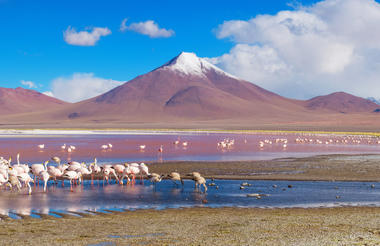
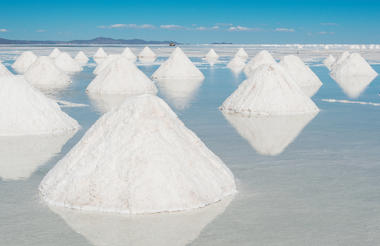
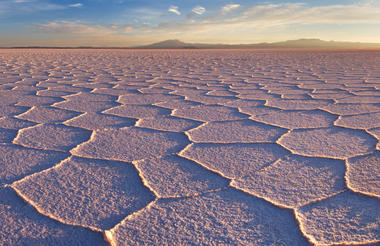
Tucked high in Bolivia’s remote Eduardo Avaroa Andean Fauna National Reserve, near the Chilean border, Laguna Hedionda is a striking high-altitude salt lake surrounded by surreal volcanic landscapes. This natural destination is celebrated for its vivid scenery and wildlife, especially its large flocks of pink flamingos that wade gracefully through the mineral-rich waters. At over 4,000 metres above sea level, the lake offers a truly otherworldly experience, where visitors can witness stark white salt flats, turquoise water, and distant snow-capped peaks. Travellers often visit Laguna Hedionda as part of a multi-day 4x4 tour through Bolivia’s southwest altiplano, combining it with stops at other dramatic sites like the Uyuni Salt Flats and Laguna Colorada.