


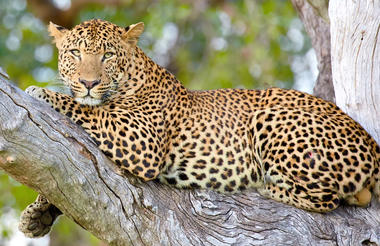
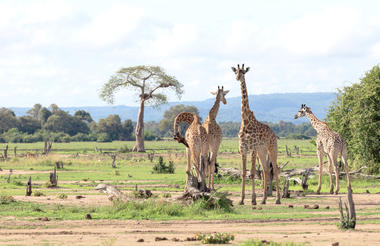
Bordering the Luangwa River in eastern Zambia, South Luangwa National Park is one of Africa’s most celebrated wildlife destinations, renowned for its unspoilt wilderness, exceptional biodiversity, and successful conservation efforts. The park supports thriving populations of elephant, lion, leopard, buffalo, hippo, giraffe, and numerous antelope species, along with more than 400 bird species. Widely regarded as the birthplace of the walking safari, South Luangwa offers visitors the rare opportunity to explore the bush on foot under the guidance of experienced armed guides, providing an intimate perspective of the surrounding wildlife and ecosystems. Traditional game drives, seasonal boating, and outstanding opportunities for photography and birdwatching further enhance the experience. Combined with the scenic Luangwa River, the park delivers one of Africa’s most authentic and unforgettable safari adventures.
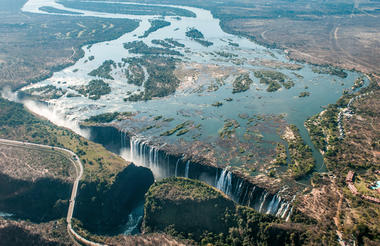
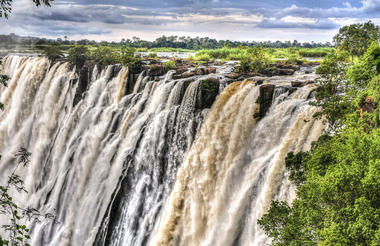
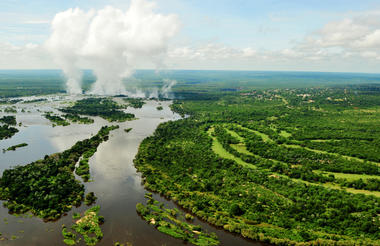
Situated on the Zambia–Zimbabwe border along the Zambezi River, Victoria Falls is experienced from the Zambian side within Mosi-oa-Tunya National Park, where walkways trace the cliff edge above a vast basalt gorge. Knife Edge Bridge pushes visitors into the spray line for a close view of the Main Falls, a continuous curtain of water, and the Eastern Cataract, where the flow breaks into narrower channels across the far side. Rainbow Falls, the highest section of the cascade, often reveals shifting arcs of colour in fine mist when light breaks through the spray. The Boiling Pot viewpoint looks directly into a deep whirlpool where the river is forced into the Batoka Gorge. Upstream, boat access reaches Livingstone Island, a rocky outcrop on the lip of the falls, and the seasonal Devil’s Pool, a natural rock pool at the edge of Victoria Falls that becomes safely accessible during low water when river levels drop and currents weaken. Activities extend beyond the rim, including white-water rafting through gorge rapids, kayaking, ziplining across the chasm, bungee jumping from the bridge, bridge swings, sunset cruises, game viewing along the riverbanks, and visits to the local market.
The Chobe River forms the northern boundary of Chobe National Park and is one of southern Africa’s most rewarding wildlife riverfronts, especially in the dry season when animals concentrate along its banks. Elephant herds gather in large numbers at the water’s edge, hippos crowd the channels, and buffalo move regularly through the floodplain grasslands, while lions range through the wider system and may hunt buffalo in the surrounding landscape. The river also supports exceptional birdlife across reeds, sandbanks, and woodland edges, and visitors typically explore it through guided game drives on designated park tracks as well as boat safaris that bring them level with elephants and hippos along the shoreline.


Situated on the eastern side of the Okavango Delta in north-western Botswana, Moremi Game Reserve is one of Africa's most celebrated wildlife reserves, protecting an extraordinary mosaic of floodplains, lagoons, forests and open grasslands. Widely regarded as the first wildlife reserve in Africa established by a local community, it is recognised for both its conservation significance and its exceptional biodiversity. Visitors can enjoy game drives and seasonal mokoro or motorboat excursions, with opportunities to spot elephants, lions, leopards, African wild dogs and abundant birdlife in remarkably varied habitats. The ever-changing landscapes, where winding waterways meet acacia woodlands and sweeping plains, create a memorable safari experience that combines outstanding wildlife viewing with the untamed beauty of the Okavango Delta.


