


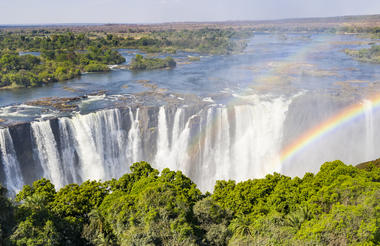
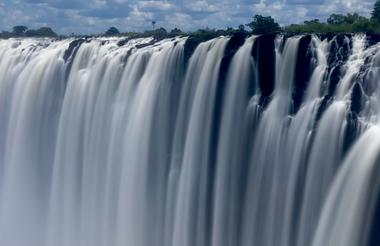
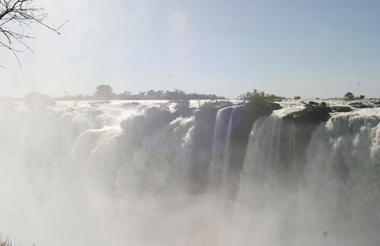
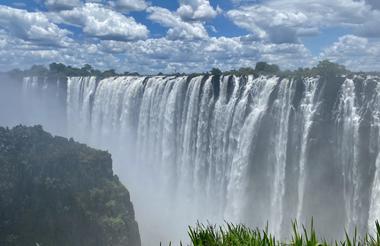
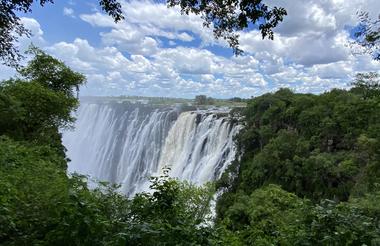
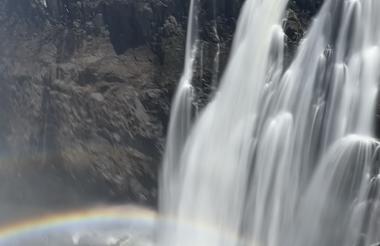
Situated on the Zambia–Zimbabwe border along the Zambezi River, Victoria Falls is experienced from the Zambian side within Mosi-oa-Tunya National Park, where walkways trace the cliff edge above a vast basalt gorge. Knife Edge Bridge pushes visitors into the spray line for a close view of the Main Falls, a continuous curtain of water, and the Eastern Cataract, where the flow breaks into narrower channels across the far side. Rainbow Falls, the highest section of the cascade, often reveals shifting arcs of colour in fine mist when light breaks through the spray. The Boiling Pot viewpoint looks directly into a deep whirlpool where the river is forced into the Batoka Gorge. Upstream, boat access reaches Livingstone Island, a rocky outcrop on the lip of the falls, and the seasonal Devil’s Pool, a natural rock pool at the edge of Victoria Falls that becomes safely accessible during low water when river levels drop and currents weaken. Activities extend beyond the rim, including white-water rafting through gorge rapids, kayaking, ziplining across the chasm, bungee jumping from the bridge, bridge swings, sunset cruises, game viewing along the riverbanks, and visits to the local market.
Southern Hwange has a very different character to the rest of the park. Influenced by the Kalahari sands, this region is drier and more open, with wide grasslands, scattered pans, and stretches of mopane woodland. It feels more remote and rugged, with long horizons and fewer visitors.
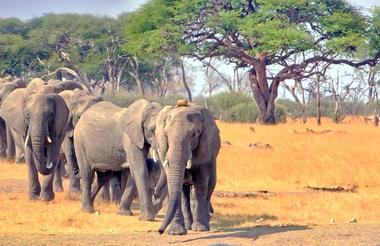
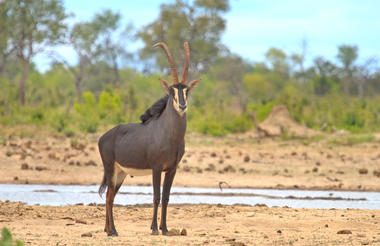
Wildlife here includes many of Hwange’s signature species — elephant, buffalo, lion, leopard, cheetah, and wild dog — but the south also offers the chance to see more unusual species that favour the arid conditions, such as brown hyena, bat-eared fox, caracal, and gemsbok. The pans and pumped waterholes are magnets for elephants during the dry season, and birdlife is abundant, with kori bustard, secretary bird, and a wide range of raptors often spotted.
Activities focus on game drives, guided bush walks, and in some areas horse-riding safaris, giving guests the chance to experience both the big game and the smaller details of this unique environment. The southern region’s open terrain also makes for excellent photographic opportunities, especially during the late dry season when wildlife congregates at dwindling water sources.
Altogether, Southern Hwange offers a wilder, more remote safari experience — a place of dramatic landscapes, unusual species, and unforgettable encounters.


Located in northern Zimbabwe, the life-giving power of the Zambezi River makes Mana Pools National Park one of Zimbabwe’s most lush and flourishing regions. Designated as a UNESCO World Heritage Site, it is known for its natural beauty and as one of the continent’s premier game-viewing areas. Visitors can look forward to an array of activities such as canoe trips which are offered year round and provide a unique and memorable way for visitors to experience the area’s striking scenic beauty and diverse fauna, while guided walks are a great way to take its pristine riverside forests. Other popular activities include: game drives, river cruises, nature walks, bird watching, catch-and-release fishing, and searching for dinosaur tracks.


