


Located on the estuary of the famed Yangtze River, the renowned international metropolis of Shanghai is a bold and brash mix of East and West. It is home to some of the world’s tallest skyscrapers, historical shikumen houses blending the styles of Chinese houses with European design flair, and it has one of the richest collections of Art Deco buildings in the world. Must-see attractions include the Yuyuan Gardens, loaded with classical Chinese architecture; the many traditional Chinese tea houses serving a wide range of tea along with traditional delicacies; Shanghai Museum with its impressive ancient bronze exhibit; and even a Chinese take on Madame Tussauds which offers a fascinating mix of Chinese and western figures, from film stars to athletes and world leaders.


Huangshan - Yellow Mountain - is located in the Anhui Province of east-central China. This spectacular region is one of the country’s most popular tourist destinations: a highly atmospheric area of jagged granite peaks and twisted pine trees shrouded in low-hanging mists. The area, which consists of 36 distinctively formed peaks, has been inscribed on the UNESCO World Heritage List and is synonymous with Classical Chinese paintings. Most easily accessed from the city of Tunxi (also called Huangshan City), there is also lodging available within the Park, which will suit visitors who intend to do some extensive hiking in the area. There are many ways to ascend the main summit of Mount Huangshan, from cable car rides to challenging climbs, while fit and adventurous travellers will relish the vertiginous West Sea Canyon route.


The prefecture-level city of Huangshan sits near the base of the mountain of the same name, which is the most famous in the country. The pretty and well-connected town functions primarily as a base from which to explore the massive, cloud-enshrouded peak, with easy accessibility to hiking and cycling routes. Inspiring around 20 000 poems over hundreds of years, the mountain’s other-worldly beauty and cultural importance has awarded it a listing under UNESCO. A huge diversity of plants and animals can be found on the mountain too, and, along with the dramatic scenes, offer great photographic opportunities. Huangshan’s historic Tunxi district, and in particular its Ancient Street, is a fantastic place to learn more about the area’s past, offering the chance to see exquisite calligraphy sets, ink tablets, and seals. The extraordinary ancient villages of Hongcun and Xidi also lie within easy visiting proximity.


The bustling port city of Yueyang is based on the eastern shores of Dongting Lake at the northeast of Hunan Province, China. Dating back 3000 years, Yueyang is a cradle a myriad historic treasures, a popular highlight being the renowned Yueyang Tower, an ancient architectural structure built remarkably without nails and is a rare example of classical Chinese architecture. Wonder at the breathtaking beauty of Dongting Lake, the second-largest freshwater lake in China and the inspiration for a great number of Chinese poets. At the heart of the picturesque wetland lies Junshan Island, an isolated mountain isle abound with historic landmarks that include the Tomb of the Two Empresses, Xiangfei Memorial Temple, Mottled Bamboo Grove, Sending-Letter Pavilion, and Dongting Temple.


Guilin is an attractive city and an extremely popular tourist destination in North Guangxi, China. The city is renowned for its magnificent natural landscape of dramatic limestone karst hills and its colourful minority culture. At the centre of the city lie two beautiful lakes, Shanhu (Cedar) and Ronghu (Banyan), remaining from a medieval-era moat that once surrounded the city. Boats travel through these and other lakes via connected rivers. While the city boasts hundreds of wonderful attractions, the most famous are the Li River, the nearby resort town of Yangshuo, and the picturesque Longji Terraced Fields.


Narrow lanes thread through Yangshuo Town, a small town of Yangshuo County in northeastern Guangxi, where limestone karst peaks rise sharply around flat river valleys. Located south of Guilin, the town sits along the Li River and functions as the hub for surrounding rural villages. Its streets combine low-rise buildings, market stalls, and guesthouses, many of which cater to independent travellers and outdoor enthusiasts. Cycling is a practical way to explore the area, including Moon Hill—a natural arch formed from eroded karst rock—and the Yulong River, known for its scenic bamboo-rafted stretches. Rock climbers are drawn to the region’s steep cliffs, while others drift past fishing nets and grazing water buffalo along quieter tributaries. In the evenings, the open-air show Impression Liu Sanjie stages folk songs and choreography on the river itself, against a backdrop of illuminated peaks and open water. West Street, the town’s oldest road, now anchors its cafés, bars, and shops.


The capital of China’s southern Yunnan Province, Kunming, is a bustling but pleasant city home to an abundance of incredible sights and attractions. As the capital city and transportation hub of Yunnan Province, the city has a large student population, which creates a lively atmosphere. For history buffs, the brilliant Wu Mayao Museum of Anthropology, housed at Yunnan University, and the Yunnan Provincial Museum, showcasing an excellent collection of folk musical instruments, are well worth visiting. The Qiongzhu Temple is an astonishing architectural feat, and be sure to check the listings at TCG Nordica, an exhibition space that regularly hosts live music and other cultural events. Green Lake Park is a wonderful place for people-watching, and for those with more time in the area, a trip to the Stone Forest - an incredible set of tall limestone rock formations - is highly recommended.


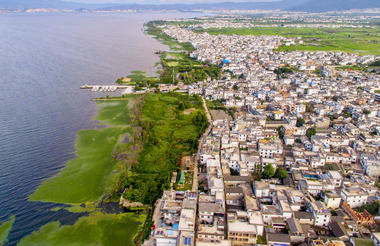
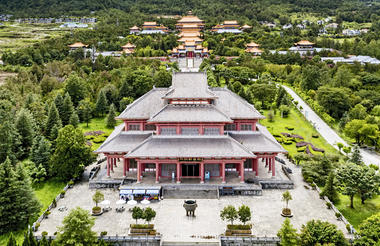
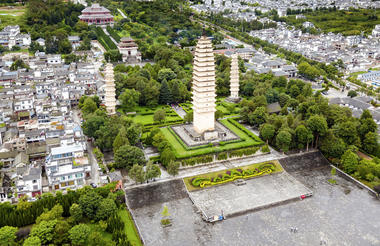
Situated in southwestern China, the laid-back city of Dali rests on the shores of Erhai Lake in the scenic Yunnan Province. This ancient city boasts a fascinating history that dates back to the 8th-century Kingdom of Nanzhao. The surrounding landscape is characterised by lush greenery, beautiful mountains, and glistening lakes. This popular backpacker’s paradise features a centuries-old walled city dating back to the Ming Dynasty with an array of traditional heritage homes. Visitors can look forward to viewing the 9th-century Three Pagodas of Chongsheng Temple and cycling around the remarkably beautiful landscapes.
Flowing lazily through the heart of Baisha Ancient Town, the Yulong River meanders amidst the stunning karst landscape. This village is renowned for its picturesque setting and rich history dating back over a millennium. Situated at one of the most scenic spots along the Yulong River, Baisha is celebrated for its kumquats, which are prized and exported across China. Quietly tucked away in Yulong Naxi Autonomous County, Yunnan, Baisha offers a tranquil retreat from the bustling cities of Guilin and Yangshuo, making it an ideal stopover between the two. Bamboo rafting adventures commence beneath the town's main bridge while photographers flock to capture scenes of cormorant fishing. Market days showcase the region's bounty, with farmers selling fresh produce, including the famed kumquats, alongside a variety of locally grown fruits such as pomelos, oranges, mandarins, persimmons, and chestnuts.


The city of Chengdu is the capital of southwestern China's Sichuan province and it serves as a popular transport hub for the entire region. The city is known for its wonderfully relaxing teahouse culture, its extraordinarily spicy culinary scene, and its vibrant nightlife which is bolstered by the large numbers of student and expats who call Chengdu home. The main attraction is undoubtedly the Chengdu Research Base of Giant Panda Breeding, a conservation centre where visitors can view endangered giant pandas in their natural habitat. Other must-see sights include the Jinsha Site Museum which displays artefacts from the Shu Kingdom, many of which date back as far as the 4th century B.C.


Located at the heart of the Weihe Plain, bound by the Weihe River in the north and the Qin Mountain Range in the south, Xian is the undisputed root of Chinese civilization and an important economic, cultural, and industrial centre of the central-northwest region. The city provides visitors with modern facilities as well as numerous world-class ancient, religious, and cultural attractions showcasing the great changes in the country. Must-see attractions include the Tomb of Emperor Jingdi, the immaculately restored and mighty city wall, and of course, the primary attraction, the astonishing display of approximately 2,000 life-like terracotta warriors, horses, and chariots. The assemblage has been billed by the tourist industry as the Eighth Wonder of the World and a world cultural heritage site by UNESCO.


Also known as the cradle of humanity, Beijing is the epicentre of China’s economic, political and educational hub. The city is famous for its Hutongs which are formed by lines of traditional courtyard residences (siheyuan). Since the mid-20th century, many hutongs have been demolished to make way for new roads and buildings. A visit to Beijing will give you a glimpse into China’s imperial past. Highlights of Beijing include: Tiananmen Square, the Forbidden City and the Olympic Stadium; it is also the gateway for the opportunity to climb the legendary Great Wall of China.


