


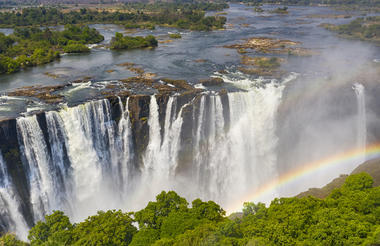
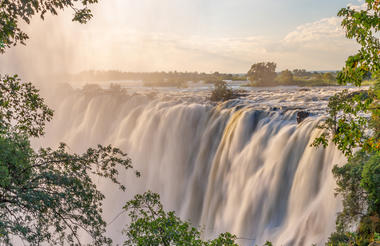
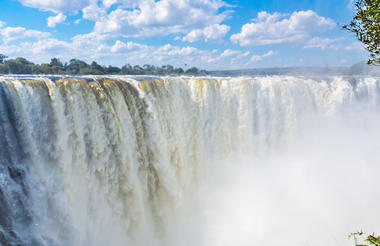
Known locally as Mosi-oa-Tunya—“The Smoke That Thunders”—Victoria Falls is one of the world’s great natural landmarks. Straddling the Zambezi River between Zambia and Zimbabwe, it forms a vast curtain of water that fills the air with mist and sound. The Zimbabwean side grants the most dramatic views, where mist rises like ghostly curtains and rainbows arc through the spray. Measuring about 1,708 metres across, it is regarded as the largest single continuous sheet of falling water on Earth. The adjacent town of Victoria Falls provides a convenient base for exploring the region, with a wide range of activities from scenic flights and microlight trips to white-water rafting, bungee jumping, kayaking, and safaris into Chobe National Park.
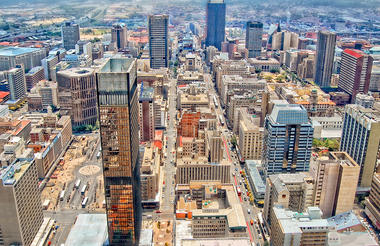
Johannesburg is one of Africa’s biggest and most vibrant cities. It is the economic capital of Africa and the gateway to Southern Africa. Although not as famous as other South African destinations, there is plenty to do in Johannesburg and nearby Pretoria. The old city is a multi-cultural mixture of traditional medicine shops, Chinese restaurants, taxi ranks and ultra modern skyscrapers. There are excellent museums, art galleries and organised tours of historical and political interest. The shopping is Southern Africa’s best and the many restaurants cater for all tastes. The nearby township of Soweto is Johannesburg’s most popular tourist attraction.


Clustered along the western edge of Inhaca Island, the village of Inhaca takes its name from Tsonga chief Nhaca, a local leader famed for sheltering shipwrecked Portuguese sailors centuries ago, and now functions as the island’s bustling heart. Its centre hums with a small market, general dealers, lively bars, and simple eateries where fresh local seafood is served. At low tide, families wade into tidal flats to gather shellfish while colourful fishing dhows rest on sandy shores nearby. From here, local guides organise snorkelling and scuba diving trips to reefs like Coral Gardens and Santa Maria Wall, where underwater gardens teem with marine life. Elevated guesthouses overlook the shore to the south, contrasting with campsites near the runway to the north. Functioning as the practical base for exploring the island, Inhaca connects visitors to beaches, forests, and mangroves through walking trails, tuk-tuk routes, and boat trips.


