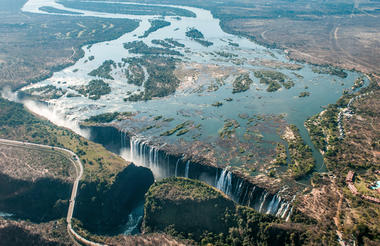
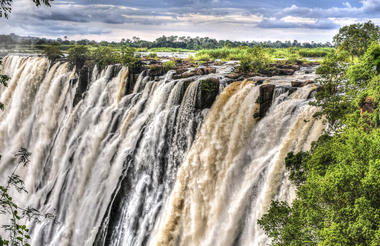
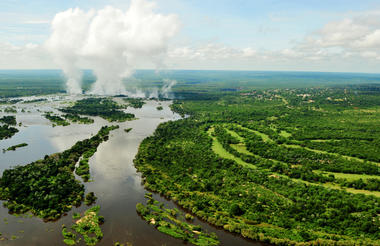
One of the original natural wonders of the world, the Victoria Falls is a World Heritage Site and an extremely popular tourism attraction. Known locally as ‘The Smoke that Thunders’ this spectacle is accessible from both Zambia and Zimbabwe and it is an ideal place to combine game viewing and water sports. There is excellent fishing, a terrifying bungee jump and arguably the best commercial white water rafting in the world.
Situated in the vast expanse of Zambia’s remote Western Province, Liuwa Plains National Park is a world-famous wildlife sanctuary. It is home to the second largest wildebeest migration in Africa and is known to have the world’s highest population of hyena. This pristine wilderness is characterised by endless golden savannah and grassy floodplains stretching over 3600 square kilometres. The park is inhabited by a diverse variety of birdlife and wildlife including: lion, wild dog, zebra, cheetah, buffalo, roan antelope and flocks of crowned and wattled cranes, to name a few. Visitors can enjoy an exhilarating flight over the awe-inspiring floodplains of the Zambezi, stroll past blooming irises and colourful lilies on a guided walking safari, soak up the spectacular scenery on a game drive, or visit a local village and learn about Liuwa’s fascinating history and traditions.


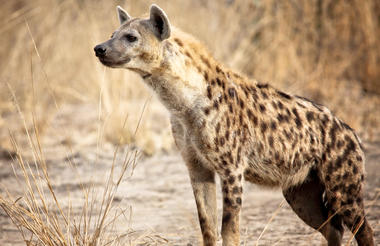
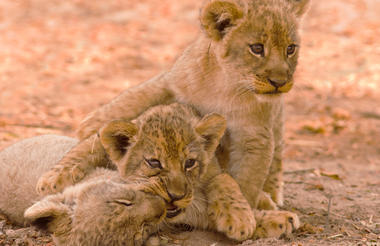
Located within Kafue National Park in north-western Zambia, this remote wetland appears each dry season as floodwaters retreat. The Busanga Plains span over 700 square kilometres and are defined by seasonal cycles that attract diverse wildlife between July and October. Herds of agile puku, red lechwe, and sturdy buffalo graze the open plains, drawing stealthy predators such as lion, cheetah, spotted hyena and wild dog. Home to over 450 bird species, the grasslands come alive in the dry months as distinctive species like wattled cranes and crowned cranes gather in remarkable numbers across the open plains. Visitors can reach the wildlife-rich region by light aircraft or via Kafue National Park and enjoy immersive game drives, guided walking safaris, and tranquil boat excursions along winding channels.


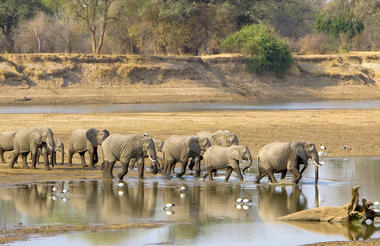
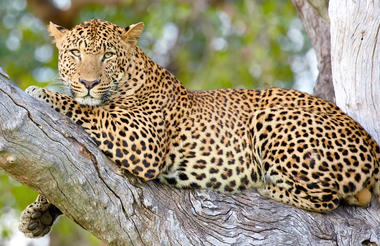
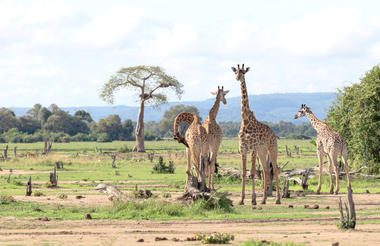
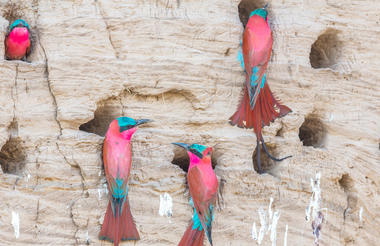
Bordering the Luangwa River in eastern Zambia, South Luangwa National Park is one of Africa’s most celebrated wildlife destinations, renowned for its unspoilt wilderness, exceptional biodiversity, and successful conservation efforts. The park supports thriving populations of elephant, lion, leopard, buffalo, hippo, giraffe, and numerous antelope species, along with more than 400 bird species. Widely regarded as the birthplace of the walking safari, South Luangwa offers visitors the rare opportunity to explore the bush on foot under the guidance of experienced armed guides, providing an intimate perspective of the surrounding wildlife and ecosystems. Traditional game drives, seasonal boating, and outstanding opportunities for photography and birdwatching further enhance the experience. Combined with the scenic Luangwa River, the park delivers one of Africa’s most authentic and unforgettable safari adventures.
As previously described