


The capital Windhoek (translated as “windy corner”) is the political, cultural, industrial and economic center of Namibia with 400,000 inhabitants. Windhoek was founded on October 18, 1890, when the foundation stone for what is now known as the “Alte Feste” fortress was laid. Other popular sites include the Tintenpalast, the Christuskirche, the Kaisergymnasium and the Heinitz und Sanderburg. The quiet and well-organized city with a colonial German touch, offers German restaurants and shops, a widespread use of the German language, the celebration of German customs (such as Carnival or Oktoberfest) - the German tradition is reflected everywhere. Even the beer is still brewed according to the German "Reinheitsgebot" (special purity law). Mixed with African traditions and roots, Windhoek offers a unique atmosphere and a relaxed lifestyle that makes the city so endearing.


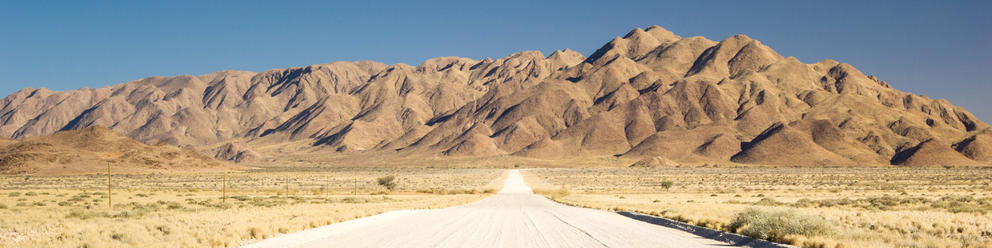
The Naukluft Mountains are perched in the centre of Namibia, making a striking silhouette against the vast, open skies. Several private farms occupy the range's northern reaches, while the spectacular Namib-Naukluft National Park lies south. The rugged landscape of Central Namibia rises steeply from the plains and has a fascinating history, interesting geology and a variety of deep gorges. An array of wildlife can be found in the area, including over 50 species of mammals, such as leopards and zebras, and more than 200 species of birds. Here, the air is crystal clear, and sunsets over the mountains are breathtaking.
Swakopmund, known simply as ‘Swakop’ to Namibians, is the capital of the Erongo Region. It was founded in 1892 and was regarded at the time as Germany’s main port in South-West Africa. The townscape of this small town is characterised by numerous historic buildings from the German colonial era: wide streets, German street names, German pubs, cafés and bakeries. During the colonial era, ‘Swakop’ was described as ‘Germany’s southernmost coastal town’. Even today, German is still spoken everywhere. Swakop offers many tourist attractions, such as charming pubs, a beautiful seafront promenade, an aquarium and much more. You can go on lovely day trips to the surrounding area, such as south to Walvis Bay or north to Cape Cross to visit the largest seal colony on the African mainland. In and around Swakop, there are plenty of activities on offer, such as boat trips to see seals, exciting desert tours, quad bike safaris, kayaking trips and helicopter flights. You’ll be spoilt for choice.


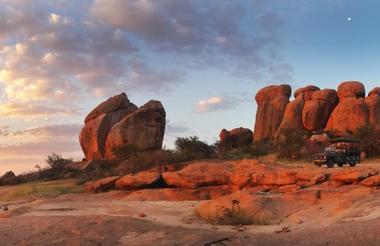
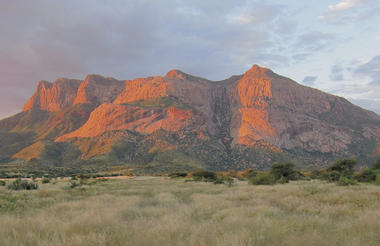
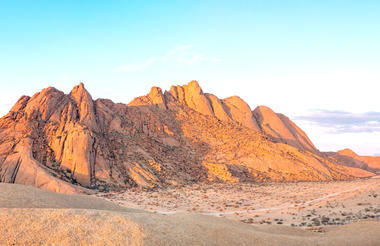
Known for its rugged mountain range, diverse plant and wildlife population, along with the famous Spitzkoppe, Erongo is a place that houses so much of Africa's natural magnificence. Surrounded by volcanic ruins and breath-taking rock formations, the Erongo Mountain range holds dramatic scenic landscapes and indescribable natural beauty. The peaks are best known for their caves and rock art, particularly the 50m-deep Phillips Cave, and home a vast array of reptiles and mammals. The rich biodiversity - with black rhinos and the rare black-nosed impala native to the area - leaves people wanting more.
Surrounded by grassland and mopane shrublands, eastern Etosha is best-known for its remarkable variety of wildlife. Springbok are found abundantly within this region, while the many waterholes attract black rhinoceros and various antelope. During the rainy season, animals tend to migrate near the eastern Von Lindequist Gate. Makalani palms sway around waterholes on this side of the park, and the nearby pans are hotspots for blushing pink flamingos. Pure bliss is finding a quiet spot to wait for action, be it zebra jostling for a drink or sudden drama as elephant arrive in rumbling groups to quench their thirst.
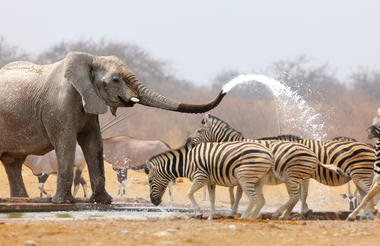
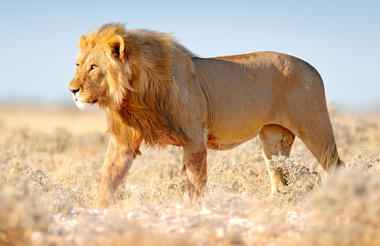
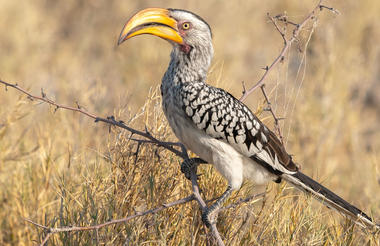
Set in the heart of Namibia’s Otjozondjupa region, Otjiwa Game Reserve spans 12,000 hectares of open bushveld, rolling plains and acacia-studded savanna. The reserve exudes a serene and private atmosphere, where wildlife roams freely, and the horizon stretches unbroken beneath vast African skies. Visitors can embark on guided game drives to spot giraffe, zebra, antelope and rhino, or enjoy walking safaris that reveal the subtle rhythms of the bush. At sunrise, the air carries the scent of dry grass and earth, while the calls of birds and distant wildlife punctuate the quiet, a place where Namibia’s wild beauty is both immersive and unforgettable.


