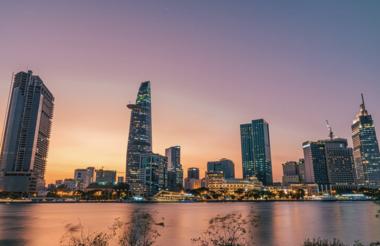
Saigon is Vietnam’s largest and most energetic city, a place of movement, commerce, history and reinvention. Officially known as Ho Chi Minh City, it’s still widely called Saigon, especially when referring to the central districts and the city’s old southern character.
This is the natural counterpoint to Hanoi. Where Hanoi feels older, more traditional and more reflective, Saigon is warmer, faster and more outward-looking. French colonial buildings, modern towers, busy markets, rooftop bars, old apartment blocks, hidden temples and endless streams of scooters all sit side by side.
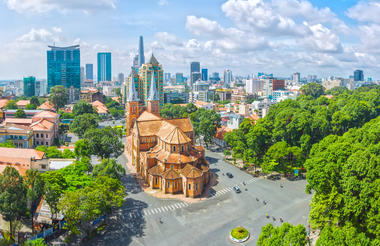
Most first-time visits focus on District 1, where many of the main sights are close together. Dong Khoi Street, the Saigon Opera House, Saigon Central Post Office, Notre-Dame Cathedral, Independence Palace and the War Remnants Museum all help tell the story of the city, from French Indochina to the Vietnam War and the rapid growth of modern Vietnam.
Saigon is also a superb food city. Travellers can enjoy classic southern dishes, strong Vietnamese coffee, market snacks, street-side grills and some of the country’s most creative contemporary dining. An evening street food tour, ideally by scooter with experienced local drivers, is one of the best ways to feel the rhythm of the city.
There are rewarding quieter moments too. The Jade Emperor Pagoda is atmospheric and incense-filled, while neighbourhoods such as Thao Dien offer riverside cafes, boutiques and a more relaxed expatriate-local mix. The city is also the main base for visiting the Cu Chi Tunnels and the Mekong Delta, both of which work well as day trips or deeper add-ons.
Saigon is busy, humid and sometimes overwhelming, but it’s also full of life and confidence. With the right pacing, a central hotel and a good local guide, it becomes one of Vietnam’s most fascinating and enjoyable city stays.
Ben Tre is one of the most accessible and appealing parts of the Mekong Delta, making it an excellent choice for travellers who want to experience southern Vietnam’s river life without travelling too far from Saigon. Known for its coconut groves, narrow waterways and gentle rural atmosphere, Ben Tre offers a softer, greener contrast to the energy of the city.
The province is often described as Vietnam’s coconut capital, and coconuts shape much of daily life here. Along the canals you’ll see small family workshops producing coconut candy, coconut fibre, cooking oil and handicrafts, often using traditional methods that have changed little over the years. These small-scale industries give Ben Tre a practical, lived-in charm rather than a staged tourist feel.
A typical visit is best enjoyed by boat. Travelling along the Mekong River and its smaller tributaries, you pass stilt houses, fruit orchards, water palms and local ferries crossing between river islands. Smaller rowing boats can slip into the shaded canals, where the pace slows and the sounds of the Delta become more noticeable: paddles dipping into the water, birds in the trees and the occasional engine from a passing sampan.
Ben Tre is also a good place to sample tropical fruit, honey tea and simple Delta cooking. Lunch is often served in a garden setting, with dishes such as elephant ear fish, fresh spring rolls and river prawns. Cycling or walking through the villages can add a lovely extra layer, especially for travellers who enjoy seeing everyday life up close.
Unlike busier Delta towns, Ben Tre still feels relatively relaxed. It works particularly well as a full-day excursion from Saigon, or as part of a slower journey towards Can Tho, Cai Be or the deeper Mekong. It’s a warm, easy-going introduction to the Delta, with enough local character to make it memorable without requiring a long overland commitment.


Chau Doc is a lively riverside town in the far west of the Mekong Delta, close to the Cambodian border. It has a very different feel from the coconut groves of Ben Tre or the floating market bustle of Can Tho, with a stronger borderland atmosphere and a rich mix of Vietnamese, Khmer, Cham and Chinese influences.
The town sits near the meeting point of the Bassac River and a network of canals, making river life central to the experience. Boats, fish farms, floating houses and market traders give Chau Doc a busy, practical energy, while the surrounding countryside opens into rice fields, lotus ponds and low hills.
One of the main reasons to visit is Sam Mountain, which rises just outside town and is dotted with pagodas, shrines and pilgrimage sites. The views from the upper slopes are especially memorable in good weather, stretching across the flat Delta landscape towards Cambodia. The area is particularly atmospheric around sunset, when local families, pilgrims and vendors gather around the temples.
Chau Doc is also known for its Cham communities, and a visit to one of the riverside Cham villages offers insight into a different cultural thread within southern Vietnam. You may see stilt houses, small mosques, weaving workshops and a quieter pace of life along the waterways.
The town’s markets are colourful and very local, with piles of tropical fruit, dried fish, fermented sauces and Delta produce. This is one of the best places to understand how closely food, trade and river life are connected in the region.
Chau Doc works well as part of a deeper Mekong journey, especially for travellers continuing by speedboat to Phnom Penh or travelling overland through southern Vietnam. It isn’t polished or resort-like, but it’s full of character and gives a fascinating glimpse of Vietnam’s far south-west, where river culture, religion and borderland history come together.

Phnom Penh is Cambodia’s capital and its most important city, set at the meeting point of the Mekong, Tonlé Sap and Bassac rivers. It’s a city of contrasts, where royal palaces, saffron-robed monks, busy markets, French colonial buildings, modern cafés and riverside life all sit alongside the country’s more difficult recent history.
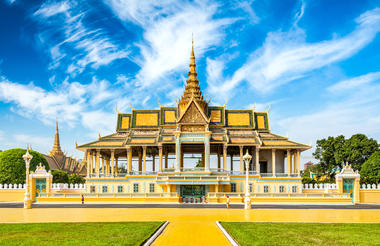
The city is best explored with time and context. The Royal Palace and Silver Pagoda give a glimpse of Cambodia’s royal traditions, with elegant Khmer architecture, gilded roofs and peaceful courtyards in the heart of the city. Nearby, the National Museum of Cambodia is one of the best places to understand the artistic and spiritual heritage of the Khmer world, especially before or after visiting Angkor.
Phnom Penh also asks visitors to engage with Cambodia’s 20th-century history. The Tuol Sleng Genocide Museum and Choeung Ek Killing Fields are deeply sobering, but important for understanding the resilience of the country and its people. These visits are best done with a thoughtful guide and enough time afterwards to pause and reflect.
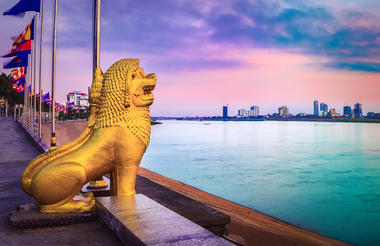
For a lighter side of the city, wander the riverside promenade, explore Central Market or Russian Market, or stop at one of the city’s growing number of independent cafés, galleries and social enterprise shops. Phnom Penh is also one of the best places in Cambodia for food, from classic Khmer dishes to contemporary restaurants and lively street stalls.
Phnom Penh works well at the start or end of a Cambodia itinerary. It’s busy and sometimes confronting, but it’s also warm, engaging and essential to understanding Cambodia properly.
Oudong was Cambodia’s royal capital for more than two centuries before the court moved to Phnom Penh in the 19th century. Set around 40 kilometres northwest of the capital, it makes an interesting and atmospheric excursion for travellers wanting to understand more of Cambodia’s royal and Buddhist history without travelling far from the city.
The main focus is Phnom Oudong, a ridge of low hills topped with stupas, shrines and pagodas. A long staircase leads up from the base, passing local vendors and pilgrims before opening onto wide views across rice fields, sugar palms and village rooftops. The climb is steady rather than difficult, and the reward is both the scenery and the quiet sense of history at the top.
The hill is dotted with memorials and royal stupas containing the remains of former kings. Some structures are beautifully restored, while others feel older and more weathered, giving the site a layered, lived-in atmosphere. On weekends and Buddhist holy days it can be lively with Cambodian families and worshippers, while weekdays tend to be quieter.
Oudong is often visited as a half-day trip from Phnom Penh, sometimes combined with a stop at a local village, market or silversmithing workshop along the way. It’s best to visit in the morning or late afternoon, when the heat is gentler and the light over the countryside is softer.
Oudong suits travellers who enjoy history, gentle walking and places where local devotion still feels very present. It’s not as grand as Angkor, but it gives a valuable glimpse into Cambodia’s royal past and spiritual life.


Kampong Cham is a relaxed riverside town on the banks of the Mekong River, offering a gentle and very local break between Phnom Penh, Siem Reap and the quieter reaches of eastern Cambodia. It doesn’t have the scale of Cambodia’s major tourist centres, but that is part of its appeal, with a slower rhythm, friendly streets, old colonial buildings and a strong sense of everyday Mekong life.
The town is pleasant to explore on foot or by bicycle, especially around the riverfront, where locals gather in the late afternoon for snacks, conversation and views across the water. The central market is a good place to experience the colour and bustle of daily trade, with fresh produce, household goods, street food and the usual lively mix of sounds and aromas.
One of Kampong Cham’s most distinctive experiences is nearby Koh Paen Island, reached by bridge or, traditionally, by a seasonal bamboo bridge. The island is lovely for a gentle cycle, passing wooden houses, fruit orchards, small farms and riverside communities where life feels little changed in pace. It’s a simple experience, but a rewarding one for travellers who enjoy seeing a quieter side of the country.
Nearby sights include Wat Nokor, an atmospheric Angkor-era temple partly enclosed within a later Buddhist pagoda, and Phnom Pros and Phnom Srei, two hilltop sites with wide views and local legends attached to them.
Kampong Cham works well as an overnight stop or a slower rural pause, especially for travellers who enjoy river scenery, local markets and places that feel more lived-in than polished.


Siem Reap is the gateway to the temples of Angkor, but it’s much more than a base for sightseeing. This lively, welcoming town combines ancient history, good food, boutique hotels, craft shops, galleries and a growing creative scene, making it one of Cambodia’s most rewarding places to spend several days.
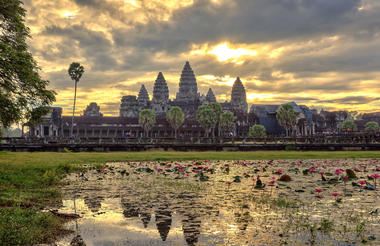
The great highlight is, of course, Angkor Archaeological Park, home to some of the most extraordinary temple sites in Asia. Angkor Wat is the icon, especially beautiful at sunrise, while Bayon is unforgettable for its serene carved faces and Ta Prohm for the way trees and ancient stone seem to have grown together. Beyond these famous sites, quieter temples such as Preah Khan, Banteay Srei and Beng Mealea add depth and variety, especially with a knowledgeable guide.
Back in town, Siem Reap has a relaxed, easy-going feel. The riverside is pleasant for a wander, while the Old Market, Made in Cambodia Market and small independent boutiques are good for local crafts, textiles and gifts. In the evening, the town comes alive with restaurants, cocktail bars and street food stalls, but it’s still easy to find quieter corners away from the bustle.
Siem Reap is also a good place for authentic local experiences, from Khmer cooking classes and countryside cycling to visits with artisans, village workshops and floating communities on Tonlé Sap.
Most travellers should allow at least three nights, with four giving a better pace. The temples are magnificent, but Siem Reap’s real appeal is the way it combines Cambodia’s ancient past with warm, creative and very human present-day life.