Deep within Namibia’s Namib Desert, Sossusvlei is a striking landscape of towering red sand dunes, among the highest in the world, pale salt pans and immense open skies. Part of the Namib-Naukluft National Park, it has a remote, almost otherworldly atmosphere shaped by silence, shifting light and extreme desert conditions. Visitors can climb famous dunes such as Big Daddy or Dune 45 at sunrise, when the sand glows orange and shadows stretch dramatically across the valley floor. Nearby Deadvlei, with its blackened camel thorn trees standing against white clay and rust-coloured dunes, offers one of southern Africa’s most distinctive desert scenes. The dry heat, the soft crunch of sand underfoot and the vast sense of space create a powerful atmosphere, though early starts and challenging temperatures are part of exploring this remarkable region.


Situated east of Etosha, bordering Fisher's Pan, Onguma Game Reserve is one of Namibia's best-kept secrets. The reserve offers visitors the opportunity to experience Africa in all her beauty and diversity. Onguma Game Reserve features over 35 480 hectares of protected land scattered with a variety of wildlife including plains game, black rhino, kudu, giraffe, zebra, lion, cheetah, leopard and more than 300 bird species. The seasonal rains attract thousands of migrating birds to the Fisher’s Pan wetland area. The neighbouring Etosha National Park is home to a rich array of wildlife, including 4 of the Big 5. Visitors can enjoy game drives, guided walks and rhino research drives within the private reserve as well as wildlife safaris into Etosha National Park to view abundant game in the largest national park in Namibia.


Stretching over 6200 square kilometres in northeast Namibia, the Bwabwata National Park includes the Caprivi Game Park and the Mahango Game Reserve which extends along the narrow Caprivi strip. The park functions as a wildlife sanctuary and practices community-engaged conservation, which visitors can take part in. It has been dubbed the 'People's Park', as the local Caprivian people live in harmony with the land and the animals. With an ever-growing wildlife population, the park is home to many animals including elephant, leopard, lion, buffalo, wildebeest, crocodile, and red lechwe. Avid birdwatchers will be thrilled to find over 330 bird species in the area. Visitors can look forward to excellent game viewing, boat safaris, nature walks and camping under the brilliantly clear Namibian night sky.


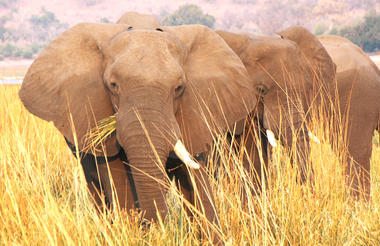
Forming the boundary between Botswana and Namibia is the Chobe River - one of the most well-known perennial rivers in Africa. The Chobe River Front encompasses vast floodplains fringed by lush riverine woodlands. The abundant wildlife inhabiting the river and its shores can be viewed from a river safari where visitors can spot elephants, hippo, water-loving antelope including the rare red lechwe and a variety of other game such as giraffe, zebra, and buffalo. Nature lovers will delight in the incredibly scenic natural landscapes and bird watchers can look forward to the wide section of bird species which can be spotted along the river banks.
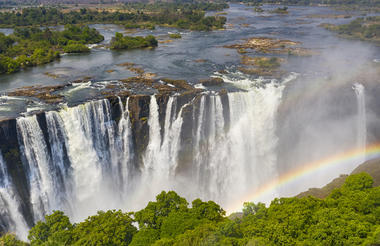
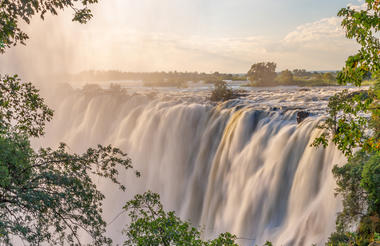
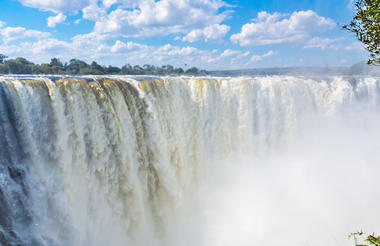
Known locally as Mosi-oa-Tunya—“The Smoke That Thunders”—Victoria Falls is one of the world’s great natural landmarks. Straddling the Zambezi River between Zambia and Zimbabwe, it forms a vast curtain of water that fills the air with mist and sound. The Zimbabwean side grants the most dramatic views, where mist rises like ghostly curtains and rainbows arc through the spray. Measuring about 1,708 metres across, it is regarded as the largest single continuous sheet of falling water on Earth. The adjacent town of Victoria Falls provides a convenient base for exploring the region, with a wide range of activities from scenic flights and microlight trips to white-water rafting, bungee jumping, kayaking, and safaris into Chobe National Park.