


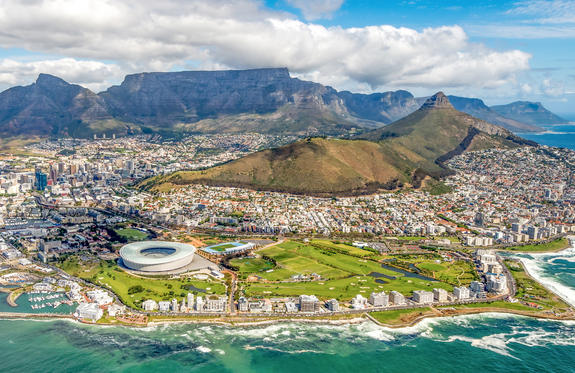
Cape Town is one of the world's most beautiful cities. Perched between the ocean and the mountain, with a national park as its heart, there is nowhere like Cape Town. Cape Town, the "Mother City", is the oldest city in South Africa and has a cultural heritage spanning more than 300 years. The unique topography of the region makes it easy to orientate oneself as long as you remember that with Table Mountain behind you and Robben Island before you, you are facing north, looking across Table Bay and up the west coast of Africa.
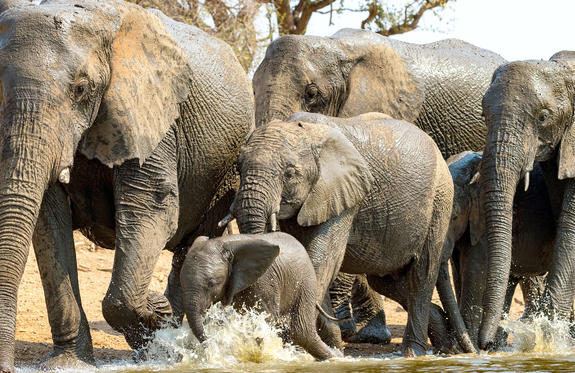
Located in South Africa’s North West Province, close to the border with Botswana, Madikwe Game Reserve is one of the country’s largest wildlife reserves and a renowned malaria-free safari destination. Set within a landscape of open grasslands, rocky hills and acacia-dotted bushveld, it offers a quieter and more exclusive atmosphere than some of South Africa’s better-known parks. Guided game drives offer opportunities to spot the Big Five, as well as endangered African wild dogs, cheetahs, and rare species such as the brown hyena. Early mornings bring crisp air and the distant calls of wildlife, while golden afternoon light transforms the savannah. As sightings can never be guaranteed, patience is part of the experience, but Madikwe’s diverse ecosystems and rich wildlife make every safari memorable.

Johannesburg is one of Africa’s biggest and most vibrant cities. It is the economic capital of Africa and the gateway to Southern Africa. Although not as famous as other South African destinations, there is plenty to do in Johannesburg and nearby Pretoria. The old city is a multi-cultural mixture of traditional medicine shops, Chinese restaurants, taxi ranks and ultra modern skyscrapers. There are excellent museums, art galleries and organised tours of historical and political interest. The shopping is Southern Africa’s best and the many restaurants cater for all tastes. The nearby township of Soweto is Johannesburg’s most popular tourist attraction.
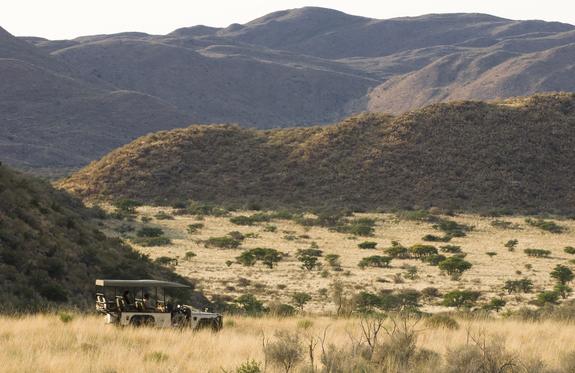
Tswalu falls within the arid savanna biome of southern Africa and has three main habitats – dunes, plains and Korannaberg mountains. The presence of these mountains form a huge basin which acts as a natural rainfall catchment. This provides a healthy water table and encourages a large, successful diversity of life - with about 80 species of mammals and 240 species of birds. The main focus of the Tswalu Kalahari tourism experience is to expose guests to the wonders of the Kalahari ecosystem. Our guides are encouraged to explore all aspects of this ecosystem including plant life, insects, birds, reptiles and the smaller mammals and to help our guests to understand the importance of conservation with particular reference to Tswalu’s vast and unique wilderness. Rare and endangered species. While Tswalu is home to most of the "charismatic" African big game species such as lion, cheetah, wild dog, desert black rhino and buffalo, Tswalu has developed into a vast area of unique biodiversity and natural beauty which offers safe haven to a number of rare and endangered species, including pangolin, aardvark, aardwolf, African wild dog, rare antelope such as roan, sable and tsessebe and endangered raptors.


