


Encompassing the bustling capital city of Windhoek, and the laid-back seaside towns of Swakopmund and Walvis Bay, Central Namibia features an array of towns, deserts, and wildlife reserves. The landscape of this region is characterised by grasslands decorated with clusters of Acacia trees, between the Namib Desert to the west and the lush Kalahari to the east. Visitors can soak in the steaming waters of the Cross Barmen Hot Springs, view a wide variety of wildlife, and explore the untouched beauty of the beautiful Erongo Mountains with the breathtakingly beautiful Spitzkoppe, which offers some of the best stargazing opportunities in the country. Divers and snorkellers will enjoy the incredible marine life just off the coast of Walvis Bay. Art lovers should make sure to visit the little town of Okahandja, famous for its fine wood carving and vibrant markets.
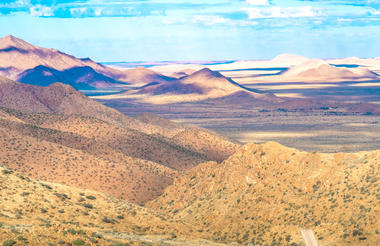
Carving out an epic rocky wonderland in southern Namibia, the Fish River has created Africa’s largest, and the world’s second-largest, canyon. Hot, dry and dramatic, the Fish River Canyon stretches for an astonishing 160 kilometres, reaching up to 27 kilometres wide and 550 metres deep. Its vast, rugged beauty draws visitors from across the globe. Adventurers can tackle the challenging 85 kilometre Fish River Hiking Trail, which winds through 1.5 billion years of geological history, while those seeking rest can soak in the mineral-rich hot springs of Ai-Ais or admire breathtaking views from Hobas Restcamp and other viewpoints along the rim. Scenic chartered flights, horse riding, nature drives, and seasonal kayaking complete this unforgettable Namibian experience.


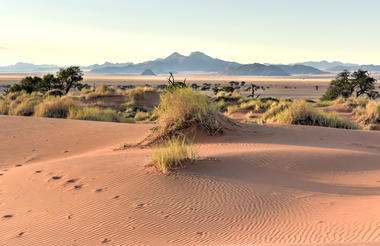
Spanning more than 172,000 hectares and encompassing several distinct desert ecosystems, the NamibRand Nature Reserve in southern Namibia is one of the largest private nature reserves in Southern Africa. Founded to conserve the unique ecosystem and biodiversity of the Namib Desert, the reserve's mix of dunes, mountains, rocky outcrops, sandy flats, and gravel plains provides habitats for a diversity of mammals, including hyenas, jackals, foxes, antelopes, and various wild cats. The reserve is also home to numerous bird species, reptiles, insects, and amphibians, alongside an array of plant species. Discover the mysterious fairy circles, enigmatic bare patches in the desert landscape whose origins remain the subject of scientific debate, or enjoy a night of sublime stargazing; as Africa's first International Dark Sky Reserve, it is one of the least light-polluted areas in the world.
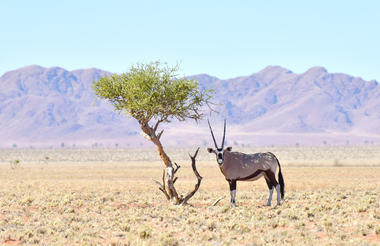
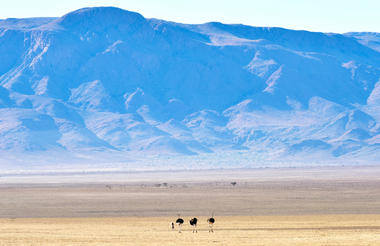
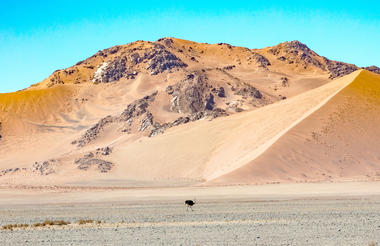
Set between the rolling dunes of the Namib Desert and the icy Atlantic coastline, Swakopmund is a relaxed seaside town in western Namibia known for its German colonial architecture, cool coastal climate, and adventurous spirit. Palm-lined streets, historic buildings, and ocean fog create an atmosphere unlike anywhere else in the country. Travellers visit for desert activities such as quad biking, sandboarding, and scenic flights over vast dunes and shipwreck-strewn shores. Cafés, bakeries, and small museums add to the town's laid-back charm, though the Atlantic waters are brisk rather than tropical. With its striking desert-meets-ocean setting and mix of adventure and history, Swakopmund is one of Namibia's most distinctive destinations.


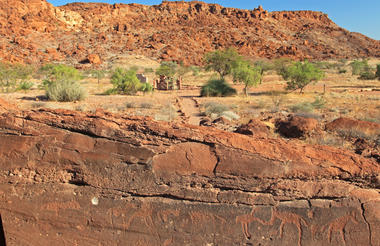
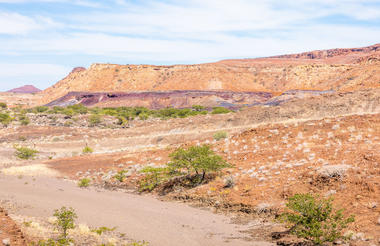
Set in the Kunene Region of northwestern Namibia, Twyfelfontein is a spectacularly scenic area, featuring one of the largest and most important concentrations of rock art in Africa. The name ‘Twyfelfontein’ translates to ‘Fountain of Doubt’, which refers to the perennial spring situated in the impressive Huab Valley flanked by the slopes of a sandstone table mountain. It was this spring that attracted Stone Age hunters over six thousand years ago, and it was during this time that the extensive group of rock engravings and paintings were produced. Visitors can look forward to basing themselves at some wonderfully shady campsites along the Aba-Huab riverbed, while exploring over thirty different sacred ritual sites of the traditional hunter-gatherer communities.
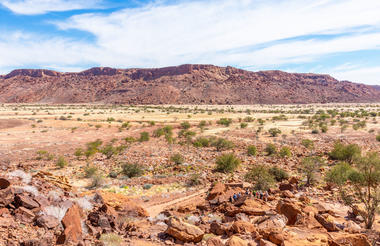
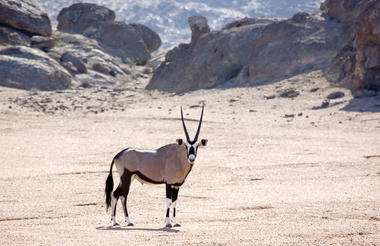
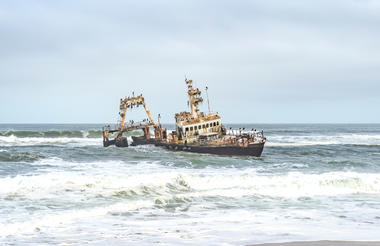
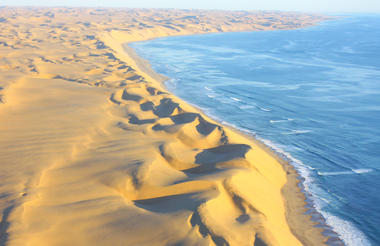
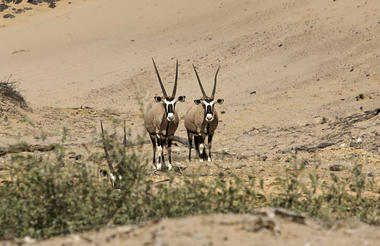
Stretching from the Swakop River to southern Angola, Namibia’s Skeleton Coast is known as the 'Land God Made in Anger'. Thousands of miles of sandy desert dotted with shipwrecks meet with the cold waters of the Atlantic, where ocean fog creeps over the shoreline. Somehow, an amazing array of wildlife and flora manages to survive in this harsh but beautiful environment. Animals living here include seabird colonies, Cape fur seals, zebras, gemsbok, desert-adapted elephants, lions, and many more. Surfing enthusiasts are drawn to the powerful crashing waves, and photographers flock from around the globe to snapshot the eerie shipwreck graveyards and breathtaking coastline.
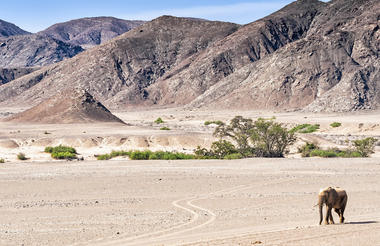
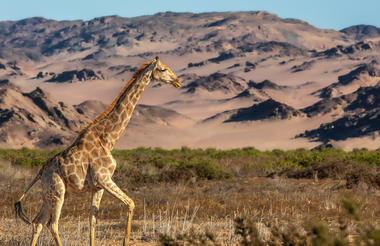
Where Kaokoland meets the Skeleton Coast, in western Namibia, the 270-kilometre-long Hoanib River is one of the last water oases in the country, providing a haven for numerous animals. Home to 75% of Namibia’s endemic species, including the largest numbers of desert-adapted, free-roaming elephants, lions, and rhinos in the world, as well as zebra, kudu, and giraffe, this is a truly exceptional and awe-inspiring place. Visitors can enjoy taking a wonderful four-wheel-drive route, going on adventurous hiking trails, running down enormous sand dunes, or climbing massive, strangely shaped rock formations as well as several guided nature walks.
Situated east of Etosha, bordering Fisher's Pan, Onguma Game Reserve is one of Namibia's best-kept secrets. The reserve offers visitors the opportunity to experience Africa in all her beauty and diversity. Onguma Game Reserve features over 35 480 hectares of protected land scattered with a variety of wildlife including plains game, black rhino, kudu, giraffe, zebra, lion, cheetah, leopard and more than 300 bird species. The seasonal rains attract thousands of migrating birds to the Fisher’s Pan wetland area. The neighbouring Etosha National Park is home to a rich array of wildlife, including 4 of the Big 5. Visitors can enjoy game drives, guided walks and rhino research drives within the private reserve as well as wildlife safaris into Etosha National Park to view abundant game in the largest national park in Namibia.


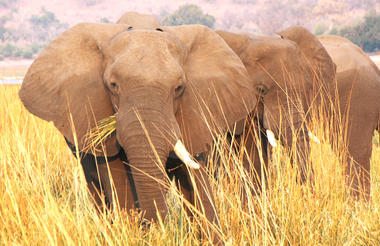
Forming the boundary between Botswana and Namibia is the Chobe River - one of the most well-known perennial rivers in Africa. The Chobe River Front encompasses vast floodplains fringed by lush riverine woodlands. The abundant wildlife inhabiting the river and its shores can be viewed from a river safari where visitors can spot elephants, hippo, water-loving antelope including the rare red lechwe and a variety of other game such as giraffe, zebra, and buffalo. Nature lovers will delight in the incredibly scenic natural landscapes and bird watchers can look forward to the wide section of bird species which can be spotted along the river banks.
Windhoek, Namibia’s capital, lies in the heart of the country amid the rolling Khomas Highlands, where wide skies and dry savannah frame a compact, orderly city. It blends German colonial heritage with contemporary African identity, creating a calm, understated atmosphere rather than a bustling metropolis. Landmarks such as Christuskirche and the Tintenpalast sit alongside modern civic buildings, while lively markets and cafés reveal everyday Namibian life. Visitors can explore museums, stroll shaded streets, or use the city as a gateway to the surrounding wilderness and safari regions. The air is often dry and clear, carrying the scent of dust and jacaranda blossoms, while distant hills glow at sunset. Windhoek offers a gentle introduction to Namibia’s landscapes and culture, with space, light and quiet defining its appeal.


