Fondly known as 'the land of smiles', Thailand is commonly associated with gorgeous golden sand, palm-lined beaches, warm aquamarine waters, glorious temples and verdant jungle-clad mountains. Thailand is the primary travel hub of Southeast Asia, offering a diverse range attractions and activities to suit all tastes and budgets. Whether exploring the teeming metropolis of Bangkok, relaxing on the tropical beaches of the southern islands, scuba diving in the underwater wonderland off the coast, jungle trekking to hill tribe villages in the North, or discovering the ancient capitals, Thailand is filled with attractions to satisfy any interest.
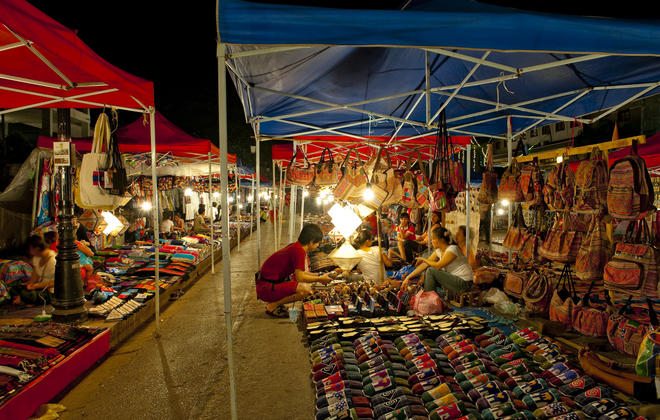
Chiang Mai, the storied “Rose of the North,” stands as the cultural soul of the former Lanna Kingdom, where centuries-old heritage blends effortlessly with contemporary refinement. Within the ancient moat and crumbling city gates lies a walkable old town filled with gleaming Lanna temples, fragrant food markets and curated boutiques showcasing northern craftsmanship. Nearby, the fashionable Nimmanhemin district offers chic cafés, design-led galleries and elegant cocktail lounges, while the Night Bazaar continues to draw visitors with its lively evening atmosphere. Chiang Mai is also a gateway to northern Thailand’s landscapes: forested mountains, rivers and national parks lie only moments away, with Doi Suthep’s revered hilltop temple providing sweeping views over the valley. Anchored by distinctive Lanna cuisine, world-class hotels and easy access to nature, Chiang Mai delivers a refined yet soulful northern Thai experience.


The Golden Triangle, where Thailand, Laos and Myanmar meet at the confluence of the Mekong and Ruak Rivers, is one of Southeast Asia’s most captivating border regions. Centred around the quiet riverside town of Sop Ruak, this area offers sweeping views of misty hills, forested mountains and the powerful waterways that have shaped its history for centuries. Longtail and Mekong boat journeys provide an unforgettable way to experience the landscape, drifting past jungle-covered riverbanks and remote rural villages. Once infamous as a major centre of the opium trade, the region now reflects on its past through two thoughtfully curated opium museums, offering valuable historical insight. Nearby, Mae Sai—the northernmost point of Thailand—adds lively local colour with its busy border market, revered Scorpion Temple and access to wild, mountainous terrain. The Golden Triangle also serves as a gateway to deeper cultural encounters, from visiting hill-tribe communities to crossing the river into the tranquil Lao village of Xieng Kok. With its evocative scenery, layered history and gentle rhythm of life along the Mekong, the Golden Triangle offers a richly atmospheric northern Thai experience.


Wedged between a number of larger neighbouring countries, Laos is often overlooked in favour of tourism giants such as Thailand and Vietnam. But these travellers are missing out on an extraordinarily scenic and culturally rich destination. Laos boasts a reputation as the least visited, least Westernised, and most untouched of all Indochinese nations. Only time will tell how long this will last, but while it does, visitors who choose to explore this nation’s remote areas will be richly rewarded. Laos’ primary drawcard is undoubtedly the mighty Mekong River which traverses the length of the country and is considered the second most biodiverse river in the world. In the north, the landscape is characterised by little-explored jungle-clad mountainous areas where visitors can witness the intriguing cultures of the various hill tribes that populate this region. Travellers on the hunt for cultural interest should head for the bustling capital of Vientiane, with its innumerable temples and Buddhist monuments. It is this variety of exotic wildlife, remote wilderness and remarkable cultural treasures that make Laos a truly unique and unforgettable holiday destination.
The small but charming village of Pakbeng sits at the midpoint between Huay Xai and Luang Prabang, where the Nam Beng River meets the Mekong, making it the quintessential stopover for travellers taking the scenic slow-boat journey through northern Laos. Quiet and unhurried, the village offers a handful of simple pleasures: a local market for basic supplies and a glimpse of daily life, a few modest temples, and a main street lined with thatch-roofed shops selling handmade trinkets and eateries serving traditional Lao dishes. Nearby, an elephant camp provides opportunities for respectful, close-up encounters with these gentle Asian giants. With its riverside setting and laid-back charm, Pakbeng offers a delightful pause between Mekong journeys.


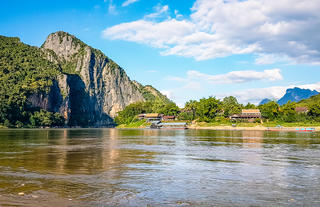
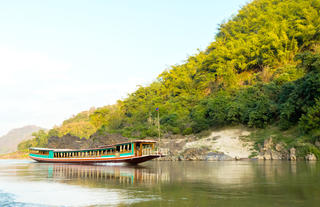
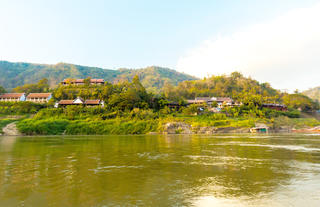
Luang Prabang is a historic town in northern Laos, set at the confluence of the Mekong and Nam Khan rivers and surrounded by forested mountains. A UNESCO World Heritage-listed destination, it is renowned for its well-preserved Buddhist temples, French colonial architecture and relaxed riverside atmosphere. Travellers can explore ornate monasteries, climb Mount Phousi for panoramic views, and visit the Kuang Si waterfalls, where turquoise pools cascade through lush jungle. Early risers can witness the traditional alms-giving ceremony, while the lively night market offers local handicrafts and Lao cuisine. With its blend of spiritual heritage, natural beauty and unhurried pace, Luang Prabang provides a distinctive introduction to Laos and is particularly appealing to travellers seeking culture, scenery and authentic local experiences.