Located in southwestern Africa, Namibia boasts a well-developed infrastructure, some of the best tourist facilities in Africa, and an impressive list of breathtaking natural wonders. Visitors can explore the capital of Windhoek and discover the lovely coastal town of Swakopmund, which boasts remnants of the country’s German influence, reflected in its architecture, culture, cuisine, and the annual Oktoberfest celebrations. To properly appreciate this extraordinary country, you will have to venture out of the cities to explore the remarkable natural landscapes Namibia has to offer. These include: the impressive Fish River Canyon; the vast Etosha National Park teeming with abundant wildlife, such as lions, desert-adapted elephants and the Hartmann's Mountain Zebra; the hauntingly beautiful Kalahari Desert; and, ofcourse, the Namib Desert stretching for over 2000 km along the magnificent Atlantic Coast. Namibia is an ideal destination for travellers seeking an unforgettable African experience in a uniquely beautiful, untamed wilderness.

Set in the heart of Namibia’s Otjozondjupa region, Otjiwa Game Reserve spans 12,000 hectares of open bushveld, rolling plains and acacia-studded savanna. The reserve exudes a serene and private atmosphere, where wildlife roams freely, and the horizon stretches unbroken beneath vast African skies. Visitors can embark on guided game drives to spot giraffe, zebra, antelope and rhino, or enjoy walking safaris that reveal the subtle rhythms of the bush. At sunrise, the air carries the scent of dry grass and earth, while the calls of birds and distant wildlife punctuate the quiet, a place where Namibia’s wild beauty is both immersive and unforgettable.

Swakopmund is a charming coastal town and a popular destination for tourists from all over the world. The city blends German colonial architecture with African flair and offers a variety of activities and attractions. Situated on the coast on the edge of the Namib Desert, the city provides a wonderful view of the Atlantic Ocean. The towering sand dunes and rugged coastline offer numerous opportunities for activities such as sandboarding, quad biking, and dune hiking. Swakopmund is also renowned for its excellent restaurants and cafes, where you can enjoy both Namibian and international cuisine. Be sure to taste local specialties made from fresh fish and seafood.
THINGS TO DO
- Dolphin Cruise (mola-namibia.com)
- Tommy’s Living Desert Tour (livingdeserttours.com.na)
- Excursion toWalvis Bay
- Fat Bike Tours (https://www.swakopfatbiketours.com/)
RESTAURANT TIPPS
- The Tug (www.the-tug.com)
- Kücki’s Pub (www.kuckispub.com)
- Jetty 1905 (www.lighthousegroup.com.ca)
- The Wreck Restaurant (www.the-wreck.com)
- Village Cafe (www.villagecafenamibia.com)
OUR TIP
Quad biking with Desert Explorer: Looking for a bit of adrenaline? Then join Desert Explorer on a tour through the fascinating dune landscape around Swakopmund. One to three-hour quad bike tours are offered with experienced guides (www.namibiadesertexplorers.com).

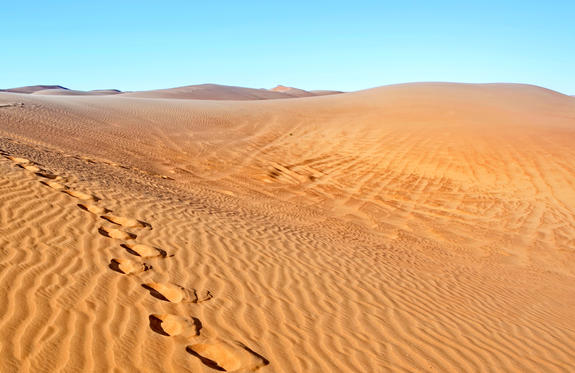
The Sossusvlei region lies in the heart of the breathtaking Namib Desert and is renowned for its extraordinary beauty and majestic landscapes. Sossusvlei is a dry clay pan surrounded by massive sand dunes, including the famous Dune 45, which is among the highest in the world. The landscape of Sossusvlei is characterized by impressive diversity. The red-orange sand dunes create a striking contrast with the blue sky and the white clay floors. The play of light and shadow throughout the day produces spectacular color displays, especially at sunrise and sunset.
In addition to Dune 45, the Sossusvlei region features other unique natural attractions such as Dead Vlei, a dried-up clay pan with petrified tree trunks that have been lying in the desert sun for centuries. This surreal backdrop offers photographers and visitors unparalleled opportunities to capture the beauty and tranquility of the desert. The Sossusvlei region is a paradise for nature lovers and adventurers. Numerous activities are available, including dune hikes, photo tours, stargazing, and even hot air balloon rides to explore the impressive landscape from a bird's-eye view.
Sesriem is a small settlement that serves as the gateway to the Sossusvlei region and the Namib-Naukluft National Park. It is located about 65 kilometers southwest of Solitaire and is a popular starting point for visitors wishing to explore the spectacular sand dunes and desert landscapes of the area. The name "Sesriem" refers to the six leather straps that early settlers tied together to draw water from the deep gorges surrounding the Tsauchab River. These gorges are now known as Sesriem Canyon, offering a fascinating sight with high rock walls and a dried-up riverbed.
Sesriem is also known for its picturesque campsites, lodges, and guest farms, which provide comfortable accommodations amid the desert landscape. Many of these accommodations organize guided tours to nearby attractions, including the Sossusvlei dunes, Dead Vlei, and Sesriem Canyon.
WILDLIFE IN THE REGION: Desert Elephants | Oryx Antelopes (Gemsbok) | Springbok | Ostriches | Desert Lions | Jackals | Geckos & Lizards | Snakes
Perched above the plains of the Namib Desert in the rocky Aus Mountains, the small village of Aus lies at the heart of phenomenal botanic diversity. Aus serves as an excellent base from which to see the area’s major attraction: the feral horses of the Namib Desert, which run wild and free in the sparsely vegetated plains. The best place for viewings is at the water trough at Garub, which lies just twenty kilometres away from Aus. Visitors can gain insight into the Succulent Karoo by visiting beautiful Gondwana Sperrgebiet Rand Park, home to the most biodiverse desert in the world. Don't miss the opportunity to camp under the famously clear Namibian night sky and experience the desert landscape on horseback.

The Fish River Canyon is the second largest canyon in the world after the Grand Canyon in the USA. It is part of the state-run Ais-Ais Richtersveld Transfrontier Park. The entrance to the park is located 10 kilometers from the well-known viewpoint called Hell's Bend at the Hobas Restcamp.
The Fish River Canyon National Park, officially known as Ai-Ais National Park, covers a total area of 6,045 km², providing a protected area for Karoo succulents and endemic wildlife. To experience the beauty and serenity up close, lace up your hiking boots and embark on a private journey along the canyon. Unfortunately, day visitors are not allowed to hike into the canyon. Guided expeditions are also offered from April to September.
The Fish River is 800 kilometers long, making it the longest river in Namibia. It originates in the eastern parts of the Naukluft Mountains and flows for about 200 km before reaching the Hardap Dam, the largest water reservoir in the country, with a circumference of 30 km and an area of 28 km². The Fish River Canyon begins at Seeheim, at the lower reaches of the river. The canyon stretches for 161 km, is 27 km wide, and reaches depths of up to 550 meters. It ends at Ais-Ais, where the river flows into the Orange River, forming the border with South Africa.
About 650 million years ago, an impressive mountain range was shaped by the forces of erosion, eventually giving way to a vast plain flooded by the sea. However, it wasn't until about 350 million years later that a fascinating biological process set the formation of the Fish River Canyon in motion. Ancient tectonic faults opened up a massive trench, which expanded over time. Thus, the wide, ancient valley of the mighty Fish River was formed. The edges of this trench, now more than 20 km apart, mark the imposing cliffs that shape the canyon.
Originally, the riverbed was about 300 meters higher than it is today around 300 million years ago. Shortly thereafter, the Gondwana Ice Age began, further deepening the mighty glacial trench. Today, it is almost unimaginable to picture ice or glaciers in this breathtaking gorge—a contrast that makes the incredible history and transformation of the Fish River Canyon all the more fascinating.
South Africa is a fascinating and diverse travel destination, and its slogan, "A World in One Country," truly reflects reality.
The "New South Africa" has eleven official languages. In addition to Afrikaans, English is the official language. The following indigenous languages are also spoken, listed in alphabetical order: Ndebele, North and South Sotho, Swati, Tsonga, Tswana, Venda, Xhosa, Zulu.
The transition to democracy, following the state elections in April 1994 in a country with over 56 million inhabitants, proceeded relatively peacefully.
South Africa is a highly diverse country where various cultures, religions, and ethnicities coexist, mostly in a respectful manner. The population is exceptionally friendly and helpful, eager to engage in contact and conversation with visitors to their country.
The country is three times the size of Germany (approximately 1.22 million km²) and is divided into nine provinces. It offers a variety of geographical and climatic zones, from the semi-desert Karoo to the lush subtropical Natal coast, from the Mediterranean climate of the Cape to the "Bush" in eastern Mpumalanga, formerly Transvaal. Explore and experience the magnificent blend of breathtaking landscapes: the mountainous regions perfect for hiking, vast wildlife reserves and conservation areas like Kruger National Park and Hluhluwe-Imfolozi Game Reserve, endless pristine beaches, modern cities, and sunshine 365 days a year, as somewhere in South Africa, the sun shines every day!
The different climate zones and the vastness of the country offer a variety of sports activities, such as horseback riding, surfing, hiking, canoeing, swimming, or golfing.
Many visitors "fall in love" with South Africa and return repeatedly to enjoy their holidays here and embark on new adventures. A major advantage is that there is no time difference (only one hour during the switch to daylight saving time/winter time), resulting in no jet lag.
Please keep in mind that unforeseen or unexpected situations may arise during your trip to South Africa. Flexibility, patience, and openness are always good companions and often the key to a wonderful journey.

Stretching for over 1000 kilometres along South Africa’s scenic West Coast, the Namaqualand is known for its stark, arid beauty. Once a year in early Spring, the Namaqualand landscape explodes into a kaleidoscope of colour. The dusty plains are transformed into a blanket of thousands of flowering wildflowers. International and local visitors flock here to see this seasonal natural splendour. Aside from the endless photogenic landscapes, visitors can look forward to viewing a wide variety of wildlife and exploring the quaint seaside towns dotting the coast as well as the various historic towns scattered in the hinterland.

Clanwilliam is a picturesque town nestled in Cederberg, offering a world of natural beauty, cultural depth, and unmatched history. Surrounded by the stunning backdrop of the Cederberg Mountains, which rise majestically over the region, this area is a paradise for nature lovers and adventurers alike. Its striking rock formations and gentle valleys are perfect for exploring along numerous hiking trails. The Cederberg Mountains are renowned for their unique rock art, revealing a deep connection to the history and culture of South Africa's indigenous peoples.
The town itself exudes a welcoming and warm atmosphere steeped in its historical heritage. Strolling through its streets, visitors can discover well-preserved colonial-era buildings. The Clanwilliam Museum offers fascinating insights into the region's history, spanning from its indigenous inhabitants to European settlers.
A culinary journey in Clanwilliam is another experience not to be missed. Sample local delicacies and enjoy fresh produce sourced from surrounding farms.
Sevilla Rock Art Trail
The 5 km trail winds along the Brannewyn River, visiting nine sites adorned with rock art left by the San people, who inhabited the area for millennia. The Sevilla Rock Art Trail showcases some of the finest examples of rock art, providing a captivating glimpse into the world of early inhabitants.
The trail is relatively easy to navigate, with an inspiring atmosphere enhanced by spring wildflowers (September to November). Alongside encounters with springboks, eland antelopes, and smaller wildlife like dassies and baboons, hikers can observe a fascinating diversity of native plant species and birds.

Cape Town is South Africa’s second-largest city and the capital of the Western Cape province. Affectionately known as the “Mother City,” it was the first city founded during South Africa’s colonial period. The city’s cultural richness reflects influences from Indonesian, French, Dutch, British, and German settlers, shaping its architecture, language, cuisine, and winemaking traditions. Today, Cape Town is a vibrant, unique city where history comes alive.
Things to Do
Cape Town offers endless ways to enjoy your stay. Here are some of our personal highlights:
Scenic Helicopter Flights
See Cape Town from the skies! Take a private or shared helicopter flight over the stunning Cape Peninsula and enjoy sweeping views of beaches, mountains, and the city, with Table Mountain as the perfect backdrop. Flights are weather-dependent.
helicopterscapetown.co.za
City Tour on a Red Double-Decker Bus
Explore Cape Town at your own pace on an open-top bus, combining sightseeing with walking tours. Highlights include Parliament, City Hall, the colorful Bo-Kaap neighborhood, and Company’s Garden. Don’t forget your camera!
citysightseeing.co.za/en/cape-town
Constantia Winelands
Just 15 km from the city, the Constantia wine region is Cape Town’s “home vineyard.” Discover its hidden wine routes and learn about South Africa’s oldest wine-producing region. Our top pick: a wine tasting at historic Groot Constantia.
grootconstantia.co.za
Westside Adventurers Hiking Group
Join locals and tourists for daily hikes around Cape Town. Westside Adventurers also offers fun activities like karaoke, bowling, and theater visits.
westsideadventurers.co.za
Table Mountain – Hike or Cable Car
Take in breathtaking views of Cape Town and the ocean with a hike or a relaxing cable car ride. During peak season (October–March), we recommend the Fast Track cable car to skip long queues. Table Mountain is a must-see for every visitor!
tablemountain.net
Classic Cobra Car
Take a drive in a classic Cobra car and enjoy the spectacular coastal roads of the Cape and the breathtaking views in the Cape Town wine region. From only R3,600 per day. (https://cobraexperience.activitar.com)
Township Tours – Uthando
Support social initiatives while exploring local communities. Uthando offers customized tours that fund projects focused on HIV awareness, substance abuse prevention, and support for women and children.
uthandosa.org
Kirstenbosch Botanical Gardens
Nestled on Table Mountain’s eastern slopes, Kirstenbosch preserves South Africa’s unique flora, including Fynbos and Protea species. Enjoy 6,000+ plants, scenic walks, and summer concerts. Free guided tours run Monday–Friday at 10:00, 11:00, and 14:00 (approx. 90 min).
sanbi.org/gardens/kirstenboch
E-Bike Tours & Cycling Adventures
Explore Cape Town and its surroundings by e-bike—perfect for longer rides and scenic routes.
ebikecapetown.com
Beaches
Cape Town boasts some of the country’s best beaches—surf, sunbathe, or stroll along pristine sands.
(insideguide.co.za/cape-town/best-beaches)
Shopping in Cape Town
Victoria & Alfred Waterfront + The Watershed (waterfront.co.za)
Tribal Trends (capetownccid.org/explore/shop/tribal-trends)
Baraka Gifts & Decor (barakashop.co.za)
The Collective, Hout Bay (thecollectivehoutbay.co.za)
Markets:
Find fresh organic produce, street food, local art, and live music at:
Old Biscuit Mill, Woodstock (theoldbiscuitmill.co.za)
Oranjezicht City Farm Market (ozcf.co.za/market-day)
Dining in Cape Town
Fine Dining:
FYN Restaurant (fynrestaurant.com)
Pier Restaurant (pier.restaurant/food)
La Colombe at Silvermist (lacolombe.co.za)
Stylish & Trendy Spots:
Willoughby & Co (Sushi, willoughbyandco.co.za)
TANG (Japanese, tanghospitality.com)
Dorp Hotel Restaurant (dorp.co.za)
Grand Africa Café & Beach (grandafrica.com)
Bilboa (bilboa.co.za)
Ramenhead (by FYN team, ramenhead.co.za)
Belly of the Beast (bellyofthebeast.co.za)
The Strangers Club (Breakfast, thestrangersclub.co.za)
Bo-Kaap Cooking Tours
Learn about South African culture through its cuisine.
bokaapcookingtour.co.za
Bars & Nightlife:
insideguide.co.za/cape-town/bars
Reservations Tip: For top restaurants in Cape Town and the Winelands, book 1–2 months in advance via dineplan.co.za. Some require a deposit, deducted from your meal.
Insider Tip
First Thursdays: On the first Thursday of every month, art galleries across Cape Town stay open until 9 PM. Locals stroll along Bree Street and Church Street with a glass of wine, enjoying the relaxed, year-round atmosphere.
www.first-thursdays.co.za
On the third Thursday of each month, the event moves to studios, galleries, and museums along Roeland Street, Buitenkant Street, and Harrington Street.