Hwange National Park dominates nearly 15,000km² of western Zimbabwe. The areas’ status as the royal hunting ground of Mzilikazi, King of the Matabele people, in the 1800s testifies to its superior quality as a wildlife destination. https://www.youtube.com/watch?v=HG2P-UpFJHw
The Park hosts over 100 mammal and 400 bird species, including 19 large herbivores and eight large carnivores. All Zimbabwe's specially protected animals are to be found in Hwange and it is the only protected area where gemsbok and brown hyena occur in reasonable numbers.
Grazing herbivores are more common in the Main Camp Wild Area and Linkwasha Concession Area, with mixed feeders more common in the Robins and Sinamatella Wild Areas, which are more heavily wooded. Distribution fluctuates seasonally, with large herbivores concentrating in areas where intensive water pumping is maintained during the dry season.
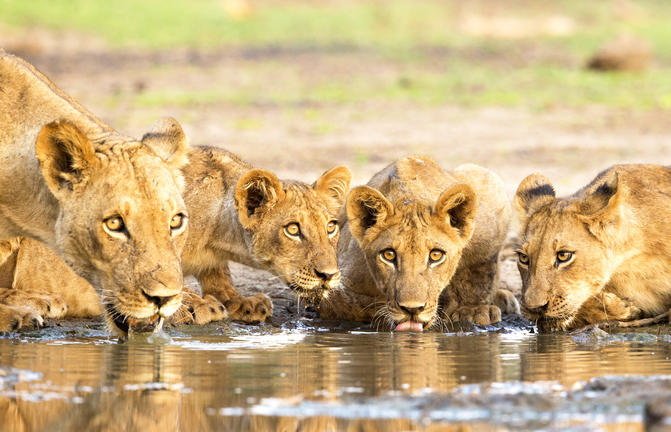
The population of African wild dogs to be found in Hwange is thought to be of one of the larger surviving groups in Africa today, along with that of Kruger National Park and Selous Game Reserve. Other major predators include the lion, whose distribution and hunting in Hwange is strongly related to the pans and waterholes, leopard, spotted hyena and cheetah.
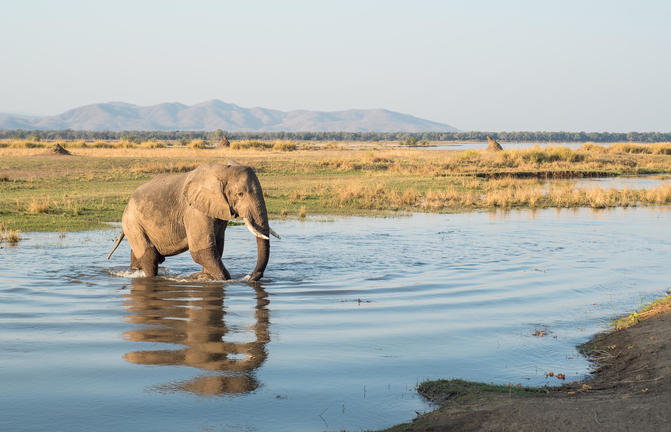
Mana Pools National Park is unique; it's a World Heritage Site. Great for walking and canoeing safaris to view the abundant wildlife, including a healthy elephant population.
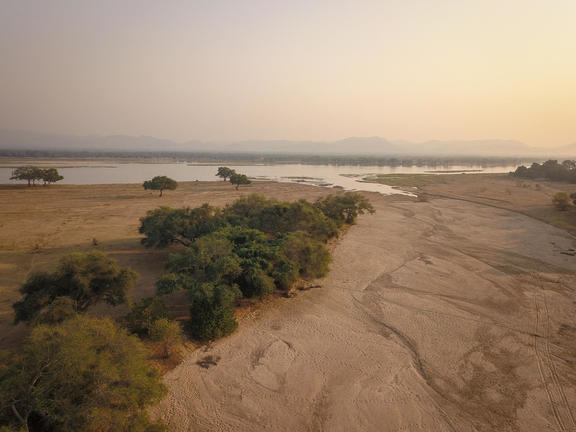
After leaving Lake Kariba, the Zambezi River continues east through the huge rift valley, widening and slowing down as it meanders through the Lower Zambezi Valley. It’s flanked by Zambia’s Lower Zambezi National Park on its north bank, and Zimbabwe’s Mana Pools National Park to the south.
Over millennia, the wide and slow Zambezi has changed its course, with the river’s old meanders leaving small oxbow lakes, surrounded by lush vegetation and tall stands of ebony and mahogany trees. Within the national park, these oxbow lakes have created four large pools (‘mana’ being the Shona word for ‘four’, giving the park its name) and these, along with the permanent Zambezi River, provide an abundance of water and greenery which in turn attract a wealth of big game and result in some stunning scenery.