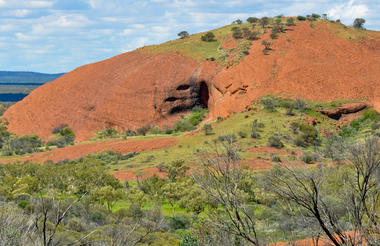
This hardy and remote desert town, initially named Stuart, started out as a telegraph station in the 1870s. Renamed Alice Springs in 1993, it’s the capital of the Australian Outback and the best place to start your exploration of the breathtaking Red Centre – the country’s interior desert region – as well as to experience the vibrant art and culture of the Aboriginal people. Venture out to Uluru-Kata Tjuta National Park, and explore Kings Canyon, the West MacDonnell Ranges, Simpson Desert, and the Devil’s Marbles Conservation Reserve – home to an iconic pair of round granite boulders. While you’re in town, make sure to visit the Alice Springs Telegraph Station Historical Reserve to get a feel of the town’s unique pioneering history.


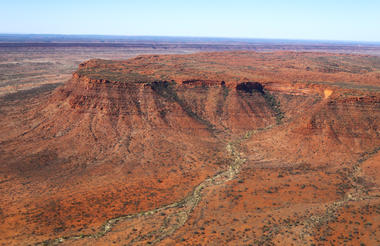
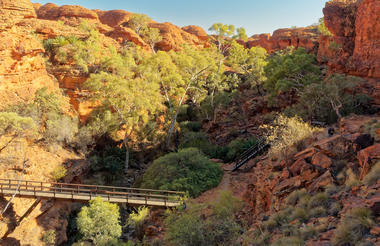
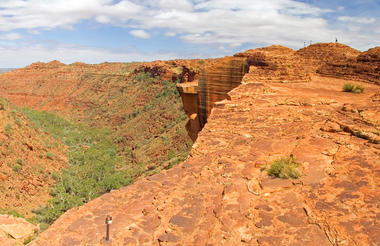
Australia’s Watarrka National Park contains the western end of the George Gill Mountain Range, the home of Kings Canyon. The scenic landscape of rugged ranges, rock holes, and gorges is a refuge for many plants and animals, making the park an important conservation area and major attraction. The canyon features ancient sandstone walls sculptured by the elements, rising 100 metres up to a plateau of rocky domes. History enthusiasts can enjoy discovering the heritage of the Luritja Aboriginal people, who lived in the area for more than 20 000 years, in one of the many guided tours. Don’t miss the opportunity to catch the sunrise from the top of the canyon, dine under the stars at the resort, or take a helicopter ride over Watarrka National Park.
One of Australia’s most recognisable landscapes, Uluru-Kata Tjuta National Park is a UNESCO World Heritage Site that encompasses striking geological formations rising from the vast red plains of central Australia. At its heart, Uluru is a rust-red sandstone monolith rising 348 metres above the surrounding plain, while Kata Tjuta is a group of 36 great domes formed from conglomerate rock. The formations are central to the traditional beliefs of the Anangu, the Aboriginal people who are the park’s traditional owners, and the Cultural Centre introduces visitors to Anangu culture, Tjukurpa and traditional arts and crafts. Around Uluru, walking trails pass caves, rock shelters, ancient Aboriginal rock art and Mutitjulu Waterhole beneath the towering cliffs. Scenic drives connect the main sights, while guided tours explore the desert landscape and its cultural heritage. At dawn and sunset, changing light washes the rock faces in deep reds and oranges, while exceptionally clear skies create superb conditions for stargazing.