


Siem Reap is the gateway to the temples of Angkor, but it’s much more than a base for sightseeing. This lively, welcoming town combines ancient history, good food, boutique hotels, craft shops, galleries and a growing creative scene, making it one of Cambodia’s most rewarding places to spend several days.
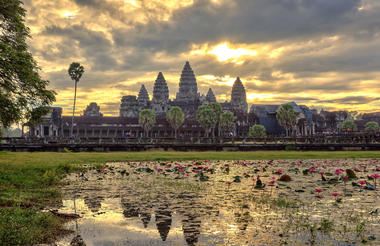
The great highlight is, of course, Angkor Archaeological Park, home to some of the most extraordinary temple sites in Asia. Angkor Wat is the icon, especially beautiful at sunrise, while Bayon is unforgettable for its serene carved faces and Ta Prohm for the way trees and ancient stone seem to have grown together. Beyond these famous sites, quieter temples such as Preah Khan, Banteay Srei and Beng Mealea add depth and variety, especially with a knowledgeable guide.
Back in town, Siem Reap has a relaxed, easy-going feel. The riverside is pleasant for a wander, while the Old Market, Made in Cambodia Market and small independent boutiques are good for local crafts, textiles and gifts. In the evening, the town comes alive with restaurants, cocktail bars and street food stalls, but it’s still easy to find quieter corners away from the bustle.
Siem Reap is also a good place for authentic local experiences, from Khmer cooking classes and countryside cycling to visits with artisans, village workshops and floating communities on Tonlé Sap.
Most travellers should allow at least three nights, with four giving a better pace. The temples are magnificent, but Siem Reap’s real appeal is the way it combines Cambodia’s ancient past with warm, creative and very human present-day life.
Tonlé Sap is one of Cambodia’s most remarkable natural landscapes, a vast freshwater lake whose size changes dramatically with the seasons. During the dry months it retreats into a broad, open body of water, while in the wet season the lake swells across the surrounding floodplain, filling forests, fields and channels with life. This annual rhythm has shaped the communities, wildlife and culture of central Cambodia for centuries.
For travellers visiting from Siem Reap, Tonlé Sap offers a very different perspective from the temples of Angkor. A boat trip takes you out into a world of floating houses, stilted villages, fish traps, small schools, pagodas and waterborne markets, where daily life moves according to the level of the lake. Depending on the season, you may pass through flooded forest, see fishing boats returning with their catch, or watch children paddling between homes as naturally as others might walk along a village lane.
The lake is also one of Southeast Asia’s most important freshwater ecosystems, supporting birdlife, fish stocks and wetland habitats that are vital to Cambodia. It’s worth visiting with a good local guide, as this helps put what you’re seeing into context and gives a more thoughtful understanding of life on the lake.
The best experience is usually in the wet or post-wet season, when water levels are higher and the scenery is at its most atmospheric. During the low-water months, some areas can feel more exposed, but the visit still offers a fascinating insight into Cambodia’s relationship with water, food, community and resilience.


Phnom Penh is Cambodia’s capital and its most important city, set at the meeting point of the Mekong, Tonlé Sap and Bassac rivers. It’s a city of contrasts, where royal palaces, saffron-robed monks, busy markets, French colonial buildings, modern cafés and riverside life all sit alongside the country’s more difficult recent history.
The city is best explored with time and context. The Royal Palace and Silver Pagoda give a glimpse of Cambodia’s royal traditions, with elegant Khmer architecture, gilded roofs and peaceful courtyards in the heart of the city. Nearby, the National Museum of Cambodia is one of the best places to understand the artistic and spiritual heritage of the Khmer world, especially before or after visiting Angkor.
Phnom Penh also asks visitors to engage with Cambodia’s 20th-century history. The Tuol Sleng Genocide Museum and Choeung Ek Killing Fields are deeply sobering, but important for understanding the resilience of the country and its people. These visits are best done with a thoughtful guide and enough time afterwards to pause and reflect.
For a lighter side of the city, wander the riverside promenade, explore Central Market or Russian Market, or stop at one of the city’s growing number of independent cafés, galleries and social enterprise shops. Phnom Penh is also one of the best places in Cambodia for food, from classic Khmer dishes to contemporary restaurants and lively street stalls.
Phnom Penh works well at the start or end of a Cambodia itinerary. It’s busy and sometimes confronting, but it’s also warm, engaging and essential to understanding Cambodia properly.
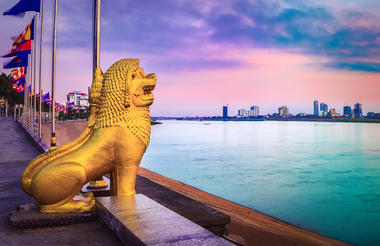
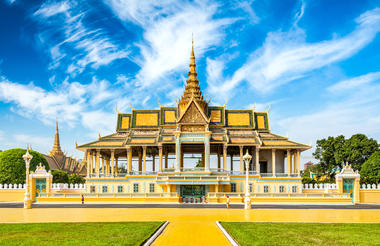
Oudong was Cambodia’s royal capital for more than two centuries before the court moved to Phnom Penh in the 19th century. Set around 40 kilometres northwest of the capital, it makes an interesting and atmospheric excursion for travellers wanting to understand more of Cambodia’s royal and Buddhist history without travelling far from the city.
The main focus is Phnom Oudong, a ridge of low hills topped with stupas, shrines and pagodas. A long staircase leads up from the base, passing local vendors and pilgrims before opening onto wide views across rice fields, sugar palms and village rooftops. The climb is steady rather than difficult, and the reward is both the scenery and the quiet sense of history at the top.
The hill is dotted with memorials and royal stupas containing the remains of former kings. Some structures are beautifully restored, while others feel older and more weathered, giving the site a layered, lived-in atmosphere. On weekends and Buddhist holy days it can be lively with Cambodian families and worshippers, while weekdays tend to be quieter.
Oudong is often visited as a half-day trip from Phnom Penh, sometimes combined with a stop at a local village, market or silversmithing workshop along the way. It’s best to visit in the morning or late afternoon, when the heat is gentler and the light over the countryside is softer.
Oudong suits travellers who enjoy history, gentle walking and places where local devotion still feels very present. It’s not as grand as Angkor, but it gives a valuable glimpse into Cambodia’s royal past and spiritual life.


Dotting the Tatai River in southwestern Cambodia, the Koh Andet Island is considered one of the most pristine wilderness areas in Southeast Asia.
Visitors can stay in the tranquil floating Khmer-style villas which are idyllically set on the river. Visitors can discover an array forest wildlife including a variety of exotic birdlife, Javan rhinoceroses, Indochinese tigers and Asian elephants and enjoying the views of the Cardamom Mountains in the distance.
Jump on a fishing trip downriver, watch a beautiful riverside sunset, and lucky visitors can spot magical fireflies during the dry season.
Day tours are popular and include: jungle tours featuring lush greenery, sparkling streams, and waterfalls; scenic boat tours to view mangrove forests and riverside palm trees, and guided walks through pristine natural landscapes.
Don’t miss the chance to kayak down the river at your own pace and soak up the spectacular riverside views.


Cardamom Mountains cover one of the wildest and most important wilderness areas in mainland Southeast Asia, stretching across southwest Cambodia in a vast landscape of rainforest, rivers, waterfalls and remote valleys. For travellers who enjoy nature, this is Cambodia at its most untamed, far removed from the temples, towns and busier tourist routes.
The region is known for its rich biodiversity, with dense forest providing habitat for elephants, gibbons, hornbills, clouded leopards and many rare species that are now difficult to find elsewhere. Wildlife sightings are never guaranteed, but the sense of immersion in nature is very real, especially when staying in one of the area’s small eco-lodges.
The best experiences here tend to be slow and low-impact. Days might include guided jungle walks, kayaking along quiet rivers, visiting waterfalls, watching birds from the forest edge, or learning about conservation projects that work with local communities to protect the forest. The scenery is lush and atmospheric, particularly in the green season when the rivers are full and the forest feels especially alive.
The Cardamoms are also a good choice for travellers who want a more meaningful break between Cambodia’s cultural highlights. A stay here works well after Phnom Penh or before heading down to the coast, adding a strong nature element to the journey.
Facilities are generally simple rather than luxurious, and travel times can be long, but that is part of the appeal. The reward is a rare chance to experience Cambodia’s wilder side, where the pace slows, the forest closes in, and the sounds of the jungle take over.


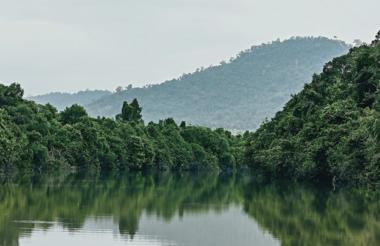
The sleepy fishing village of Krong Kaeb, also known as Kep, rests on the Gulf of Thailand and is the capital of Kep Province in southern Cambodia.
Once a vibrant resort town, Krong Kaeb is now a serene seaside township dotted with the dilapidated shells of what was once lavish French colonial mansions.
Travellers flock to the area to visit the famous crab market, where seafood lovers can indulge in the delicious delicacy. Within walking distance from Kep Beach is an 8-kilometre track that leads to Kep National Park.
Along the route, trekkers can take the ‘Stairway to Heaven’ trail that leads to a tranquil Buddhist temple, a nunnery and Sunset Rock viewpoint that offers sweeping vistas of the town, mountains, the beach and views of the island of Phu Quoc.


