


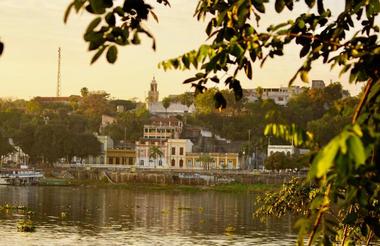
Set next to the border between Brazil, Paraguay, and Bolivia, Corumbá is a large city and the main tourist attraction in the Mato Grosso do Sul State. This is mainly owing to its proximity to the famous Pantanal wetlands (the largest on earth), where a huge variety of plant and animal species can be seen (including the captivating and precious Ocelot wild cat, giant river otters, and many more). The city was also one of the most important ports in South America during colonial times; a wealth of heritage buildings await exploration, including several ancient forts. The city is watched over by the O Cristo (The Christ) statue (similar to the one in Rio) and boasts numerous fascinating museums, attractive parks, and plenty of excellent restaurants.


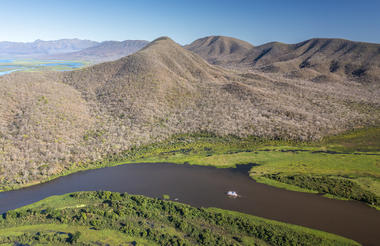
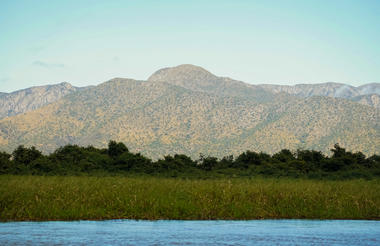
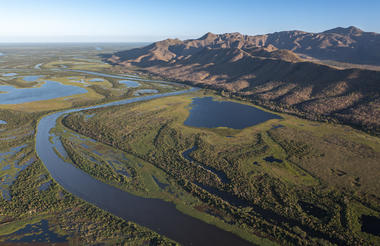
The Amolar Mountain Range is one of the most protected areas in the Pantanal region, a biodiversity corridor, and a natural barrier to regulate humidity and reduce river runoff. This Natural World Heritage site is 80km long, has an altitude peak of more than 950m above sea level, and is located on the border between Brazil and Bolivia, separating the cities of Corumbá (MS) and Cáceres (MT). There are three great lagoons in its surroundings: Mandioré, Gaíva, and Uberaba. The Amolar Mountain Range is an encounter of biomes, a rare beauty, and a territory with archaeological remains of people who lived there 8 thousand years ago.


Serra do Amolar.
As previously described
The world’s biggest inland wetland system, the Pantanal Reserve is a biodiversity hot spot and one of Brazil’s premier tourism destinations. Encompassing rivers, lakes, marshes, floodplains and both perennial and non-perennial streams, it is home to myriad exotic wildlife species, including jaguars, hyacinth macaws, giant anteaters, capybara and caiman. Birdwatchers and animal lovers will be in their element here – the Pantanal is considered in some circles to be superior game-viewing territory to the Amazon, where the dense foliage obscures much of the wildlife. While you’re here, don’t miss a visit to the Parque Nacional do Pantanal Matogrossense – a UNESCO World Heritage Site – and a four-day boat trip into the Puerto Jofre region, where visitors have an excellent chance of spotting a jaguar.


Resting on the banks of the Cuiabá River in southern Brazil, Porto Jofre is part of the Pantanal wetlands system - one of the most beautiful and biodiverse corners of the planet. The rainforests, rivers and estuaries surrounding the town are home to a incredible array of bird and animal life, including monkeys, tapirs, capybaras, macaws, giant otters, armadillos, anteaters and even the elusive jaguar. This one of the few places in the world where you may still be able to catch a glimpse of these majestic cats in the wild. It is also an excellent sports fishing destination, with rich stocks of feisty game fish such as golden dorado, tucunaré and pacu.


As previously described


As previously described


