


DAY 1: ARRIVE AT ELEPHANT PAN
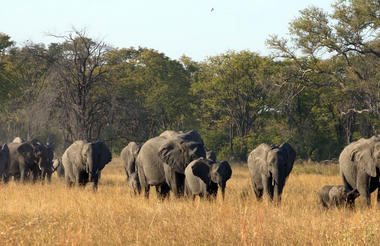
Your walking adventure begins at Elephant Pan, our camp tucked away in the drier interior of Khwai Private Reserve, surrounded by a forest of mopane and overlooking a natural waterhole. The elephants love it here, and so will you. There are elephant highways stretching in every direction, and tomorrow they will become yours to explore on foot. The camp itself is simple, stylish, and perfectly in tune with its surroundings. Eight canvas tents gaze out across the waterhole, where thirsty herds of elephant love to drink. After settling in, you can watch the comings and goings from the dining deck, pool, or firepit. As dusk falls, the waterhole glows in soft light, transforming into a stage for nocturnal visitors. It’s wild, and unscripted. Meals here are wholesome, the fire is warm, and the night is alive with sound: elephants rumbling, hyenas whooping, frogs calling from the darkness. Sleep comes easily in the bush, tomorrow we walk at first light.
WHAT YOU NEED TO KNOW
• Walking distance: Varies each day, from shorter exploratory walks to longer traverses (±2–5 hours). A good level of walking fitness is recommended.
• Guiding team: You’ll be accompanied by two trained professional walking guides at all times.
• Safety: Guides manage wildlife encounters responsibly and teach you how to navigate the bush. Your safety always comes first — and yes, rule number one: don’t run.
• Support: Guides carry water and first-aid supplies, with back-up vehicle support available when needed.
• Heli transfer: After the morning walk on Day 3, you’ll board a helicopter transfer to Little Sable in time for lunch.
• Dry Season (May–Oct): Prime walking months — firm ground, cool mornings and excellent wildlife viewing.
• Age: Children 16 years and older are welcome.
• Group size: Small group departures ensure a personal, safe and intimate experience.
• Luggage: Your luggage will be transferred between camps — you only walk with a small daypack.
SOME HELPFUL WALKING TIPS
• Wear comfortable clothing: choose neutral-coloured, lightweight, breathable fabrics that blend into the
environment. Avoid bright colours or noisy fabrics.
• Long-sleeved shirts and long trousers to protect against sun, thorny branches, and insects.
• A warm fleece or jacket – mornings and evenings can be surprisingly cool in the Delta.
• A light waterproof layer in case of unexpected showers.
• Bring good footwear: a pair of walking shoes or boots are essential for navigating uneven terrain.
• Essential gear: pack a small backpack with water, sunscreen, a wide-brimmed hat, long socks, binoculars,
camera and insect repellent.
• Stay hydrated: walking in the sun can be tiring, so ensure you drink plenty of water.
Climate
Climate in Southern Africa (Botswana, South Africa, Zambia, & Zimbabwe).
-The climate in these regions is mainly temperate.
-Summer (October to April) can be very hot, daytime temperatures can exceed 30ºC (86ºF).
-Emerald Season (December to March) sees average daily temperatures range from 20ºC (68ºF) to 23ºC (75ºF). Short downpours and thunderstorms are common.
- Winter (May to September) brings cooler weather, with an average daily temperature of around 25ºC (77ºF); early mornings and evenings may be very cold.
What to pack
For your comfort, we recommend packing casual, wash-and-wear clothing. Bring muted colours for game viewing. Keep in mind that early morning and late afternoon game drives can be very cold, particularly in winter. The most practical items to pack for safari are
- Khaki, green-, beige-, and neutral-coloured clothes (Please note that no camouflage/ military-like clothes are allowed in Zimbabwe).
-Shirts with long sleeves (even in summer, as they provide protection from the sun and mosquitoes).
-Neutral coloured walking trousers. Jeans or safari trousers for evenings and cooler days.
-Layered clothing (including a down jacket: recommended for early morning and evening game drives).
-Lightweight water-proof jacket (for Emerald Season).
-Swimwear
- Comfortable walking shoes.
-Sunscreen, sunglasses, hat, insect repellent, and lip-salve.
-Toiletries (shampoo, conditioner, soap, and body lotion supplied in camp)
-Personal medications.
- Binoculars and camera equipment.
Luggage Allowance
Due to limited space in vehicles and bush aircrafts, luggage must adhere to the following standards:
Please provide this information on the Personal Information Form.
Luggage restrictions for internal light aircraft flights
- Soft-sided bags only, no wheels or frames
- Maximum weight of 44 lbs (20 kg), which includes hand luggage
- Size Restrictions: 10 in (25 cm) wide by 12 in (30 cm) high and 24 in (62 cm) long.
For extra luggage, you can book an additional seat on the aircraft subject to availability.
To ensure proper loading, the pilot will also need the weight of each passenger. Individuals over 265 lbs (120 kg) may need to purchase an additional seat.
Photography
Please ensure you have an ample supply of memory cards and batteries. Always ask for permission before photographing local residents. Please note that the use of drones and similar aerial devices are strictly prohibited.
Wi-fi and Cellular
While certain camps and lodges provide Wi-Fi throughout their premises, others only offer it only in designated areas or not at all. This encourages guests to fully immerse themselves in nature with no digital distractions. Please be aware that the available Wi-Fi is limited to basic functions such as sending and receiving emails and WhatsApps. This ‘bush Wi-Fi’ is not strong enough for video conferences, online streaming, etc. Please note that there is no mobile signal in the bush.
Travelling with Children
--A valid passport
An unabridged birth certificate (or a certified copy thereof)
-A letter of consent from the other parent should the minor be travelling with only one parent. This letter is a requirement; however, it is at the discretion of the immigration officer to ask for this paperwork.
Passports and Visas
If you are a foreign visitor, you must have a passport that is valid for at least six months after your planned departure date. Additionally, ensure your passport has at least two consecutive blank pages (excluding endorsement pages). It is crucial to verify your specific visa requirements with the appropriate embassies or consulates, as these can differ based on your nationality. This responsibility lies with you.
Health Requirements
If you require specific medication, please bring enough to last the duration of your visit. All our camps can accommodate CPAP machines - guests must bring their own device. Some camps have a temporary plug socket installed in your room to support the device. Please consult us as your Senior Travel Advisor if you plan to bring your CPAP machine. A Yellow Fever Vaccination Certificate is mandatory for entry into Southern Africa if you have previously travelled through a Yellow Fever Zone. Please consult your physician before traveling to Africa for advice on malaria precautions and required chemoprophylaxis. We also advise that you check your government’s foreign travel advice.
• 4 days / 3 nights accommodation (Elephant Pan, Skybeds, Little Sable).
• Your professional guide throughout your safari and support vehicle if needed.
• All meals, snacks, and drinks (local spirits, wines, beers, and soft drinks).
• Guided walks and all safari activities (including mokoro, game drives, boat trips).
• Park fees and conservation levies.
• Internal air transfers to/from Maun into Khwai Private Reserve.
• Community, Conservation & Reserve Fee.
• International flights to/from Botswana.
• Premium imported wines, champagnes, and spirits.
• Travel insurance and personal medical expenses.
• Staff gratuities.
• Items of a personal nature.
DAY 2:
WALK TO SKYBEDS
Here in the drier north-eastern reaches of Khwai, there is a rich diversity of wildlife – big, small, and everything in between. In this thirsty landscape, waterholes become predictable focal points for wildlife. Your walk today will have you following fresh elephant and antelope tracks in the sand, amongst subtle markings of predators. Look closely in the mopane woodland – a flash of white on black might reveal the elusive Arnot’s Chat often found hiding in the mopane thickets. A reminder that even the quietest corners hold treasures. With over 450 bird species calling the Delta home, this is a birder’s paradise.
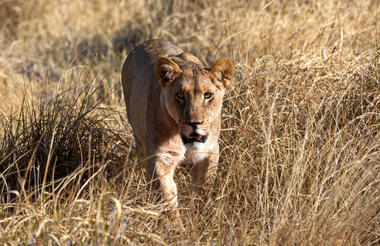
Walking through the dense woodland you’ll rely on your guide’s exceptional tracking skills to tune into your environment. Every rustle, call, and paw print is a clue of what lies ahead. Lion spoor will get your adrenaline racing, a pause to marvel at fire ants marching with quiet purpose will leave you curious. Every sound in the bush tells its story. Bird calls urging you to stay alert – the babblers’ frantic chatter, the soaring whistle of a bateleur overhead, each the language of survival, and soon you’ll begin to read it.
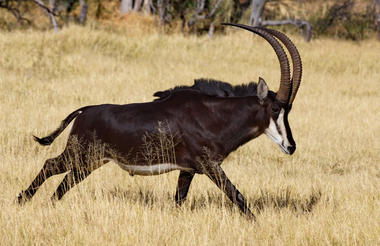
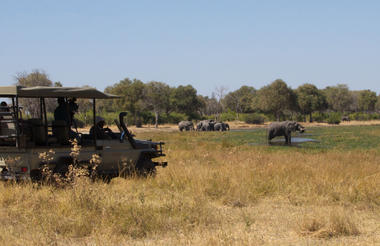
By midday you’ll reach the underground hide, where if luck has it, you can delight in ankle-level views of big herds as they jostle and slosh for Botswana’s most precious resource – water. A shaded picnic lunch will be waiting for you, giving you respite from the heat and time to pause before continuing across groves of leadwood, jackalberry, and sausage trees. After a leisurely lunch you’ll set out across a more open landscape alive with zebra, wildebeest and the occasional giraffe stretching above the trees. Along the way you might even stumble across a scatter of porcupine quills, never random – a parting shot left as a survival shield.
ARRIVE AT SKYBEDS
Your destination tonight is Sky beds, and it is unlike anywhere else in the Okavango Delta. Three raised platforms, open to the sky, where your bed lies beneath nothing but a mosquito net and a canopy of stars.
SKYBEDS
Elevated high above the ground, each double-storey platform has sweeping views over a prolific waterhole that draws elephants, antelope and the occasional predator. On arrival, as the sun sets, you’ll dine fireside and then retreat to your “room” in the sky, lulled to sleep by the African night sounds. Sleeping and waking here is a once-in-a-lifetime experience we know you’ll deeply love.
WHAT YOU NEED TO KNOW
• Walking distance: Varies each day, from shorter exploratory walks to longer traverses (±2–5 hours). A good level of walking fitness is recommended.
• Guiding team: You’ll be accompanied by two trained professional walking guides at all times.
• Safety: Guides manage wildlife encounters responsibly and teach you how to navigate the bush. Your safety always comes first — and yes, rule number one: don’t run.
• Support: Guides carry water and first-aid supplies, with back-up vehicle support available when needed.
• Heli transfer: After the morning walk on Day 3, you’ll board a helicopter transfer to Little Sable in time for lunch.
• Dry Season (May–Oct): Prime walking months — firm ground, cool mornings and excellent wildlife viewing.
• Age: Children 16 years and older are welcome.
• Group size: Small group departures ensure a personal, safe and intimate experience.
• Luggage: Your luggage will be transferred between camps — you only walk with a small daypack.
SOME HELPFUL WALKING TIPS
• Wear comfortable clothing: choose neutral-coloured, lightweight, breathable fabrics that blend into the
environment. Avoid bright colours or noisy fabrics.
• Long-sleeved shirts and long trousers to protect against sun, thorny branches, and insects.
• A warm fleece or jacket – mornings and evenings can be surprisingly cool in the Delta.
• A light waterproof layer in case of unexpected showers.
• Bring good footwear: a pair of walking shoes or boots are essential for navigating uneven terrain.
• Essential gear: pack a small backpack with water, sunscreen, a wide-brimmed hat, long socks, binoculars,
camera and insect repellent.
• Stay hydrated: walking in the sun can be tiring, so ensure you drink plenty of water.
Climate
Climate in Southern Africa (Botswana, South Africa, Zambia, & Zimbabwe).
-The climate in these regions is mainly temperate.
-Summer (October to April) can be very hot, daytime temperatures can exceed 30ºC (86ºF).
-Emerald Season (December to March) sees average daily temperatures range from 20ºC (68ºF) to 23ºC (75ºF). Short downpours and thunderstorms are common.
- Winter (May to September) brings cooler weather, with an average daily temperature of around 25ºC (77ºF); early mornings and evenings may be very cold.
What to pack
For your comfort, we recommend packing casual, wash-and-wear clothing. Bring muted colours for game viewing. Keep in mind that early morning and late afternoon game drives can be very cold, particularly in winter. The most practical items to pack for safari are
- Khaki, green-, beige-, and neutral-coloured clothes (Please note that no camouflage/ military-like clothes are allowed in Zimbabwe).
-Shirts with long sleeves (even in summer, as they provide protection from the sun and mosquitoes).
-Neutral coloured walking trousers. Jeans or safari trousers for evenings and cooler days.
-Layered clothing (including a down jacket: recommended for early morning and evening game drives).
-Lightweight water-proof jacket (for Emerald Season).
-Swimwear
- Comfortable walking shoes.
-Sunscreen, sunglasses, hat, insect repellent, and lip-salve.
-Toiletries (shampoo, conditioner, soap, and body lotion supplied in camp)
-Personal medications.
- Binoculars and camera equipment.
Luggage Allowance
Due to limited space in vehicles and bush aircrafts, luggage must adhere to the following standards:
Please provide this information on the Personal Information Form.
Luggage restrictions for internal light aircraft flights
- Soft-sided bags only, no wheels or frames
- Maximum weight of 44 lbs (20 kg), which includes hand luggage
- Size Restrictions: 10 in (25 cm) wide by 12 in (30 cm) high and 24 in (62 cm) long.
For extra luggage, you can book an additional seat on the aircraft subject to availability.
To ensure proper loading, the pilot will also need the weight of each passenger. Individuals over 265 lbs (120 kg) may need to purchase an additional seat.
Photography
Please ensure you have an ample supply of memory cards and batteries. Always ask for permission before photographing local residents. Please note that the use of drones and similar aerial devices are strictly prohibited.
Wi-fi and Cellular
While certain camps and lodges provide Wi-Fi throughout their premises, others only offer it only in designated areas or not at all. This encourages guests to fully immerse themselves in nature with no digital distractions. Please be aware that the available Wi-Fi is limited to basic functions such as sending and receiving emails and WhatsApps. This ‘bush Wi-Fi’ is not strong enough for video conferences, online streaming, etc. Please note that there is no mobile signal in the bush.
Travelling with Children
--A valid passport
An unabridged birth certificate (or a certified copy thereof)
-A letter of consent from the other parent should the minor be travelling with only one parent. This letter is a requirement; however, it is at the discretion of the immigration officer to ask for this paperwork.
Passports and Visas
If you are a foreign visitor, you must have a passport that is valid for at least six months after your planned departure date. Additionally, ensure your passport has at least two consecutive blank pages (excluding endorsement pages). It is crucial to verify your specific visa requirements with the appropriate embassies or consulates, as these can differ based on your nationality. This responsibility lies with you.
Health Requirements
If you require specific medication, please bring enough to last the duration of your visit. All our camps can accommodate CPAP machines - guests must bring their own device. Some camps have a temporary plug socket installed in your room to support the device. Please consult us as your Senior Travel Advisor if you plan to bring your CPAP machine. A Yellow Fever Vaccination Certificate is mandatory for entry into Southern Africa if you have previously travelled through a Yellow Fever Zone. Please consult your physician before traveling to Africa for advice on malaria precautions and required chemoprophylaxis. We also advise that you check your government’s foreign travel advice.
• 4 days / 3 nights accommodation (Elephant Pan, Skybeds, Little Sable).
• Your professional guide throughout your safari and support vehicle if needed.
• All meals, snacks, and drinks (local spirits, wines, beers, and soft drinks).
• Guided walks and all safari activities (including mokoro, game drives, boat trips).
• Park fees and conservation levies.
• Internal air transfers to/from Maun into Khwai Private Reserve.
• Community, Conservation & Reserve Fee.
• International flights to/from Botswana.
• Premium imported wines, champagnes, and spirits.
• Travel insurance and personal medical expenses.
• Staff gratuities.
• Items of a personal nature.
DAY 3: WALK TO THE UNDERGROUND HIDE THEN HELI TO LITTLE SABLE
Today, as the bush stirs around you, you set out from Skybeds after breakfast. As dew clings to the tall grass, and birds fill the silence with song, the air carries the scents of wild sage and the sweet tang of elephant dung – irresistibly attracting dung beetles, rolling their precious cargo backwards like drunk sailors, as you stride forward. You’ll walk through mopane woodlands and open clearings, following age-old animal trails back towards the underground hide.
Along the way, your guide will help you tune in to the bush’s quieter rhythms – perhaps observing an acacia pod, a vital food source for many animals, or pointing out the faint imprint of a night visitor in the sand. By mid-morning, you’ll arrive at the hide once more, perfectly placed for a well-earned rest and a chance to watch herds gather for their midday drink.
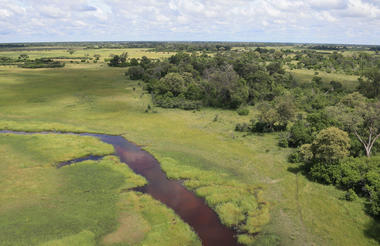
From here, your next adventure begins – a scenic helicopter transfer to Little Sable, soaring over the Okavango’s shifting mosaic of floodplains, palm islands, and winding channels. It’s a breathtaking perspective of the landscapes you’ve been walking through, revealing just how vast and wild Khwai Private Reserve really is. Little Sable is a quiet gem, an intimate camp of just eight traditional-style tents. It’s relaxed, warm, and welcoming – the kind of place where the staff soon feel like family and the pace slows to the gentle hum of the bush.
Once you’ve settled in, you can decide how you’d like to spend the afternoon. You might head out on an evening game drive or walk, drift quietly along the water in a mokoro, or simply stay in camp and put your feet up – you’ve definitely earned it. Tonight, enjoy a tasty home-style meal, share stories around the firepit, and fall asleep to the sounds of the bush in the comfort of your private tent.
DAY 4: LITTLE SABLE THEN HOME
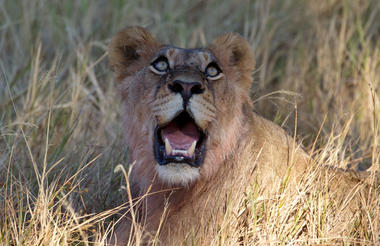
Make the most of your last few hours in the beautiful Khwai Private Reserve. Lace up your shoes once again and head out to explore the landscape on foot or go on another camp activity. The landscape reveals a different version of the Delta to discover – floodplains stretching into the horizon, forested pockets, and channels dotted with lilies. Every ecosystem reveals life both grand and subtle: here wild dogs roam, lechwe bound across the waterways, and rarer creatures like servals, honey badgers, or even the elusive pangolin may make a star appearance. This is the perfect end to an incredible journey.
It’s time to bid farewell in preparation for your onward journey. Walking through the Okavango Delta is a privilege few will ever experience. As you venture off, pause for a quiet moment of recognition – that you’ve walked here, in one of the planet’s last great wildernesses. Step by step, story by story, tracing hidden paths, and leaving you with more than just memories – this walking safari will stay with you long after the footprints fade.

WHAT YOU NEED TO KNOW
• Walking distance: Varies each day, from shorter exploratory walks to longer traverses (±2–5 hours). A good level of walking fitness is recommended.
• Guiding team: You’ll be accompanied by two trained professional walking guides at all times.
• Safety: Guides manage wildlife encounters responsibly and teach you how to navigate the bush. Your safety always comes first — and yes, rule number one: don’t run.
• Support: Guides carry water and first-aid supplies, with back-up vehicle support available when needed.
• Heli transfer: After the morning walk on Day 3, you’ll board a helicopter transfer to Little Sable in time for lunch.
• Dry Season (May–Oct): Prime walking months — firm ground, cool mornings and excellent wildlife viewing.
• Age: Children 16 years and older are welcome.
• Group size: Small group departures ensure a personal, safe and intimate experience.
• Luggage: Your luggage will be transferred between camps — you only walk with a small daypack.
SOME HELPFUL WALKING TIPS
• Wear comfortable clothing: choose neutral-coloured, lightweight, breathable fabrics that blend into the
environment. Avoid bright colours or noisy fabrics.
• Long-sleeved shirts and long trousers to protect against sun, thorny branches, and insects.
• A warm fleece or jacket – mornings and evenings can be surprisingly cool in the Delta.
• A light waterproof layer in case of unexpected showers.
• Bring good footwear: a pair of walking shoes or boots are essential for navigating uneven terrain.
• Essential gear: pack a small backpack with water, sunscreen, a wide-brimmed hat, long socks, binoculars,
camera and insect repellent.
• Stay hydrated: walking in the sun can be tiring, so ensure you drink plenty of water.
Climate
Climate in Southern Africa (Botswana, South Africa, Zambia, & Zimbabwe).
-The climate in these regions is mainly temperate.
-Summer (October to April) can be very hot, daytime temperatures can exceed 30ºC (86ºF).
-Emerald Season (December to March) sees average daily temperatures range from 20ºC (68ºF) to 23ºC (75ºF). Short downpours and thunderstorms are common.
- Winter (May to September) brings cooler weather, with an average daily temperature of around 25ºC (77ºF); early mornings and evenings may be very cold.
What to pack
For your comfort, we recommend packing casual, wash-and-wear clothing. Bring muted colours for game viewing. Keep in mind that early morning and late afternoon game drives can be very cold, particularly in winter. The most practical items to pack for safari are
- Khaki, green-, beige-, and neutral-coloured clothes (Please note that no camouflage/ military-like clothes are allowed in Zimbabwe).
-Shirts with long sleeves (even in summer, as they provide protection from the sun and mosquitoes).
-Neutral coloured walking trousers. Jeans or safari trousers for evenings and cooler days.
-Layered clothing (including a down jacket: recommended for early morning and evening game drives).
-Lightweight water-proof jacket (for Emerald Season).
-Swimwear
- Comfortable walking shoes.
-Sunscreen, sunglasses, hat, insect repellent, and lip-salve.
-Toiletries (shampoo, conditioner, soap, and body lotion supplied in camp)
-Personal medications.
- Binoculars and camera equipment.
Luggage Allowance
Due to limited space in vehicles and bush aircrafts, luggage must adhere to the following standards:
Please provide this information on the Personal Information Form.
Luggage restrictions for internal light aircraft flights
- Soft-sided bags only, no wheels or frames
- Maximum weight of 44 lbs (20 kg), which includes hand luggage
- Size Restrictions: 10 in (25 cm) wide by 12 in (30 cm) high and 24 in (62 cm) long.
For extra luggage, you can book an additional seat on the aircraft subject to availability.
To ensure proper loading, the pilot will also need the weight of each passenger. Individuals over 265 lbs (120 kg) may need to purchase an additional seat.
Photography
Please ensure you have an ample supply of memory cards and batteries. Always ask for permission before photographing local residents. Please note that the use of drones and similar aerial devices are strictly prohibited.
Wi-fi and Cellular
While certain camps and lodges provide Wi-Fi throughout their premises, others only offer it only in designated areas or not at all. This encourages guests to fully immerse themselves in nature with no digital distractions. Please be aware that the available Wi-Fi is limited to basic functions such as sending and receiving emails and WhatsApps. This ‘bush Wi-Fi’ is not strong enough for video conferences, online streaming, etc. Please note that there is no mobile signal in the bush.
Travelling with Children
--A valid passport
An unabridged birth certificate (or a certified copy thereof)
-A letter of consent from the other parent should the minor be travelling with only one parent. This letter is a requirement; however, it is at the discretion of the immigration officer to ask for this paperwork.
Passports and Visas
If you are a foreign visitor, you must have a passport that is valid for at least six months after your planned departure date. Additionally, ensure your passport has at least two consecutive blank pages (excluding endorsement pages). It is crucial to verify your specific visa requirements with the appropriate embassies or consulates, as these can differ based on your nationality. This responsibility lies with you.
Health Requirements
If you require specific medication, please bring enough to last the duration of your visit. All our camps can accommodate CPAP machines - guests must bring their own device. Some camps have a temporary plug socket installed in your room to support the device. Please consult us as your Senior Travel Advisor if you plan to bring your CPAP machine. A Yellow Fever Vaccination Certificate is mandatory for entry into Southern Africa if you have previously travelled through a Yellow Fever Zone. Please consult your physician before traveling to Africa for advice on malaria precautions and required chemoprophylaxis. We also advise that you check your government’s foreign travel advice.
• 4 days / 3 nights accommodation (Elephant Pan, Skybeds, Little Sable).
• Your professional guide throughout your safari and support vehicle if needed.
• All meals, snacks, and drinks (local spirits, wines, beers, and soft drinks).
• Guided walks and all safari activities (including mokoro, game drives, boat trips).
• Park fees and conservation levies.
• Internal air transfers to/from Maun into Khwai Private Reserve.
• Community, Conservation & Reserve Fee.
• International flights to/from Botswana.
• Premium imported wines, champagnes, and spirits.
• Travel insurance and personal medical expenses.
• Staff gratuities.
• Items of a personal nature.


