


Pick up early morning at arrival from the airport in Nairobi for drive to Sagana. Sagana is a small commercial metropolis in Kirinyaga District, Central, Kenya. It is along the Nairobi-Nyeri dual carriageway, 100 kilometres north of Nairobi, the capital of Kenya. Its name comes from Kenya's 2nd longest river, Sagana River which is also called Thagana. The metropolis also inspired the rhumba song "Afro mtoto wa Sagana". It´s situated at the threshold of a big undeniable at the southern foot of Mt. Kenya.
The metropolis and its environment have a developing hospitality industry alongside the river Sagana with cottages, water sports and different tourist sites being mounted. Today you will enjoy ziplining, kayaking or rafting on the river.


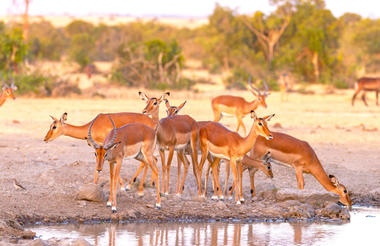
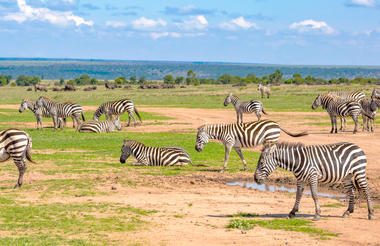
Meru National Park. The morning drive takes you across the Central highlands and through local farmlands – if time allows enjoy impromptu stops for close viewing of pineapple farmlands, coffee plantations as well as rice farms on your way. The drive crosses the mighty Tana River as it snakes its way from the Aberdares to the Indian Ocean. Drive over the picturesque Nyabene hills with its winding roads and wonderful scenery before descending towards Maua town and to the lovely Ikweta Safari Camp. Enjoy lunch and a game drive. The Meru and Kora sister parks feature lush jungles, coursing rivers, verdant swamps, khaki grasslands, and gaunt termite cathedrals all under the sky’s great blue bowl. Little visited and utterly unspoilt, few places are comparable to the remote and rugged atmosphere found here. Visitors can see Grevy's zebras, elephants, Bohor reedbucks, hartebeests, buffalos and more than 427 recorded species of birds
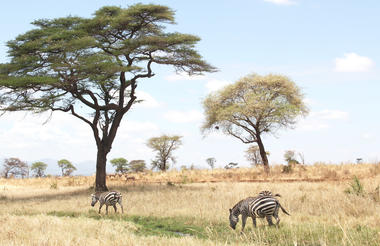
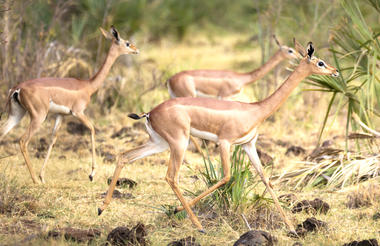
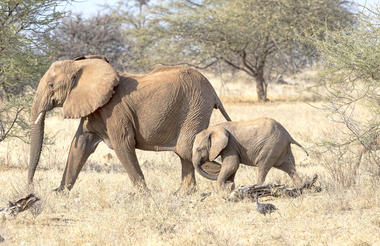
Wake up to a sumptuous breakfast before heading out for a full day game drive with picnic lunch out in the park. Meru National Park features verdant vegetation and over 12 rivers crisscrossing the expanse of the park. This park is rarely visited and utterly unspoilt with its wonderful and rugged terrain adding to the intrinsic beauty of the park.


You will travel to the Samburu Game Reserve, home to several species only found north of the equator, in the land of the colourful Samburu, the close relatives of the Maasai. It offers a unique view of rounded and rugged hills and undulating plains. The mix of wood and grassland with the forest and wetlands is home to a variety of animals and birds. Lunch is served at the lodge, and later in the afternoon, you go on a game drive until sunset
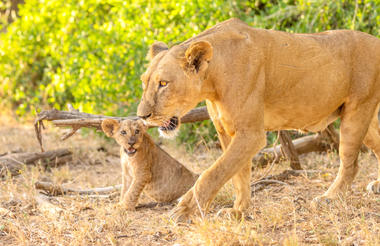
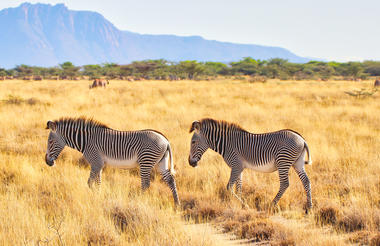
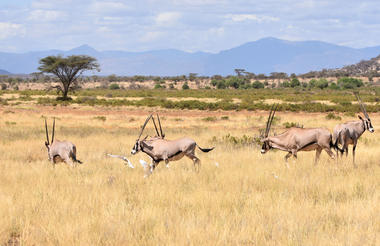
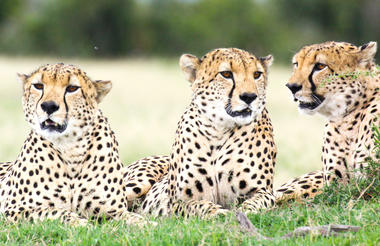
Spend the day in the National Reserve with unforgettable game viewing. Water in the arid Samburu region comes from the Ewaso Ng'iro River, which rises at the foothills of the Aberdares a few hundred kilometres to the west and disappears over Samburu in the recess of the Lorian swamp. The birdlife is very diverse with more than 380 recorded species, and you can also see giraffes, Grevy's zebras, elephants, oryx, Somalis, hippos, crocodiles, giraffes, buffaloes, lions, leopards, cheetahs, and hyenas. The long-necked giraffe gazelle is a graceful antelope that has adapted to the savannah and covers its water needs solely through food intake
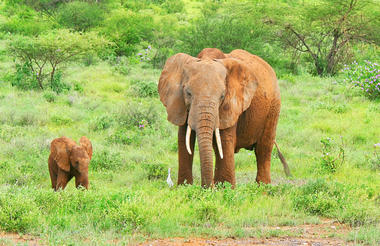
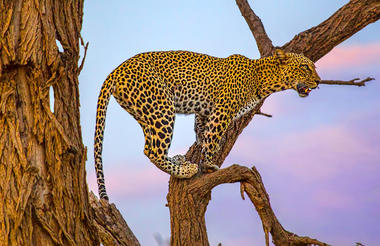
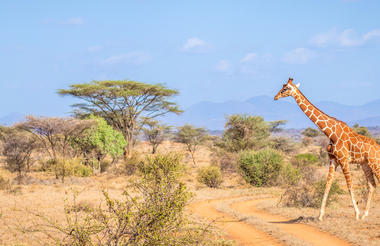
Today you set out for the enchanting Laikipia County. Laikipia is home to some of Africa’s most diverse wildlife populations — and not just the Big Five. Yes, you will find lions, leopards, elephants, buffalo, and even both black and white rhinos here. But it is also one of the few places where you can see Grevy’s zebras, African wild dogs, and the graceful reticulated giraffe. Remarkably, it is the only place on the continent where, with a little luck, you may even encounter the elusive black leopard.
What sets Laikipia apart from a national park? Privacy. Most of the land here is made up of private conservancies, which means you won’t be surrounded by 20 other safari vehicles jostling for position when a lion is spotted. It’s just you, your guide, and the wilderness.
One of the most inspiring aspects of Laikipia is its commitment to conservation and community-led tourism. Many of the lodges and conservancies in the region are either community-owned or work closely with the local Maasai, Samburu, and Turkana people.
When you visit Laikipia, you are not only going on safari, but also directly contributing to wildlife conservation, the fight against poaching, and sustainable development projects that empower local communities. This is travel with purpose — and it feels good.
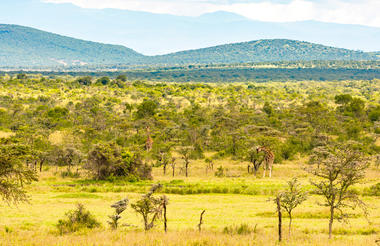


The Maasai communities here welcome you with open arms, inviting you to learn about their centuries-old traditions and way of life. One of the most moving experiences is the famous “Singing Wells”: Maasai warriors dig wells to water their cattle, accompanied by melodic songs. The elders carefully read the weather from the skies, and nature provides them with a wealth of medicinal plants whose use and wisdom have been passed down through generations.
Those who come here find harmony with nature and are carried away by the soothing tranquility of this pristine landscape.
Our guests have the opportunity to explore the remarkable wildlife both on foot and by safari vehicle. The conservancy is home to large predators – including the rare, legendary black leopards – as well as wild dogs and numerous elephants.
Activities we offer here:
WILDLIFE TRACKING
Stroll around the camp and identify different animals and birds in various ways – by listening to bird calls, spotting tracks, bones, or footprints.
GUIDED NATURE WALKS
Discover plants and trees while learning about their traditional uses and significance in the local community.
BUSH SURVIVAL TRAINING
Learn the traditional survival skills of the Maasai. Craft bows and arrows from natural materials, then test your skills with the traditional club or at archery – with a small reward awaiting you.
BEADWORK
With the help of Maasai women, learn how to make traditional bracelets and necklaces. You can take your handmade jewelry home as a personal souvenir.
STARGAZING
Look up at the night sky and learn about the stars – on a clear evening you can spot many of the well-known constellations. This activity can take place before or after dinner.
Immerse yourself in this authentic, sustainable safari experience and let yourself be enchanted by the magic of the Ewaso Enclave.


After breakfast, drive to Ol Pejeta Conservancy, a beautiful private game reserve and home to rare species such as Beisa oryx, Rothschild's giraffe and black rhino. On the game drive, Africa shows you the whole range of African wildlife such as lions, leopards, cheetahs, elephants, and hippos. Visit the chimpanzees from the Jane Goodall Institute at Sweetwaters Chimpanzee Sanctuary. Other optional activities include bird walks, where you can observe several hundred species, horseback riding and camel riding (surcharge).
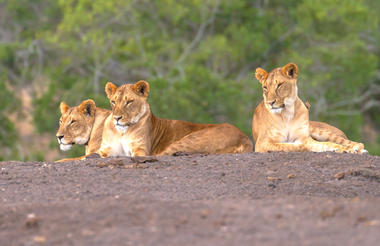
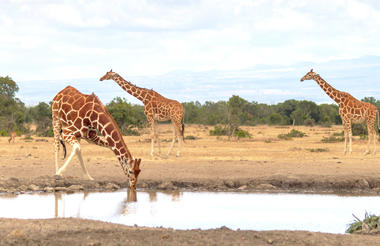
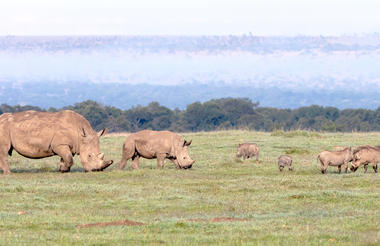
From a working cattle ranch in colonial Kenya to a trailblazer of conservation innovation - the story of Ol Pejeta is as enchanting as it is inspirational. Today, Ol Pejeta is the largest black rhino sanctuary in East Africa, and home to two of the world’s last remaining northern white rhinos. It is the only place in Kenya to see chimpanzees, in a sanctuary established to rehabilitate animals rescued from the black market. It has some of the highest predator densities in Kenya, and still manages a very successful livestock program. The conservation of the natural habitat, located in Kenya’s Laikipia Plateau, ensured the protection of existing rhino, elephant, and other wildlife populations in addition to captive chimpanzees living in a 300-acre sanctuary.
After breakfast, drive through the park back to Nairobi and from there you will be escorted to the airport for your flight home.


