
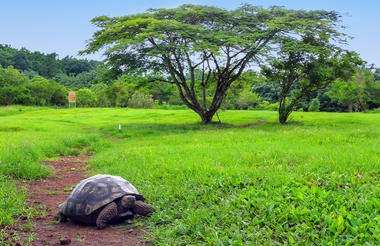
Upon your arrival to Baltra Airport, you take a bus trip and the first visit of the trip will be to Santa Cruz Highlands where you will see the huge turtles of Santa Cruz Island in their natural habitat. After lunch, you will be transferred to the yacht. Then, you will head to Charles Darwin Research Station, where you will learn about the protection and conservation of the island, and visit the Breeding and Rearing Centre for young tortoises and adult Galapagos tortoises in captivity.

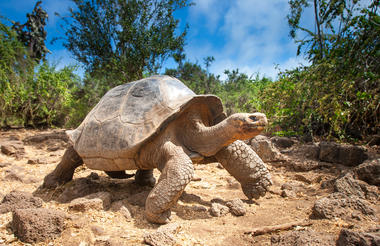

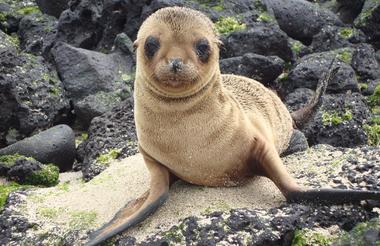
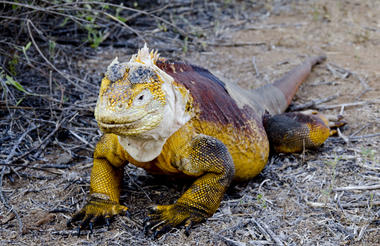
First activity of the day will be landing on Santa Fe Island, which is a great place to watch and swim along sea lions. This place is also the home of endemic species like the Galapagos Hawk, Galapagos snake and land iguanas. The bay is also a nice place to snorkel or swim. In the afternoon, the yacht will take you to South Plaza Island where you will see various species of land and marine iguanas. If the weather allows it, you can swim or snorkel too. After this activity, dinner will be served onboard the yacht.
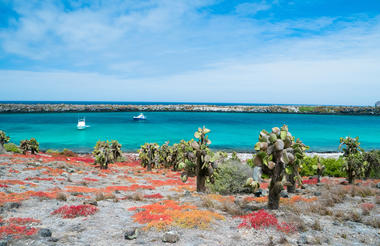
In the morning, you will visit Witch Hill, a stunning coastal viewpoint where you will enjoy panoramic views of the ocean, cliffs, and seabird colonies. You will have the opportunity to observe marine iguanas and frigatebirds while exploring the surrounding trails.
In the afternoon, you will visit El Junco Lagoon, a freshwater lagoon located in the highlands of San Cristóbal. Here, you will explore the lush landscapes and spot native bird species, learning about the island’s unique ecosystem. After your visit, you will return to your accommodation or vessel for rest and preparation for the next day of your Galapagos adventure.


Early in the morning, you will head to Gardner Bay on Española Island, one of the most beautiful white-sand beaches in the Galapagos, where you can swim or snorkel alongside sea lions and various species of fish and manta rays. You may also spot white-tipped sharks. Nearby, you will also visit Osborn Islet, a small islet that offers another opportunity to snorkel in the calm waters around it. In the afternoon, the yacht will take you to Suarez Point, where a short walk will let you see sea lions, sea birds, the largest marine iguanas of the Galapagos, and masked and blue-footed boobies, among other species. After this activity, you will return to the yacht for dinner.
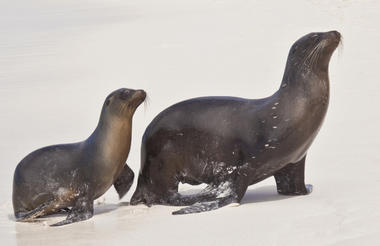
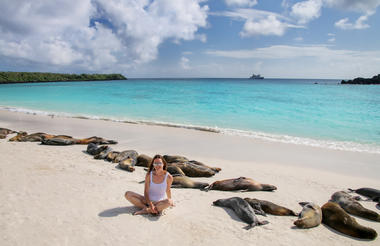
Early in the morning, head to Floreana Island, first to Cormorant Point, where you will be welcomed by a small Galapagos sea lion colony and the largest and best Flamingo Lagoon in Galapagos. After lunch, you will go to Post Office bay, place that commemorates the improvised mail service that was situated here during the 18th century. End of the day and dinner.


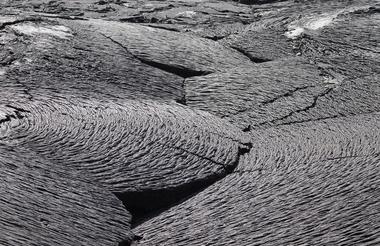
The first activity of the day will be a visit to Dragon Hill on Santa Cruz Island. A trail leads to a hyper-saline lagoon that is frequently visited by flamingos, pintail ducks and other species of birds. After lunch, you will go to Sullivan Bay on Santiago Island, where you will walk across a lava field and see interesting geological formations and patterns. After this activity, you will return to the yacht for dinner and rest.

Early in the morning, the yacht will take you to Genovesa Island, where you will visit Prince Philip’s Steps. The ascent takes you about 100 feet above sea level to a Palo Santo forest, home to species such as Nazca boobies, and rewards you with a panoramic view of the island. After lunch, you will head to Darwin Bay, where you can see native species such as red-footed boobies and great frigatebirds, which display to attract mates. You will also come across Darwin’s finches and native flora such as mangroves and cacti. The day ends with dinner onboard.


Breakfast
Lunch
Dinner
After breakfast, head to Black Turtle Cove and take a boat ride around this place, and see, from afar, the mangrove swamp where you may see marine turtles, sharks and rays. After this activity you will be transferred to Baltra Airport and take your flight back to the continent. In the afternoon, you will visit the Tortoise Breeding Center, where you will learn about the conservation efforts to protect the giant tortoises of Isabela and see them at different stages of life. Along the way, the trail passes by the Flamingo Lagoon, where pink flamingos and other shorebirds can often be seen.


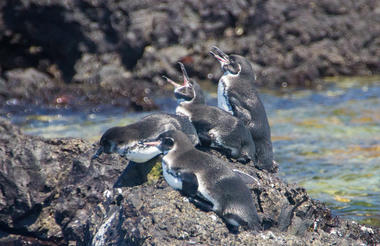
After breakfast, you will visit Chinese Hat Islet, named for the shape of the islet, which resembles a traditional Asian hat. A short trail crosses lava formations where you may see sea lions, marine iguanas, and Galápagos penguins, and the surrounding waters are ideal for snorkeling. In the afternoon, you will visit Rabida Island, known for its distinctive red-sand beach, colored by the high iron content of its volcanic rock. A short trail leads to a coastal lagoon where flamingos can sometimes be seen, while sea lions rest along the shore.


In the morning, you will arrive at Puerto Villamil on Isabela Island, the largest island of the archipelago, and hike up Sierra Negra Volcano, one of the most active volcanoes in the Galápagos. Its caldera, about 10 kilometers wide, is one of the largest volcanic craters in the world, and the rim offers broad views over the crater and the surrounding landscape. In the afternoon, you will visit Puerto Villamil and its harbour, a quiet coastal town set between the sea, lagoons, and volcanoes.


In the morning, you will explore Moreno Point, a landscape of black lava flows dotted with small lagoons and mangroves, home to flamingos, ducks, and herons. Along the coast, it is common to see Galápagos penguins and flightless cormorants. In the afternoon, you will visit Elizabeth Bay, a calm area surrounded by mangroves where sea turtles, rays, and sea lions swim, and where one of the main Galápagos penguin colonies can be found.


In the morning, you will visit Urbina Bay, at the foot of Alcedo Volcano, a coastline uplifted from the sea where large land iguanas, Darwin’s finches and, depending on the season, giant tortoises can be found. In the afternoon, you will explore Tagus Cove, a historic site once used by pirates and whalers. A trail leads past Darwin Lake to a viewpoint overlooking the volcanic landscape, while the surrounding waters are home to penguins, sea turtles, and marine iguanas.


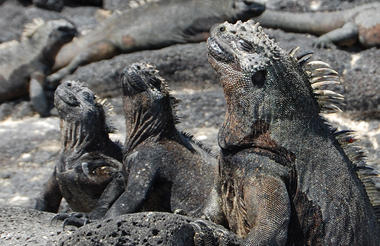
In the morning, you will visit Espinoza Point on Fernandina Island, the youngest island of the archipelago. Here you will find the largest colony of marine iguanas in the Galápagos, along with flightless cormorants, sea lions, and lava cactus growing on fresh lava fields. In the afternoon, you will explore Vicente Roca Point on Isabela Island, known for its towering cliffs and sea caves, and for rich waters where sea turtles, penguins, and, with luck, the ocean sunfish can be seen.


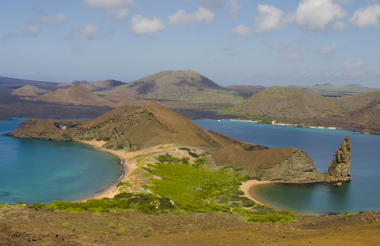
In the morning, you will visit Espumilla Beach on Santiago Island, an important nesting site for sea turtles, with a trail that leads into a dry forest of palo santo trees where finches and Galápagos hawks can be seen. You will also visit Buccaneer Cove, a historic bay once used by pirates and whalers. In the afternoon, you will explore Bartholomew Island, one of the most iconic landscapes in the Galápagos. A climb to the summit offers a spectacular view of Pinnacle Rock and its surrounding beaches, while its waters are home to penguins, sea turtles, and reef sharks.

Breakfast
Lunch
Dinner
On your last morning, you will visit North Seymour Island, home to one of the largest colonies of magnificent frigatebirds, as well as blue-footed boobies, swallow-tailed gulls, land iguanas, and sea lions. Afterwards, you will be transferred to Baltra Airport for your flight back to the mainland.


Breakfast

