PRELIMINARY ITINERARY
Departures from the U.S.
Independent departures on overnight flights to Santiago, Chile.
Arrive Santiago / Lastarria & Native Flora
Arrive in Santiago, where a local representative assists with arrival formalities and transfer to Hotel Cumbres Lastarria, with guaranteed early check-in and time to rest after the overnight flight.
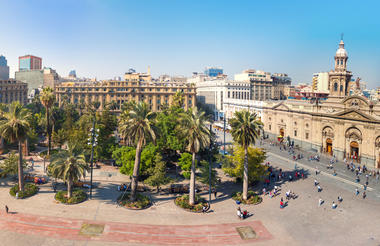
After lunch at a local restaurant, enjoy an orientation walk through Lastarria, one of Santiago’s most atmospheric neighborhoods, known for its leafy streets, cafés, galleries and cultural life.
Later, visit Santiago’s metropolitan park and botanical garden for an introduction to Chile’s native flora and views across the city toward the Andes.
This evening, gather for a welcome dinner (includes 1 glass wine / beer/soft drink)


Travel Details:
- Flights from the USA to Santiago, Chile typically arrive between 5:30 – 9:30 a.m.
- Drive 30 minutes from the airport into central Santiago (traffic dependent).
Activity:
- Short walks in the city, mostly on paved sidewalks, up to 1 mile.
NOTES
- Santiago can be warm in the sun but cool in the shade—layers are ideal.
Lunch, Dinner
Maipo Valley / Viña Santa Rita & Museo Andino
Today, travel into the Maipo Valley, one of Chile’s historic wine regions, for a visit to Viña Santa Rita.
On an exclusive visit, discover the estate’s history and grounds, including its 19th-century architecture and long association with Chilean wine culture. Enjoy a three-course lunch paired with wines at the vineyard’s Restaurant Doña Paula, followed by a visit to Museo Andino, a private collection of pre-Columbian artifacts. The museum’s archaeological and ethnographic objects offer an introduction to the cultures of the Andes and the wider pre-Columbian world.
Return to Santiago in the late afternoon. Dinner on your own.


Breakfast, Lunch
Dinner
Santiago: History, Memory & the Capital Today
This morning, explore Santiago’s historic and civic center, including Plaza de Armas, the surrounding colonial-era streets and exterior views of La Moneda, Chile’s presidential palace.
Continue to the Museo de la Memoria y los Derechos Humanos, one of Chile’s most important institutions for understanding the human impact of the 1973–1990 dictatorship and the country’s ongoing commitment to remembrance, democracy and human rights.
Afterward, enjoy lunch at Santiago’s Mercado Central, the city’s historic market known especially for seafood and lively local character.
The afternoon is free for independent exploration.


Breakfast, Lunch, Dinner
Valparaíso & Casablanca Valley
Set out for the Pacific coast and the historic port city of Valparaíso, whose hillside neighborhoods, murals, funiculars and harbor views reflect Chile’s maritime history and global connections.
Explore the city with a local guide, focusing on its colorful hill districts, stairways, viewpoints and artistic character. Lunch is included.
In the afternoon, continue through the Casablanca Valley, a cool-climate wine region known especially for white wines and elegant coastal-influenced varietals. Enjoy a winery visit with a tasting paired with appetizers before returning to Santiago.
Dinner is on your own.
Breakfast, Lunch
Dinner
Fly from Santiago to Patagonia
Check out of the hotel in Santiago and fly to Puerto Natales, arriving in time for lunch.
This afternoon, we visit Mylodon Cave Nature Reserve, a massive natural cave complex where remains of the Giant ground sloth (Mylodon) and other Pleistocene mammals were found. We walk one of the reserve’s trails into the main cave and learn about the region’s glacial and paleontological past.
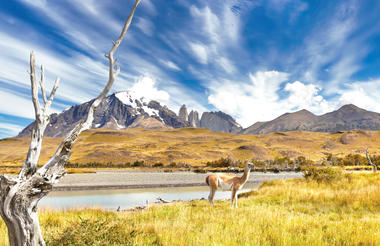
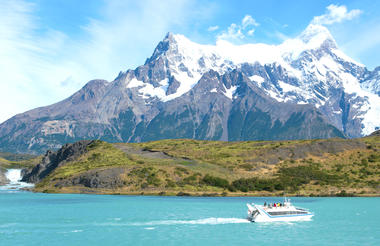
From here, we continue our drive, entering Torres del Paine National Park, where the jagged peaks of the Paine Massif rise higher with every mile. This vast protected area - more than 560,000 acres of lakes, steppe, forest, and mountains - is Patagonia’s premier wildlife destination, and the approach alone sets the stage for the days ahead. We stop at several viewpoints that offer sweeping, unforgettable vistas of the massif’s granite spires and banded sedimentary cliffs, a dramatic geologic story written in stone.
As we travel toward the park’s eastern entrance, wildlife begins to appear across the open steppe. Large herds of guanacos graze along the roadside, often unbothered by passing vehicles, while Darwin’s (lesser) rheas stride through the grasslands with their characteristic rolling gait. With luck, we may spot southern gray foxes weaving through the shrubs or even a Patagonian hog-nosed skunk foraging near the road.
We enjoy our first walk in the park between Lago Pehoé and Lago Nordenskjöld, a mild and scenic path that passes waterfalls, wind-sculpted shrubs, and the first pockets of southern beech (Nothofagus) forest. Throughout the walk, the iconic Cuernos del Paine (“Horns of Paine”) dominate the skyline, their contrasting bands of dark granite and lighter sedimentary layers revealing the park’s extraordinary geologic history. This is an ideal introduction to the landscapes that define Torres del Paine, and to the wild inhabitants we will spend the next several days tracking and observing.
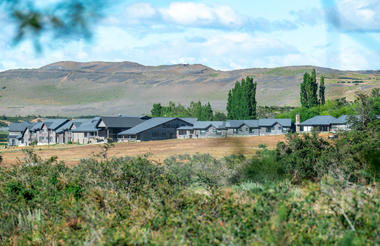
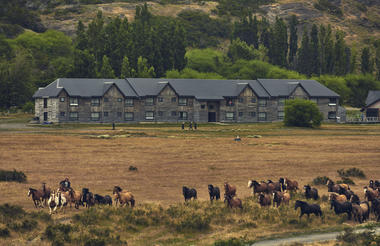
We arrive at our base, Hotel Las Torres, in time to settle in and enjoy dinner.

Travel Details:
- Porvenir - Punta Arenas flight: ~15–20 minutes.
- Punta Arenas - Puerto Natales: approximately 3 hours by road with scenic stops.
- Puerto Natales - Hotel Las Torres: approximately 75–78 miles, taking 2–2.5 hours, with the final portion within Torres del Paine National Park on gravel roads.
Activity:
Moderate: cave walk on well-maintained paths with some steps and slight inclines; total walking up to 1.5–2 miles spread over the day.
NOTES
- Dress in layers as you’ll transition through a variety of climate conditions today.
- The cave can be cool and damp; a light fleece or jacket is useful even on a warm day.
- Keep camera batteries charged; this is where “classic Patagonia” landscapes begin in earnest.
Breakfast, Lunch, Dinner
Torres del Paine: Puma Country & Patagonia Landscapes
For three full days, we immerse ourselves in Torres del Paine National Park, an extraordinary backdrop for some of the best puma viewing on Earth.
We devote our time to the eastern flank of the park, where the northern shores of Lago Sarmiento, Laguna Amarga, and Laguna Azul, together with Estancia Laguna Amarga, support one of the world’s highest concentrations of wild pumas. Through long-standing relationships with the estancia, we have privileged access to private lands rarely open to visitors. Using a combination of 4×4 routes and easy to moderate walks, we explore ridgelines, open steppe, and lake margins while scanning for fresh tracks, territorial scrapes, and the subtle movement of cats on the hunt.
Our schedule is built around the puma’s natural rhythm. Early mornings and late afternoons offer the greatest likelihood of activity, and each day includes two wildlife sessions of approximately four hours supported by highly experienced puma trackers (1 tracker per 6 guests). During these windows, cats may be patrolling their territories, stalking guanacos, shifting between hunting grounds and dens, or interacting with their young. Sightings are never guaranteed, but Torres del Paine is one of the few places in the world where multiple encounters are possible in a single trip.
Mid-day, when pumas retreat to rest and avoid disturbance, we explore the park’s broader landscapes. Short scenic walks and drives bring us to classic viewpoints such as Lago Pehoé, Lago Nordenskjöld, and waterfalls framed by the striking Cuernos del Paine. Wildlife remains abundant throughout the day: herds of guanacos, Darwin’s (lesser) rheas, Andean condors, caracaras, and waterfowl are frequent sightings, while more elusive species such as the huemul (Andean deer), Patagonian hog-nosed skunk, and both chilla and culpeo foxes - reward patient observers.
Terrain across the estancia and park is generally gentle, with occasional slopes and altitude differences of 160–1,000 ft, all approached at a slow, steady pace appropriate for wildlife viewing. The maximum elevation during this section of the journey is around 1,000 ft above sea level, making the walking accessible for most travelers with moderate fitness.
These days offer an authentic immersion into one of the world’s most vibrant predator-prey ecosystems. Whether watching condors spiral overhead, observing guanacos on alert, or scanning a windswept hillside for the silhouette of a puma, each moment deepens your connection to the extraordinary natural rhythms of Patagonia.

Travel Details:
- Morning and afternoon puma tracking outings involve travel of roughly 45 minutes to 1.5 hours each way, depending on wildlife activity and the specific area of Estancia Laguna Amarga being explored.
- Distances are covered in short, stop-and-scan segments, with frequent breaks for wildlife sightings, interpretation, and photography.
- Road surfaces are primarily gravel, and speeds are intentionally slow to maximize viewing opportunities and ensure safe travel in variable terrain.
Activity (Each Day):
- Moderate: multiple short walks totaling 0.5–2 miles at a time, often on uneven, rocky, or grassy terrain, with occasional short, steeper sections (altitude differences typically 160–1,000 ft).
- Guests may opt out of any walk or remain with the vehicle; daily plans are adjusted to comfort levels and current conditions.
NOTES
- Bring layered clothing, including a windproof shell, insulating mid-layer, hat, and gloves—Patagonian weather can shift rapidly between sun, wind, rain, and even sleet.
- A good daypack, sturdy hiking shoes or boots, and trekking poles (if you use them) add comfort and stability.
- Keep binoculars and camera ready at all times—puma or condor sightings often happen quickly and unexpectedly.
- Patagonia’s dry, windy climate can lead to dehydration; carry a refillable water bottle and top off at the hotel or during stops.
Breakfast, Lunch, Dinner
Return to Santiago Airport for Departure
We say goodbye to Torres del Paine and drive back to Puerto Natales, enjoying final views of the jagged tops of the Paine Massif. From Puerto Natales, we board our domestic flight to Santiago.
Upon arrival in Santiago International Airport, a local representative is on hand to assist with your international check-in and connections for independent departures home.
Travel Details:
- Torres del Paine - Puerto Natales: roughly 2–2.5 hours by road.
- Puerto Natales - Santiago flight: typically 3–3.5 hours.
- Flights from Arturo Merino Benítez International Airport (SCL) to the USA typically depart after 11:00 p.m.
NOTES
- Keep travel documents, valuables, and medication organized and secure in your carry-on.
- Pack a light change of clothes or warm layer for the overnight flight home.
- This is a great time to jot down your favorite sightings and experiences while they’re fresh.
Breakfast
Lunch, Dinner