In the morning you will take your flight to the Galápagos Islands. Upon arrival, you will be transferred to the yacht and welcomed onboard.
In the afternoon, you will visit Bartolome Island, famous for its iconic Pinnacle Rock and stunning volcanic landscapes. You will enjoy a guided walk to the viewpoint, where you can take breathtaking photographs, and later have the opportunity to snorkel, observing colorful fish, sea lions, and penguins.


Early in the morning you will visit Mosquera Islet, a small sandy island located between Baltra and North Seymour Islands, well known for its large sea lion colony. During the visit you will enjoy a walk along the beach, where you may also observe marine iguanas, lava gulls, and various shore birds. Snorkeling opportunities are excellent, with chances to see rays, reef sharks, and tropical fish.
After lunch, you will continue to North Seymour Island, one of the best wildlife sites in the Galápagos. During the guided walk you will encounter blue-footed boobies, frigate birds, land iguanas, and sea lions, while learning about their unique behaviors and mating rituals.


Early in the morning, head to el Barranco on Genovesa Island, where you will walk through a trail to a cliff form which you will have an amazing view of the island and is also a nesting site for storm petrels. During the afternoon, you will visit Darwin Bay. This bay has its origin when the crater of this island collapsed below sea level. This is a great site for birdwatchers, that allow various species to be seen, such as red footed boobies, masked boobies, wandering tattlers, lava gulls, whimbrels, yellow-crowned, and black-crowned lava herons, and yellow warblers.


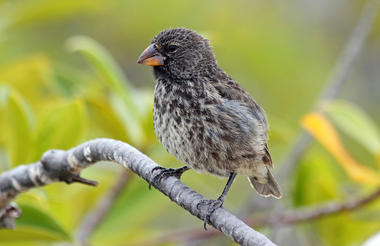
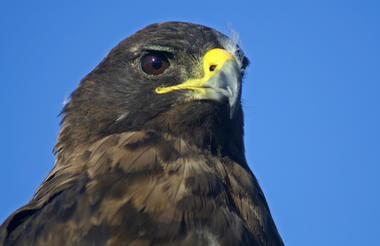
First activity of the day will be landing on South Plaza Island where you will see various species of land iguanas, marine iguanas and hybrids of this species. In the afternoon, after lunch, you will head to Santa Fe Island, which is a great place to snorkel and swim along sea lions. This place is also the home of endemic species like the Galapagos Hawk, Galapagos snake and a variety of finches. After this activity, dinner will be served onboard.
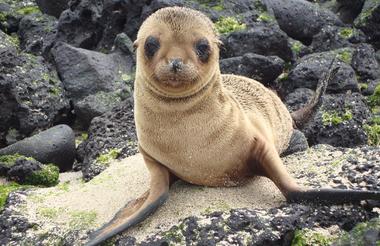


In the morning you will visit the David Rodríguez Giant Tortoise Breeding Center, located on San Cristóbal Island, where you will learn about the conservation and repopulation programs for the iconic giant land tortoises, observing different species and age groups.
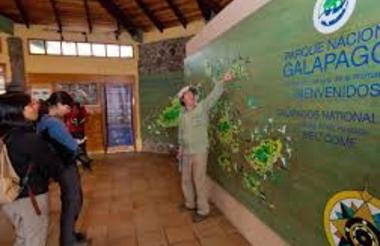
Afterward, you will continue to the Gianni Arismendy Environmental Interpretation Center, where you will gain a deeper understanding of the natural history of the Galápagos Islands, their ecosystems, volcanic origins, and conservation efforts.

In the morning you will visit Lobos Island, a small islet located off the coast of San Cristóbal Island, known for its large sea lion colony. During the walk you can observe sea lions at close range, as well as blue-footed boobies, frigate birds, and marine iguanas.
You will also have the opportunity to snorkel, where you may encounter playful sea lions, sea turtles, rays, and a variety of tropical fish.
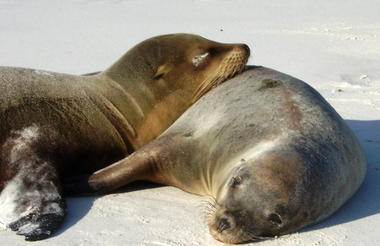


After breakfast, you will land at Gardner Bay in Española Island. This place offers you the opportunity to swim, kayak or just relax at the beach. You can also observe sea lions from close, and sea sharks swimming along the bay. In the afternoon, head to Point Suarez, a basaltic cliff which forms a blowhole where water sprays high into the air. A hike to the top makes a great opportunity to take spectacular pictures. You can also watch sea lions,sea birds, Marine Iguanas, masked and blue footed boobies, among others. After this visit, head back to the yacht for dinner.
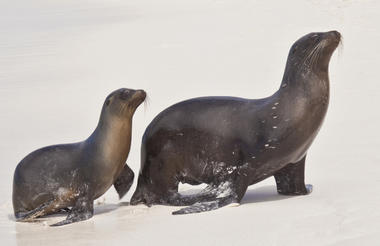
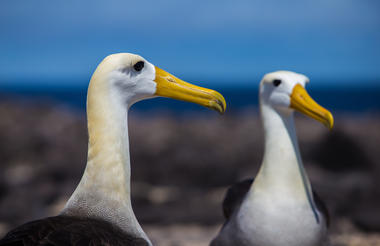
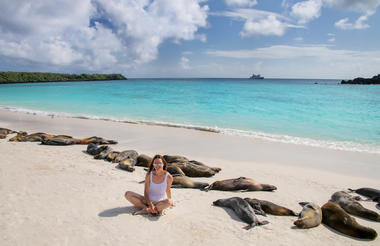
Early in the morning, head to Floreana Island, your first stop will be Cormorant Point, where you will be welcomed by a small Galapagos sea lion colony. You will also visit green sand beach that contains olivine crystal and a white coral sand beach. You will also visit Champion Islet. After lunch, the yacht will take you to Post Office bay, that was established in the 18th century by British whalers to send letters to and from England, and even today, visitors have the opportunity to send letters of their own. End of the day and dinner.


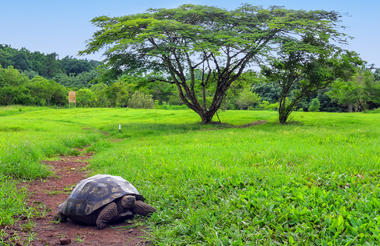
The first activity of the final day will take place at Santa Cruz Island with a visit to Charles Darwin Research Station where you will learn about the protection and conservation of the island, and visit the Breeding and Rearing Centre for young tortoises and adult Galapagos tortoises in captivity. After lunch you will head to Santa Cruz Highlands to see the Galapagos giant tortoises roaming freely in their natural habitat.
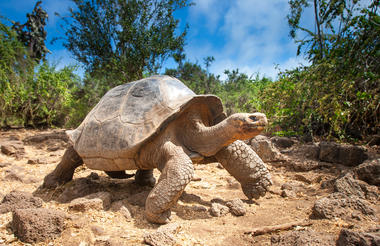
After breakfast, you will disembark at Fernandina Island, specifically Mangle Point, which is a perfect site for snorkeling and a nice location for riding a zodiac though a grove of mangrove trees, where you will spot sea lions, tortoises, pelicans, among other species. Next activity will be heading to Moreno Point, located between volcanoes Sierra Negra and Cerro Azul, where you will take a trail along a solidified lava flow, to a coastal lagoon where several species of birds can be found.


The first visit during this day will be to Urbina Bay, located at eh base of Alcedo Volcano. This is a great place to snorkel, and spot native species like land iguanas, Darwin ́s finches and Galapagos Tortoises. After lunch, you will head to Tagus Cove, located west of Darwin Volcano on Isabela Island and used to be a favorite hiding spot for pirates and whalers. After this activities head back to the yacht for dinner.


Early in the morning you will head to Espinoza Point at Fernandina Island, that is one of theyoungest islands with the most active volcano, and where you canspot pelicans, marine iguanas and flightless cormorants. During theafternoon, head to Vicente Roca Point, this site is a large bay withspectacular sea life. Keep an eye out for seahorses, sea turtles, andthe strange yet fascinating Mola mola (or sunfish). After the end ofthe activities head back to the yacht for dinner.


Early in the morning, head to Espumilla Beach where you can see playful sea lions, fur seals and various speciesof seabirds. This is also a good place to snorkel. After lunch, you will go to Egas Port, also known as James Bay, on Santiago Island, which main attraction is a black sand beach, and is also home to the curious Galapagos hawks and quick-footed Galapagos lava lizards.
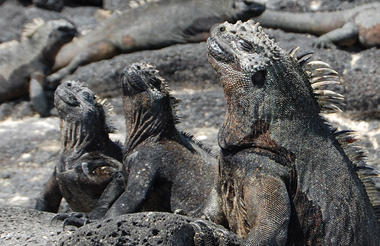
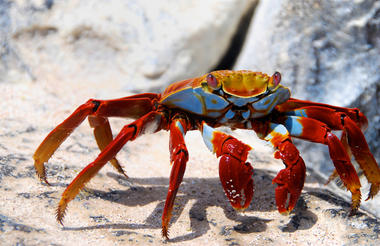
After breakfast, you will visit Rabida Island one of the most colorful and volcanically varied islands, due to its red sand beach in the archipelago and also a great snorkeling site. In the afternoon, you will visit the Chinese Hat Islet. Its name comes from the distinct shape of the islet’s summit. This place is a great location to view many geological formations such as lava tubes and lava flows you can also spot colonies of sea lions and marine iguanas here.


Breakfast
Lunch
Dinner
In the morning you will visit Black Turtle Cove, located on Santa Cruz Island, a peaceful mangrove inlet accessible only by dinghy. During the ride you may observe sea turtles, blacktip and whitetip reef sharks, rays, and several species of coastal birds in their natural habitat.
After the visit, you will be transferred to the airport for your departure flight.


Breakfast

