Upon your arrival to San Cristóbal Island, you will visit Lobos Island, a small islet known for its large sea lion colony and abundant marine life. Observe blue-footed boobies, frigatebirds, and playful sea lions, with opportunities for snorkeling in the clear waters. After this memorable introduction to the Galápagos, return to the yacht for dinner
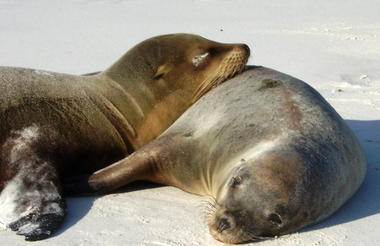


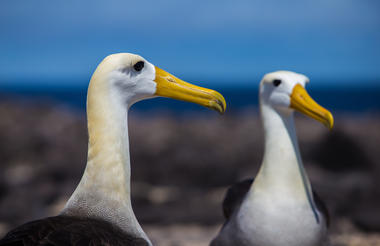
Enjoy the day on Española Island, one of the oldest in the archipelago. Visit the white sandy beach of Gardner Bay's and the bird colonies of Punta Suárez. Arriving at Gardner Bay's in the morning, spend the day exploring on shore and snorkelling at Gardner Island in the bay. After lunch, sail to the western side of the islands to Punta Suárez, known for its amazing bird colonies and home to the waved albatross (April and December).
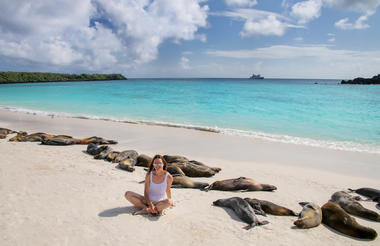
Visit Gardner Bay's magnificent white sandy beach, home to sea lions and sea birds. Be sure to explore the beautiful turquoise water and its incredible sea life. Spot young sea lions and large schools of surprisingly big tropical fish, including yellow-tailed surgeonfish, king angelfish, and bump-head parrot fish.
Head to Tortuga Rock and Gardner Bay for a spectacular snorkelling experience. Spot playful young sea lions and large schools of tropical fish, including yellow-tailed surgeonfish, king angelfish, and bump-head parrot fish. Look for white-tipped reef sharks napping on the bottom.
In the afternoon visit Punta Suárez, one of most rich wildlife landing sites in the Galápagos. Be greeted by surfing young sea lions on arrival. Head to the trail to find many species of nesting sea birds, and, if lucky, see the waved albatross. Follow the path up to a cliff for great views over the ocean, and watch sea birds gliding in the wind.
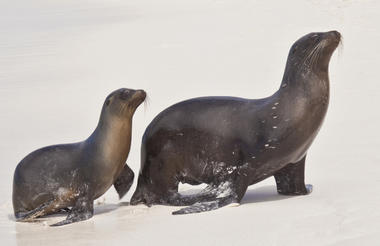
Land at Punta Cormorant on Floreana. Guided walks to observe the bird and wildlife and learn about the natural history. Snorkelling excursion at Champion Islet. Visit Post Office Bay.
Visit Punta Cormorant, the only landing site on Floreana Island, and discover two amazingly different beaches: one with green sand, coloured by olivine crystals, and another with white sand particles known as 'Flour Beach'. Spend the afternoon observing flamingos and other shore birds feeding in the lagoon. Spot penguins and marine iguanas at the water’s edge, and explore the lava tubes with the Galápagos CEO.
Jump on in and get up close and personal with the playful sea lion colony that reside in the waters off this tiny island. Keep an eye out for sea turtles, rays and colourful fish swimming by. There can be currents in this area, this activity should be done by strong swimmers only.
Visit Post Office Bay and learn about its unique history. In the late 18th century, English whaling vessels placed a barrel here to be used as a post office. Today, the box is used mainly by tourists, who may drop off and pick up unstamped letters to be carried to far destinations. Continue the tradition – leave a letter and take one to deliver (be sure it makes it to the correct location)


Cormorant Point
Breakfast
Lunch
Dinner
Disembark in Puerto Ayora and visit the Charles Darwin Research Station to see the giant Galápagos tortoises. Visit Fausto Llerena Breeding Center a great place to observe many species of tortoises and land iguanas in captivity. Brought back from the brink of extinction, see the famous Galápagos tortoise up close – a corral houses adult tortoises, and a nursery cares for the young until around age three when their shells have hardened. This area also houses the Charles Darwin Research Station, a scientific organization initiated in 1964, which works to preserve the Galápagos' ecosystem through the conservation efforts of scientists, researchers, and volunteers. While the offices themselves are not open to visitors, the research station provides a study location for international scientists and environmental education for the local community.
In the afternoon visit the highlands of Santa Cruz and see the Galápagos giant tortoise in its natural surroundings. Explore the area and its incredible underground lava tunnels – some are more than 1km (.6 mi) long! Wander along the volcanic tubes and keep an eye out for the (mainly) nocturnal barn owls that sometimes roost here.

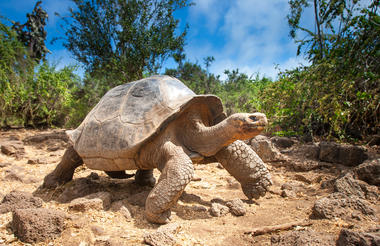

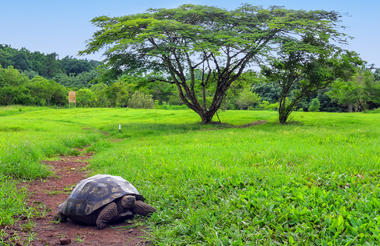
Today, you will visit the Charles Darwin Research Station on Santa Cruz Island, where you will learn about conservation efforts and see giant tortoises of different ages up close. Afterwards, continue to the highlands, exploring lush landscapes, volcanic craters, and hidden lava tunnels while observing giant tortoises, finches, and lava lizards in their natural habitat. After this enriching day, return to your accommodation to relax and enjoy the evening.

Today we will be visiting the beautiful and remote Genovesa Island. This northern island, famous for its red-footed colony, is a paradise for bird lovers. It is estimated that about 200,00 Red-footed boobies live on this island.
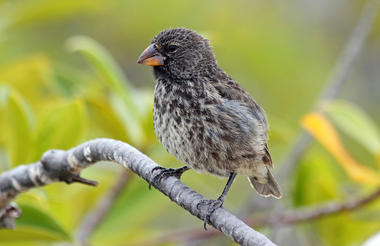
El Barranco or Prince Phillips’s Steps as otherwise known, was named after a visit by the British Monarch in 1964. El Barranco's steep 81-foot stairway leads up to a high cliff-face that opens out onto the plateau surrounding Darwin Bay. Here an amazing view can be appreciated. Once at the top of the stairway we will meet Nazca boobies, red-footed boobies, mockingbirds, and finches along the way of a palo santo trail. It will also be possible to see wedge-rumped storm petrels swarm and short-eared owls.
Darwin bay was formed by the collapse of the flooded caldera of Tower Island, another name used for Genovesa. After landing at a small sand and coral beach, it easy to realize why this island is a bird lover paradise. Among the bird species found here, the most common are swallow-tailed and lava gulls, mockingbirds, yellow-crowned night herons, lava herons, Galapagos doves and yellow warblers.
We will continue on a short and flat trail to encounter red- footed booby and great frigatebird nests. We will visit a tidal lagoon where sea lions swim playfully ending our path on a cliff with magnificent views of this remote part of the Galapagos.


Breakfast
Lunch
Dinner
Take a morning panga ride and look for marine life in Black Turtle Cove. Explore the mangroves by panga to find rich marine wildlife between the fresh and salt waters. Keep any eye out for manta rays and sea turtles in this tranquil ecosystem. Whitetip reef sharks can also be seen gliding by.
In the afternoon head to Bachas Beach where the sand is made of decomposed coral, making it soft and white, and a favourite site for nesting sea turtles. Spot abundant Sally Lightfoot crabs on the lava rocks along the water's edge -- these crabs will eat anything they can get their claws on! Trek to see a wide range of wildlife, including flamingos, hermit crabs, black necked stilts, and sea lions.
Go snorkelling or swimming right off the white sand beach of Las Bachas. Spot all sorts of marine wildlife in its shallow waters and tidal pools. Bachas is also one of the most important beaches for the green turtle as a nesting site.


Today, you will visit Bachas Beach on Santa Cruz Island, a pristine white-sand beach where you may spot sea lions, flamingos, shorebirds, and nesting sea turtles depending on the season. Afterwards, continue to Dragon Hill, a scenic site known for its dry forest, unique landscapes, and opportunities to observe land iguanas and endemic birds. After this memorable day, return to your accommodation to relax and enjoy the evening.


Today we visit the most western visitor site of the Galapagos, Espinoza Point in Fernandina Island. This island is also one the most pristine on the archipelago as no foreign species have been introduced. On the afternoon, we will visit Vicente Roca Point, on Isabela Island, famous for its rich underwater sea life thanks to its location on the Bolivar Channel.
Espinosa Point on Fernandina Island is one of the most pristine islands in the world, with none of man’s introduced species to date. From here we can see the island of Isabela across the Bolívar Channel, an area that boasts some of the highest diversity of endemic sea fauna in the Galapagos. Fernandina is the youngest of the Galapagos Islands and a visitor favorite. When landing, check out the tidal pools where there is abundance of sea life, including small fish and mollusks. If we are lucky, a sea turtle or ray may be trapped in the pools. A little further ahead we will pass through some marine iguana burrows and sea lion colonies. The trail continues to where several flightless cormorants have their nests. This remarkable bird is only found in western Galapagos, and experts estimate that they may only be a few hundred individuals in total.
Vicente Roca Point has great deep-water snorkeling at one of the richest marine havens on Earth (Bolivar Channel). Vicente Roca Point is renowned for its Galápagos green turtles, which are very numerous on the bay. Although the spot is known for its high concentration of green turtles, sharks and rays can also be observed when underwater visibility is good. We take a dinghy ride along the coast to observe a great diversity of sea and coastal birds; Nazca and blue-footed boobies, noddies, brown pelicans, penguins, flightless cormorants. The upwelling of coldwater currents in this part of the Galapagos gives rise to an abundance of marine life. Our snorkeling will takes us along the cliffs and offers the chance of exploring two shallow underwater caves with rich marine wildlife.


Today, you will visit Isabela Island, starting at Urbina Bay, a raised coral reef where you can observe marine iguanas, sea lions, and unique bird species. Afterwards, continue to Tagus Cove, a sheltered bay with dramatic cliffs, volcanic landscapes, and historic inscriptions left by pirates and whalers. After this adventurous day, return to the yacht for dinner.


Breakfast
Lunch
Dinner
Today, you will explore Black Turtle Cove on Santa Cruz Island, navigating calm mangrove channels where you may spot sea turtles, rays, sharks, and a variety of seabirds. Afterwards, you will be transferred to Baltra Airport for your onward journey, taking unforgettable memories of the Galápagos with you.


Breakfast

