
AM | Arrival to Baltra
Morning flight from Quito or Guayaquil to Baltra, Galapagos Islands. After passing through immigration and baggage claim, you will be met by a Cormorant II staff member and brought onto a private bus to start your adventure in Galapagos. Please note that your first excursion in the Galapagos will be after being picked up at the airport upon arrival to the islands, before boarding the cruise. You need to arrive in the Galapagos wearing comfortable clothes, good closed-toe shoes suitable for an excursion, a long-brimmed hat, sun lotion, and sunglasses, and to ensure you have your camera handy.
PM | Santa Cruz Highlands & Fausto Llerena Breeding Center
Accessible by bus from Puerto Ayora, the highlands of Santa Cruz are a deep green which contrasts beautifully with the dry, lower part of the islands. The predominant vegetation in the highlands are Scalesia trees which create a lush green forest. The lava tunnels, over half a mile long, are underground, and walking through them is a unique, surreal experience. At this place, you’ll have lunch. You will visit the “Fausto Llerena” Tortoise Breeding Center in Puerto Ayora, where giant tortoises are bred in captivity. This is home to tortoises ranging from 3 inches (new hatchlings) to 4-feet-long adults. Subspecies of the giant tortoises interact with one another, and many of the older tortoises are accustomed to humans stretching out their heads for a photo opportunity. The babies are kept until they are about four years old and strong enough to survive on their own.


PM | Santa Cruz Highlands
- Possible Activities: Hiking (1.5 miles / 2 ½ km)
- Difficulty: Easy
- Type of Landing: Dry Landing
- Highlights & Animals: Lava tunnels, Finches, wild tortoises, tortoise nesting site.
PM | Fausto Llerena Breeding Center
- Possible Activities: Walking
- Difficulty: Easy
- Type of Landing: Dry Landing
- Highlights & Animals: Giant tortoises, finches, Galapagos rails
AM | Tintoreras Islet & Sierra Negra Volcano
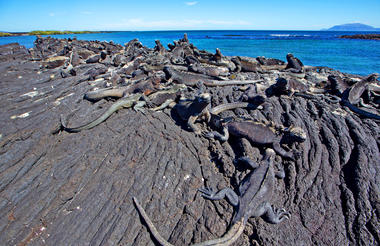
Tintoreras Islet, situated a short distance from Puerto Villamil, is teeming with diverse wildlife. Its turquoise, crystalline waters are home to white-tip reef sharks, Galapagos penguins, marine turtles, and sea lions. One of its beaches, surrounded by mangroves, serves as a vital breeding ground for marine iguanas.
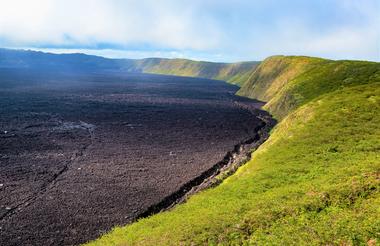
You'll then embark on a visit to the Sierra Negra Volcano, boasting the largest basaltic caldera in the Galapagos with a diameter of 6.2 miles (10 km). This site offers breathtaking vistas and the opportunity to observe up to seven species of finches, along with a rich array of vegetation. Evidence of the volcano's most recent eruption in 2005 can be seen on the north side of the caldera.
PM | Wetlands & Arnaldo Tupiza Breeding Center
The Wetlands of Isabela Island, located just outside Puerto Villamil, encompass lagoons, swamps, and mangroves, providing a habitat for a variety of unique bird species such as common stilts, whimbrels, white-cheeked pintails, and gallinules. These Wetlands can be explored on foot via a path through the swamps.
The Arnaldo Tupiza Breeding Center, situated approximately one mile (1.5 km) from Puerto Villamil, is dedicated to the conservation of tortoise populations from South Isabela, Sierra Negra Volcano, Cerro Azul, Cazuela, Cinco Cerros, Roca Union, San Pedro, Tables, and Cerro Paloma. In total, the center houses 330 juvenile and adult tortoises.


AM | Tintoreras Islet
- Possible Activities: Dinghy ride and hike
- Difficulty: Easy
- Type of Landing: Dry Landing
- Highlights & Animals: White-tipreef sharks, penguins, marine turtles, sea lions, marine iguanas
AM | Sierra Negra Volcano
- Possible Activities: Hiking, walking
- Difficulty: Difficult
- Type of Landing: Dry Landing
- Highlights & Animals: Basaltic caldera, stunning views, finches
PM | Wetlands & Arnaldo Tupiza Breeding Center
- Possible Activities: Wakling
- Difficulty: Easy
- Type of Landing: Dry Landing
- Highlights & Animals: Giant mangroves, shore birds, flamingos, two of the five species of the giant tortoise
AM | Moreno Point
Situated southwest of Elizabeth Bay, Moreno Point offers a unique landscape formed by once-flowing lava. Visitors can make a dry landing on the hardened lava, which has left behind craters that now form crystal tide pools. Peering into these pools offers a glimpse into another world, as marine life glides by. Among the brackish pools, you may spot pink flamingos, white-cheeked pintails, and common gallinules. Keen observers might even catch sight of white-tip reef sharks and sea turtles lurking beneath the surface.
PM | Elizabeth Bay
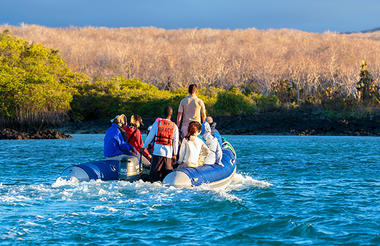
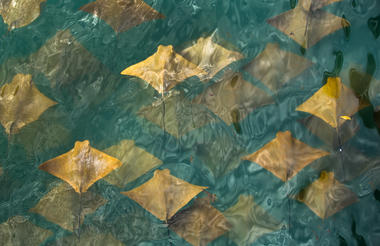
Located on the east coast of Isabela Island, Elizabeth Bay is adorned with numerous islets, accessible by dinghy. These rocky islets are home to penguins and blue-footed boobies, offering excellent opportunities for wildlife observation. With its abundant marine life and clear waters, the bay is perfect for snorkeling, allowing visitors to witness schools of colorful fish, playful sea lions, and perhaps even glimpses of sharks.
AM | Moreno Point
- Possible Activities: Snorkeling, panga ride & hike (1.2 miles / 2km)
- Difficulty: Moderate/Difficult
- Type of Landing: Dry Landing
- Highlights & Animals: Flamingos, gallinules, pintail ducks, turtles, white-tip reef sharks.
PM | Elizabeth Bay
- Possible Activities: Hiking (1.5 miles / 2 km) and dinghy ride
- Difficulty: Easy/Moderate
- Type of Landing: Wet Landing
- Highlights & Animals: Mangrove forest (unique in Galapagos), sea turtles, penguins, rays, herons and sea lions
AM | Espinoza Point
Upon crossing the Bolivar Channel that separates Isabela and Fernandina Islands, you'll arrive at Espinoza Point. Here, after passing by a colony of marine iguanas and a group of sea lions, you'll reach the island's highlight: the nesting site of the flightless cormorant. This area also offers a great opportunity to observe the Galapagos hawk in its natural habitat.
PM | Vicente Roca Point
Comprising two separate coves, Vicente Roca Point is a vast bay teeming with spectacular marine life. While snorkeling, keep an eye out for seahorses, sea turtles, and the intriguing Mola mola, also known as the sunfish.


AM | Espinoza Point
- Possible Activities: Hike (approximately 1.2 miles / 2 km)
- Difficulty: Moderate
- Type of Landing: Dry Landing
- Highlights & Animals: Flightless cormorant, marine iguanas, ‘a‘ā lava, sea lions, penguins, active volcano “La Cumbre”.
PM | Vicente Roca Point
- Possible Activities: Snorkeling & dinghy ride
- Difficulty: Easy/Moderate
- Type of Landing: No Landing
- Highlights & Animals: Penguins, blue-footed boobies, terns, Nazca boobies, two types of sea lions. Sea turtles, rays and puffer fish.
AM | Egas Port
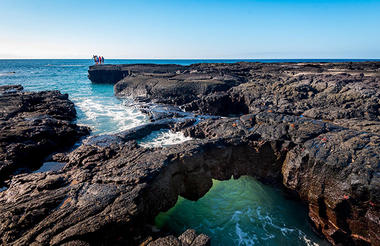
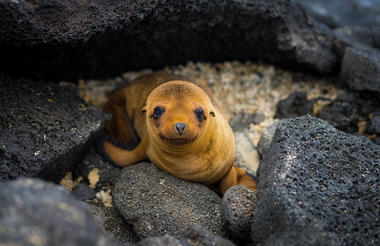
Egas Port, also known as James Bay, situated on Santiago Island, is inhabited by curious Galapagos hawks and swift Galapagos lava lizards. Following the trail leads to the coastline adorned with stunning tide pools and grottos teeming with wildlife. Here, you can observe Galapagos fur seals basking in the sun. This area also offers excellent snorkeling opportunities.
PM | Espumilla Beach & Buccaneer Cove
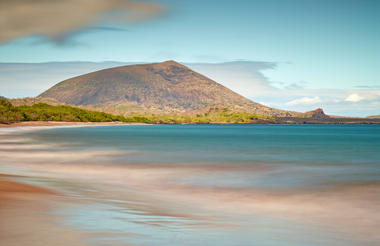
Espumilla Beach is a haven where marine iguanas bask in the sun and Sally Lightfoot crabs attract hunting herons, offering a captivating display of predator-prey interactions. Snorkeling is highly recommended here, offering the chance to encounter octopuses, moray eels, sharks, and a variety of tropical fish species.
Buccaneer Cove serves as a reminder of Santiago Island's past as a refuge for British buccaneers. These pirates would anchor in the protected bay for repairs and to replenish their supplies, including tortoise meat. The towering cliffs, adorned with hundreds of seabirds, overlook the dark red sand beach, creating a magnificent sight.
AM | Egas Port
- Possible Activities: Snorkeling, hiking (1.2 miles/2 km)
- Difficulty: Easy/Moderate
- Type of Landing: Wet Landing
- Highlights & Animals: Furseals, Galapagos sea lions, tidal pools and grottos, Galapagos hawks, oyster catchers, marine iguanas, finches; snorkeling: reef sharks, turtles, rays, nice underwater formations.
PM | Espumilla Beach
- Possible Activities: Snorkeling and swimming
- Difficulty: Easy
- Type of Landing: Wet Landing
- Highlights & Animals: Snorkeling
PM | Buccaneer Cove
- Possible Activities: Short hike along the beach (less than 0.6 miles / 1 km), snorkeling, dinghy ride and kayaking
- Difficulty: Easy
- Type of Landing: Wet Landing
- Highlights & Animals: Sea birds, historical site, snorkeling and rock formations
AM | Pinnacle Rock
Your morning will take you to Bartholomew Island, home to the iconic Pinnacle Rock. Bartholomew showcases an extinct volcano adorned with a variety of volcanic formations in striking hues of red, orange, black, and even green. Embark on a trail of stairs leading to the summit of the volcano, a 30 to 40-minute hike, offering unparalleled views of the islands. You'll also visit a small yet picturesque beach enveloped by the island's sole vegetation. This beach provides an excellent opportunity for snorkeling, where you may encounter and swim alongside Galapagos penguins.
PM | Sullivan Bay
In the afternoon, you'll explore Sullivan Bay, situated on the southeast coast of Santiago. This area is renowned for its fascinating geology, characterized by extensive lava flows. Elevations resembling small volcanoes dot the landscape, formed by the solidified lava.


AM | Pinnacle Rock
- Possible Activities: Dinghy ride, snorkeling & hiking (1.2 miles/ 2 km)
- Difficulty: Moderate/Difficult
- Type of Landing: Dry & Wet Landings
- Highlights & Animals: Pinnacle Rock, panoramic view, moonlike landscape, penguins, pioneer plants, lava cactus; snorkeling: penguins, reef sharks, rays, and great colorful fish.
PM | Sullivan Bay
- Possible Activities: Hiking
- Difficulty: Easy/Moderate
- Type of Landing: Dry Landing
- Highlights & Animals: Lava flows, small volcanoes
AM | Chinese Hat Islet
Located near the southeast coast of Santiago Island, Chinese Hat Islet derives its name from the distinctive shape of its summit. This small islet offers an excellent opportunity to observe various geological formations, including lava tunnels and flows. Some of the lava flows were initially formed underwater and subsequently emerged above sea level. The presence of coral heads atop the lava flow attests to this phenomenon.
PM | Dragon Hill
Found on Santa Cruz Island, Dragon Hill stands as one of the newest visitor sites accessible to tourists in the Galapagos Islands. Visitors can embark on one of the longer walking trails in the Galapagos, which leads along a beach and up to a lagoon lookout point. Here, you may spot vibrant flamingos, pintail ducks, and land iguanas amidst the stunning natural surroundings.


AM | Chinese Hat Islet
- Possible Activities: Hike (1,9 miles / 3 km)
- Difficulty: Easy
- Type of Landing: Wet Landing
- Highlights & Animals: Lava formations, great site for snorkeling with an abundance of marine species such as sea lions, sharks, rays and penguins.
PM | Dragon Hill
- Possible Activities: Panga ride & short hike
- Difficulty: Easy
- Type of Landing: Dry Landing
- Highlights & Animals: Land iguana nesting spot, Galapagos flamingos, common stilts, palo santo trees and cacti forest
AM | North Seymour
North Seymour Island offers an opportunity to encounter a variety of Galapagos wildlife, including Galapagos sea lions, blue-footed boobies, and magnificent frigatebirds, which abound on this island. Formed by a series of submarine lava flows containing layers of sediment uplifted by tectonic activity, North Seymour is characterized by its arid vegetation zone.
After this final visit, you will be transferred to the Baltra airport in time for your flight back to the mainland.


AM | North Seymour
- Possible Activities: Dinghy ride & hiking (1.5 miles / 2.41 km)
- Difficulty: Moderate/Difficult
- Type of Landing: Dry Landing
- Highlights & Animals: Land & marine iguanas, frigate birds, blue-footed boobies, sea lions; snorkeling: rays, reef sharks, fish, garden eels.
Please note:
Itineraries are unlikely to change significantly but are subject to change. Weather, wildlife breeding, safety concerns, instructions from the
Galapagos National Park, specific abilities and interests of guests as well as operational matters may cause your guide or captain to change the
time or nature of visits. Your guide and captain will always endeavor to select the best itinerary within these limits.


