


Upon arrival at Windhoek's Hosea Kutako International Airport, proceed through immigration and customs, collect your luggage, and enter the arrivals hall. Head to the Namibia2GO office located at the airport to collect your rental vehicle. Once you've picked up the vehicle, begin your drive into Windhoek, which is approximately 45 kilometers west of the airport (about a 20-30 minute drive, depending on traffic).
If you have the afternoon free, you can explore some of Windhoek's highlights, such as visiting the iconic Christuskirche, taking a stroll around Zoo Park, or enjoying the local art and craft stalls at the Namibia Craft Centre. For a scenic view of the city, head to the Skybar at the Hilton Hotel, where you can relax with a drink and take in the sights. Windhoek offers a mix of cultural and historical sites, local shops, and cozy cafés to enjoy at your leisure.


After breakfast this morning, we recommend stocking up on some essentials before leaving town. Always carry water & snacks on board your vehicle as distances can be long and facilities few and far between.
Leaving the capital, you head south to the Kalahari Desert, it's an easy drive of roughly three hours, almost all on good tar roads. This gives you the chance to get used to your vehicle before you reach the gravel roads.


The best time to explore the desert is in the cool early morning hours. The myriad tracks and trails crisscrossing the seemingly lifeless orange sands are evidence of the nocturnal life of the more elusive residents of the Kalahari. After a hearty breakfast you continue your journey south west to the Namib Desert. You travel via Mariental to Maltahohe, a small farming settlement on the edge of the escarpment. Depending on the rains you might be lucky to witness the lily fields at Sandhof (west of Maltahohe). A huge field of lilies grows in a clay pan where rainwater collects. The bulbs only bloom after there has been enough rain to fill the pan with about 30 cm of water - not a common occurrence in Namibia. Heading down the escarpment mountains you reach your overnight accommodation on the edge of the Namib dune sea later this afternoon. The Tsaris Pass is steep in areas with twists and turns. Drive slowly and carefully. Relax at the swimming pool and enjoy the late afternoon light on the mountains.
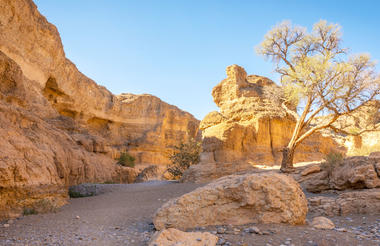
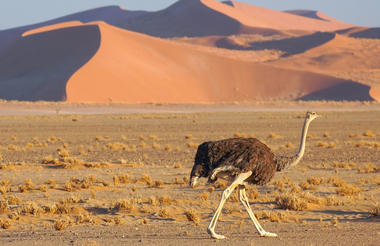
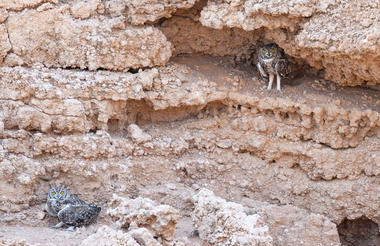
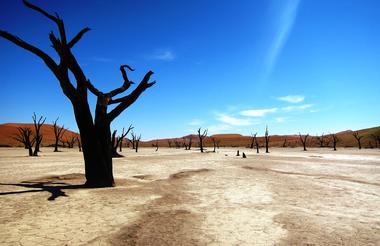
You have a full day to explore the dune fields and pans of Sossusvlei. The park gates open at sunrise and close at sunset. We recommend an early start to experience the beautiful early morning light on the dunes. And to enjoy the cooler early morning hours. Be sure to take plenty of water with you (at least 3 litres per person), a hat, a long-sleeved shirt to protect your arms, sunscreen and closed walking shoes (the sand will get hot!). You enter the park at the Sesriem Gate where you need to stop at the office to get your permit (valid from sunrise to sunset) and pay your park entry fees. From here there is a small tar road leading 60 kilometres into the dunes. It's a spectacular drive, take it easy and enjoy the scenery. The tar road ends at the 2x4 parking area at the 60-kilometre point. From here there is a 5-kilometre, sandy track into Sossusvlei. If you are not comfortable to drive this (it is very sandy and requires 4x4) there is a shuttle service from the 2x4 parking area in/out of Sossusvlei (additional charge payable on site / N$180,00 per person). Spend the morning exploring Sossusvlei & Dead Vlei then return to camp for lunch and a siesta or swim. In the cooler afternoon hours, you can explore Sesriem Canyon, located approximately 7 kilometres from the park gate. Just remember that the park gates close at sunset.
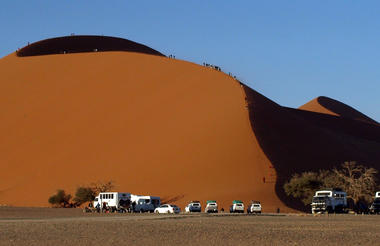

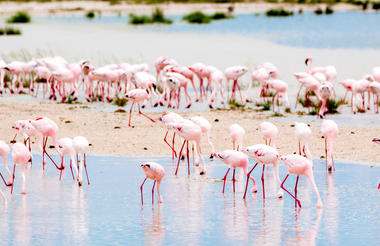
A fairly long but interesting drive today. You skirt around the main Namib Dune Sea to reach the coast. En route you pass petrified dunes, the Tropic of Capricorn (not looking very tropical) and negotiate your way through the Gaub & Kuiseb Canyons before you reach the coastal plains that roll all the way down to the ocean. You'll notice a drop in the temperature as you get closer to the coast. The cold Benguela Current modifies the coastal temperatures and offers a welcome relief from the summer heat. You might want to detour to visit the Walvis Bay lagoon area, home to thousands of wetland birds including flamingoes. The last section of your journey today is a beautiful drive between the dunes and the ocean.


Swakopmund is the activity centre of Namibia, but the town offers so much more than just something for adrenaline junkies. Sandwiched between the hot, arid desert and the cold waters of the Atlantic, Swakop is one of the most fascinating colonial towns in Africa. It is an eclectic mix of South African, Namibian and German cultures, architecture, languages and cuisine. Both locals and foreigners love the laid-back atmosphere, good restaurants, many activities and the temperate climate. A great variety of activities are available to explore the coastal dune fields, the rocky desert and the rich Atlantic waters. Activities range from seal & dolphin cruises; kayaking with the seals; exploring the coastal dunes and meeting the desert adapted creatures that live here; scenic flights; desert walks; quad biking ... the list is long! We’ve added some details on a few of our favourite activities for your consideration. We recommend pre-booking in peak season to avoid disappointment.


We suggest you stock up on some supplies for the next few days as there are few facilities en route. Bidding farewell to Swakopmund you head a short distance up the Skeleton Coast and can stop at one of our more recent shipwrecks, the Zeila, just south of Henties Bay. Turning inland you encounter the desert heat again as you move away from the coast. You will see the Brandberg Mountain, home to the highest peak in Namibia, shimmering in the heat haze. The small mining settlement of Uis offers a chance to refuel and have lunch or a cup of tea/coffee or an ice cream. Continuing north you are now in desert elephant territory, you might see their tracks on the road. It is amazing how tricky it is to spot such large creatures! On arrival at your overnight camp take a refreshing dip in the pool and maybe stretch your legs on a walk in the area around the camp. Time permitting you might want to visit the nearby Damara Living Museum to learn more about the Damara people.
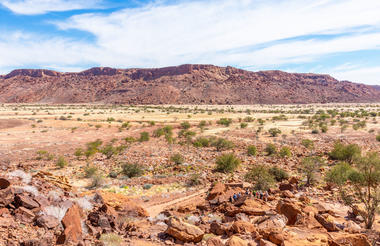
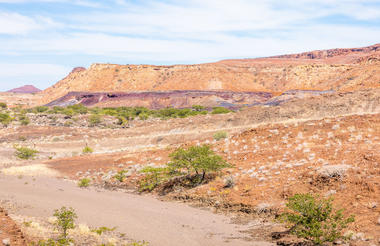
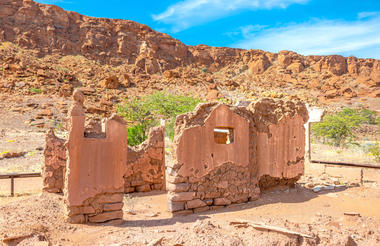
We recommend visiting the rock engravings at Twyfelfontein early this morning. This world heritage site is home to the largest collection of rock engravings in southern Africa. Local guides will take you around the site, be prepared for some walking and a little bit of climbing if you want to view most of the engravings. The full walk will take 1-2 hours. Departing Twyfelfontein you head into northern Damaraland, an area of starkly stunning scenery. Flat topped mountains, mesa's and butts frame rock strewn valleys that are home to an unexpected variety of desert adapted flora & fauna. This afternoon enjoy a well earned sundowner while watching the late afternoon light on this primordial landscape. You might be lucky to find the desert elephants here, springs in the ephemeral Ugab River attract game to the area around the lodge.
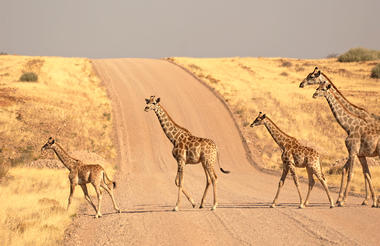

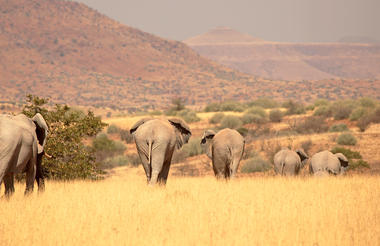
This morning you might want to join a guided walk in the area around the lodge to learn a bit more about the unusual flora of northern Damaraland. You might encounter springbok, oryx, kudu, giraffe, mountain zebra and elephant; as well as strange plants like the euphorbia damarana, sesame trees, bottle trees and whip stick acacias. Bidding farewell to Damaraland you head east towards the game filled plains of Etosha. You can still enjoy the stunning scenery for a while as you climb up over the Grootberg mountains, stop at the top for a fantastic view back into the rocky valleys below. We suggest you stop in Outjo to stock up on supplies for the next three days in the park. Each camp has a shop, but they are not well stocked. Pick up some water, soft drinks, beer & wine as well as snacks to keep in the car. Bear in mind that you are staying inside the park tonight. The park and camp gates close at sunset and only open again at sunrise.
NOTE: plastic bags are banned in Etosha. If you are picking up supplies in Outjo request a cardboard box to pack them in.


Undoubtedly one of the great parks of Africa, Etosha covers more than 22,300 km2 (8,620 sq mi) and is synonymous with big game and wide open spaces. The name Etosha means “great white place” referring to the massive (130km long and 50km wide) dry saline pan in the middle of the park, believed to have been formed over 100 million years ago.
Etosha is home to a staggering amount of wildlife, both common and rare, including several threatened and endangered species. The mammal list is at over 110 species, including four of Africa’s Big Five, Cheetah, Giraffe, Spotted Hyaena, Zebra (2 species), Greater Kudu, Springbok, Gemsbok/oryx(Namibia’s national animal), Common Warthog, Honey Badger and many more. Etosha also has a bird list of more than 350 species. The park is also home to smaller mammals like Banded and Yellow Mongoose, Scrub Hare and Southern African Spring-hare, as well as rare ones like Pangolin, Aardvark, Aardwolf and Cape Porcupine. Over 110 reptile species also occur in the park, along with 16 amphibian species and a surprising number of fish during flood years.
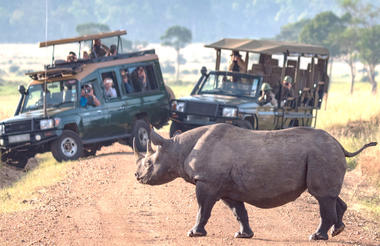
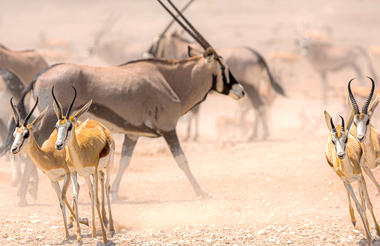
You have a full day for game viewing in Etosha today as you cross the park from south to east. As the crow flies it is a distance of 200 kilometres. But this journey will take most of the day as you will be game viewing en route. The park speed limit is 40 kilometres per hour but at times you will be driving even slower as you search for game. The park gates are open from sunrise to sunset. Plan your day to allow enough time to exit the park at least one hour before sunset that you can settle in at your next camp before it gets dark. It is easy to lose track of time in the park, be aware of how far you have to go. We suggest you plan to stop at Halali Camp for your lunch, a leg stretch, bathroom and maybe even a swim. Spend your morning game viewing across to Halali. Be sure to take the route simply marked "Etosha", which will take you a few kilometres out onto the pan. This will give you a good idea of the size of the pan. If the park has had good rains the game will have moved away from the over grazed areas around the waterholes and out onto the plains to take advantage of the sweet new grasses. Most species drop their young at this time of the year, so the plains are full of young springbok, wildebeest and zebra, a delight to watch. From Halali push through to Namutoni where you can have another break or head out of the park to your destination.


Sadly, its time to bid farewell to Etosha and begin your journey back towards Windhoek. Heading south you travel via the mining town of Tsumeb and on to Otjiwarongo, the place of the fat cows, an appropriate name for this farming community. Just south of Otjiwarongo you turn off the main road and into the bush again. Okonjima Plains Camp is located on the 22 000 hectare private Okonjima Nature Reserve. Stocked with a variety of game species Okonjima is well known for its more unusual game offers such as leopard, brown hyena and pangolin. They offer a variety of expertly guided activities to learn more about some of Namibia's lesser known and seldom seen game species. Be sure to plan your day to arrive in time to join an afternoon activity of your choice.
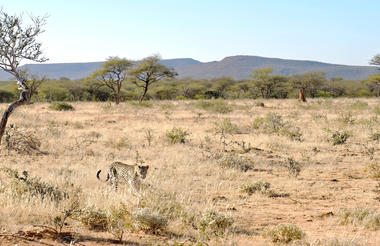
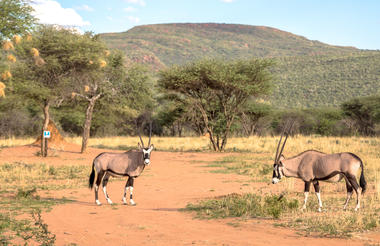
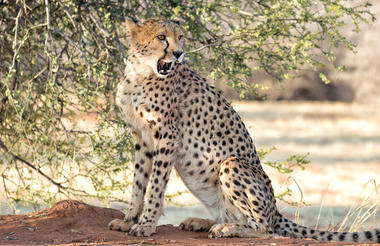
At Okonjima, you can enjoy a relaxed start or join an additional morning activity, which begins early and returns mid-morning for a hearty brunch. Afterward, you’ll meander through the reserve toward the main road—keep an eye out for any last glimpses of cheetahs or other wildlife. The drive to Okapuka is about three hours on well-maintained tar roads, offering a smooth transition from the calm of the bush to the busier pace as you near Windhoek.


After a restful stay at Okapuka, you can enjoy a leisurely morning before preparing for your journey to Hosea Kutako Airport. The drive to the airport is about an hour along well-paved roads, making for an easy final leg of your trip. As you get closer to the airport, be prepared to adjust to the busier traffic. If you need to refuel your vehicle, allow time to do so before returning it as required. Safe travels, and enjoy the memories you’ve made on your journey


