
Arrival at Baltra
Your journey begins with a morning flight from Quito or Guayaquil to Baltra, in the Galapagos Islands. Upon arrival at Baltra Island in the morning, you'll proceed through immigration and collect your baggage. A Cormorant II staff member will be waiting to greet you and transfer you to the yacht. Once aboard, you'll be shown to your cabin, where you'll have some time to settle in before lunch and a welcome briefing.
PM | Bachas Beach
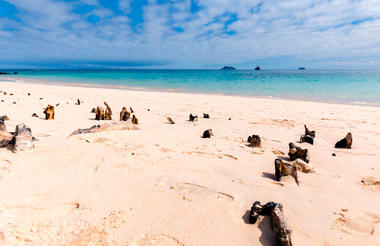
Located on the north shore of Santa Cruz, Bachas Beach beckons for a refreshing swim. Remnants of the U.S. World War II presence in the Galapagos, including a floating pier, can still be seen here. Keep your eyes peeled for sightings of flamingos, Sally Lightfoot crabs, hermit crabs, black-necked stilts, and whimbrels. Bachas Beach also serves as a nesting site for sea turtles, adding to the rich diversity of this coastal haven.


PM | Bachas Beach
- Possible Activities: Hiking
- Difficulty: Easy
- Type of Landing: Wet Landing
- Highlights & Animals: World War II remnants. Sally Lightfoot crabs, hermit crabs, black necked stilts, whimbrels, sea turtles
AM | El Barranco
Also known as Prince Phillip’s Steps, El Barranco is a steep and rocky path that ascends a high cliff rock face, offering a marvelous panoramic view. This site is adorned with Palo Santo vegetation and serves as a habitat for red-footed boobies, short-eared owls, Galapagos storm petrels, and Galapagos doves.
PM | Darwin Bay
Explore the pristine white-sand coral beach of Darwin Bay, which features a half-mile trail winding through mangroves teeming with land birds. Keep an eye out for Nazca boobies, red-footed boobies, and swallow-tailed gulls, easily spotted in this area. Further along the path, discover tidal pools where playful sea lions swim. At the trail's end, marvel at the spectacular view of a cliff, completing a memorable journey through Darwin Bay.


AM | El Barranco
- Possible Activities: Hiking (0,9 miles / 2 Km)
- Difficulty: Moderate T
- ype of Landing: Dry Landing
- Highlights & Animals: Red-footed boobies, short-eared owls, storm-petrels, Galapagos doves
PM |Darwin Bay
- Possible Activities: Hiking (0,9 miles / 1,5 Km), snorkeling, kayaking, and dinghy ride
- Difficulty: Easy
- Type of Landing: Wet Landing
- Highlights & Animals: Nazca boobies, red-footed boobies, swallow-tail gulls, mangroves, coral pebble beach, snorkeling: rays, colorful reef fish, and hammerhead sharks occasionally
AM | South Plaza Island
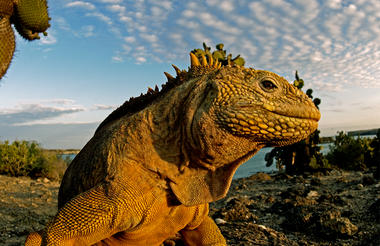
South Plaza Island, characterized by its steep cliffs, was formed by rising lava and is now adorned with Opuntia cacti. It boasts one of the largest sea lion colonies in the Galapagos and is home to colorful yellow and red land iguanas. The island's most notable plant is the Sesuvium, which undergoes a remarkable transformation throughout the seasons. During the rainy season, its hue shifts to a greenish-yellow tone, while in the dry season (from end of June through January), it takes on a vibrant red color.
PM | Santa Fé Island
Santa Fé Island, also known as Barrington, features a charming small bay and anchorage on its northeast coast. The bay offers two visitor trails: one leading to a scenic viewpoint atop a cliff, providing panoramic vistas, and the other stretching from a small beach to a dense forest of tall prickly pear cacti.


AM | South Plaza Island
- Possible Activities: Hike (1.5 miles / 2 ½ km)
- Difficulty: Moderate
- Type of Landing: Dry Landing
- Highlights & Animals: Land iguanas, sea lion colony, Audubon’s shearwater
PM | Santa Fé Island
- Possible Activities: Hiking (5 miles / 8 km)
- Difficulty: Moderate
- Type of Landing: Dry Landing
- Highlights & Animals: Land iguanas, giant Opuntia cactus
AM | Pitt Point
Pitt Point, situated on the northeastern tip of San Cristobal island, is a haven for frigate birds, storm petrels, and all three types of booby birds: the Nazca, blue-footed, and red-footed boobies. A steep trail winds up a cliff and through a ravine, leading visitors to an area teeming with an abundance of birdlife.
PM | Witch Hill "Cerro Brujo"
Located on the northern coast, Witch Hill, or "Cerro Brujo," showcases an eroded hill and its surroundings, presenting one of the most picturesque beaches in the Galapagos. With its white powdery sand and abundance of wildlife, including sea turtles, rays, and various types of booby birds, it offers a mesmerizing sight. The clear waters provide an excellent opportunity for swimming and snorkeling amidst the vibrant marine life.


AM | Pitt Point
- Possible Activities: Dinghy ride, snorkeling, kayaking & hike (1.5 miles / 2.5 km)
- Difficulty: Moderate/Difficult
- Type of Landing: Wet Landing
- Highlights & Animals: Frigate birds, storm petrels, Nazca boobies, blue- and red-footed boobies
PM: Witch Hill "Cerro Brujo"
- Possible Activities: Hike, dinghy ride, snorkeling & kayaking
- Difficulty: Easy
- Type of Landing: Wet Landing
- Highlights & Animals: Beautiful rock formations, sea lions, shore birds, finches and mockingbirds; Snorkeling: nice tropical fish, anemones, sponges, coral
AM | David Rodriguez Breeding Center “La Galapaguera”
The David Rodriguez Breeding Center, known as “La Galapaguera,” situated in Cerro Colorado, is a newly established visitor site in the southeast part of San Cristobal Island. Accessible by road, it is approximately a one-hour journey from Puerto Baquerizo Moreno. The surrounding trees and shrubs provide habitat for land birds such as warblers, finches, and mockingbirds. Giant tortoises roam the trails, living in a protected area to ensure their survival by being shielded from introduced predators like pigs and goats.
PM: Lobos Island & Kicker Rock
Embark on an excursion to Lobos Island, aptly named “Sea Lion Island,” as it is home to a vibrant population of noisy and playful sea lions. They eagerly welcome visitors to their habitat. This island also offers excellent snorkeling opportunities, providing glimpses of blue-footed and Nazca boobies.
Kicker Rock, a striking rock formation located a couple of hours off the western shore of San Cristobal, towers vertically hundreds of feet above the ocean. Divided by a small channel, this geological marvel offers no landing areas, but circumnavigation and dinghy rides allow visitors to spot a diverse array of marine life.


AM | David Rodriguez Breeding Center “La Galapaguera”
- Possible Activities: Short hike (0,6 mi / 1 Km)
- Difficulty: Easy/Moderate
- Type of Landing: Dry Landing
- Highlights & Animals: Giant tortoises, finches, warblers, mockingbirds
PM: Lobos Island
- Possible Activities: Short hike (less that 0,6 miles / 1 km), dinhy ride
- Difficulty: Easy/Moderate
- Type of Landing: Dry Landing
- Highlights & Animals: Sea lions, frigate birds, blue-footed boobies
PM: Kicker rock
- Possible Activities: Dinghy ride
- Difficulty: Easy
- Type of Landing: No Landing
- Highlights & Animals: Sharks, tropical fish, turtles, manta rays (occ.), hammerhead sharks, spectacular rock format
AM | Suarez Point
Embark on the trail to Suarez Point, where you'll have the opportunity to encounter blue-footed boobies, albatrosses, and Nazca boobies. This island serves as the breeding site for nearly all of the world's 12,000 pairs of waved albatrosses. You'll visit a stunning oceanfront site where a cliff serves as a launching pad for the large albatrosses. Don't miss the chance to witness the famous blowhole, which spurs sea water into the air. The landscape offers fantastic opportunities for photography.
PM | Gardner Bay, Gardner Islet & Osborn Islet
Your excursion continues to the breathtaking Gardner Bay. Upon landing, stroll across a beautiful white-sand beach amidst a bustling sea lion colony, or dive into the water for a swim with playful sea lion pups. Keep an eye out for curious mockingbirds as you enjoy the serene surroundings of Gardner Bay.


AM |Suarez Point
- Possible Activities: Hike (1,9 miles / 3 km)
- Difficulty: Difficult
- Type of Landing: Dry Landing
- Highlights & Animals: Hood mockingbirds, Nazca boobies, waved albatrosses (approximately from the last week of April until the last week of January), red-billed tropicbirds, lava lizards, Galapagos hawks
PM | Gardner Bay, Gardner Islet & Osborn Islet
- Possible Activities: Snorkeling, panga ride, short hike (0,6 miles / 1km) and Kayaking
- Difficulty: Easy
- Type of Landing: Wet Landing
- Highlights & Animals: White sandy beach, sea lions, mockingbirds; snorkeling: colorful fish, sea lion nursery
AM | Post Office Bay & Baroness Viewing Point
Your morning begins with a visit to Post Office Bay, where you'll land on a beach and make your way to a spot where 18th-century whalers placed a wooden barrel used as an unofficial mailbox. This unique tradition continues to this day, allowing Galapagos visitors to send and receive postcards. It's said that sometimes, the postcard arrives at its destination before the sender returns home!
Next, head to Baroness Viewing Point, offering a fantastic opportunity to immerse yourself in the captivating environment of the Galapagos. This area was once inhabited by an indulgent baroness and her three lovers, making the island's history intriguing. Legends surrounding the baroness are intertwined with a fascinating murder mystery. Explore the easy trails in this area to discover the diverse flora and fauna of Floreana Island.
PM | Cormorant Point & Champion Islet
Cormorant Point welcomes you with a large flamingo lagoon, where you can also spot other bird species such as common stilts and white-cheeked pintails. The island's beaches are distinct: the Green Beach owes its name to its green hue, caused by a high percentage of olivine crystals in the sand, while the Flour Sand Beach is composed of white coral.
Named after the whaler Andrew Champion, Champion Islet is a small island located just offshore Floreana Island in the southern part of the Archipelago. Considered one of the most beautiful places in the Galapagos, it offers unparalleled opportunities for snorkeling and diving enthusiasts. Keep an eye out for dolphins, as Champion Islet is also an excellent spot for dolphin watching.


AM | Post Office Bay
- Possible Activities: Short hike (less than 0.6 miles / 1km) & snorkeling
- Difficulty: Easy
- Type of Landing: Wet Landing
- Highlights & Animals: Post office barrel, nice sandy beach
AM | Baroness Viewing Point
- Possible Activities: Short hike (0.6 miles/1 km), snorkeling, kayak, panga ride
- Difficulty: Easy
- Type of Landing: Dry Landing
- Highlights & Animals: Great view, sea turtles, mysterious story about the first inhabitants of the islands
PM | Cormorant Point
- Possible Activities: Dinghy ride & hike (1.25 mi /2 km)
- Difficulty: Easy
- Type of Landing: Wet Landing
- Highlights & Animals: Flamingoes, green-colored beach
PM | Champion Islet
- Possible Activities: Snorkeling and dinghy ride
- Difficulty: Moderate/Difficult
- Type of Landing: Wet Landing
- Highlights & Animals: See lions, reef fish and Nazca boobies
AM | Twin Craters, Santa Cruz Highlands
Your morning excursion will take you to the Twin Craters, situated opposite each other on both sides of the road leading from Puerto Ayora to Baltra. Despite their name, these formations are not actual craters but were formed by the collapse of surface material in underground fissures and chambers. Nevertheless, the sight is awe-inspiring, offering breathtaking views of the surrounding landscape.
After this final visit, you will be transferred to the Baltra airport in time for your flight back to the mainland.


AM | Twin Craters, Santa Cruz Highlands
- Possible Activities: Walking and scape viewing
- Difficulty: Easy
- Type of Landing: Dry Landing
- Highlights & Animals: Pit craters, Scalesia Forest


