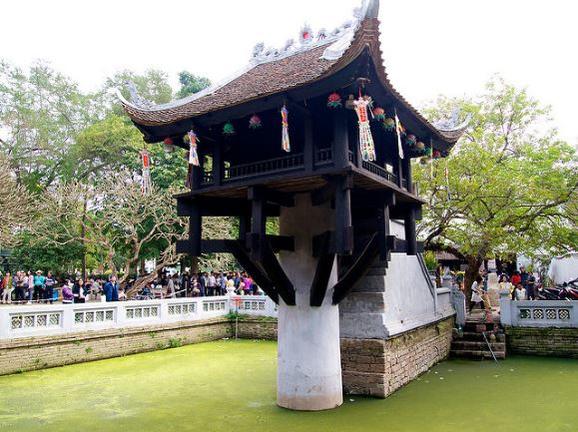
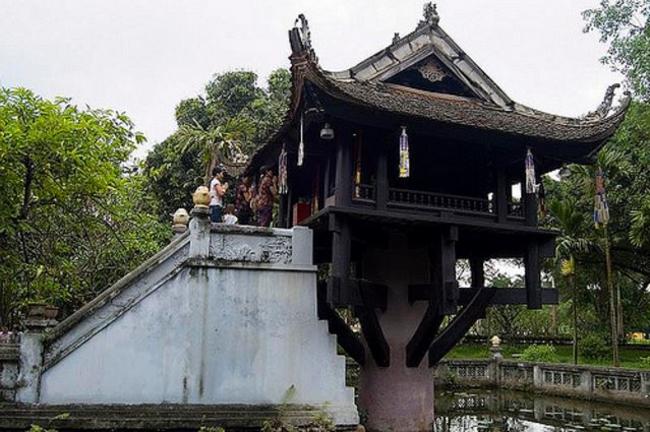
One of Hanoi’s most recognisable religious landmarks, One Pillar Pagoda is a small but highly symbolic sight in the Ba Dinh area, close to the Ho Chi Minh Mausoleum complex. Originally built in 1049 during the reign of Emperor Ly Thai Tong, the pagoda is one of the city’s most distinctive historic monuments and has long been associated with purity, faith and good fortune. It was designed to resemble a lotus blossom rising from the water, an image that carries strong meaning in Buddhist tradition.
What makes One Pillar Pagoda especially appealing is its unusual design. The wooden shrine stands on a single stone pillar above a lotus pond, giving it a delicate and almost storybook quality that sets it apart from Hanoi’s larger temple complexes. Its modest scale is very much part of its charm, and although it is not a lengthy visit, it remains one of the city’s most photographed and best-loved sights.
The pagoda works best as part of a wider visit to the surrounding historic district, especially when combined with the Ho Chi Minh Mausoleum, Ba Dinh Square, the Presidential Palace grounds and Ho Chi Minh’s Stilt House. Because of its location, it is usually seen as one stop within a broader half day rather than a standalone attraction.
For many travellers, One Pillar Pagoda is memorable not because of its size, but because of its symbolism and setting. It is one of those small but essential Hanoi sights that adds character, cultural depth and a strong sense of continuity with the city’s long past.