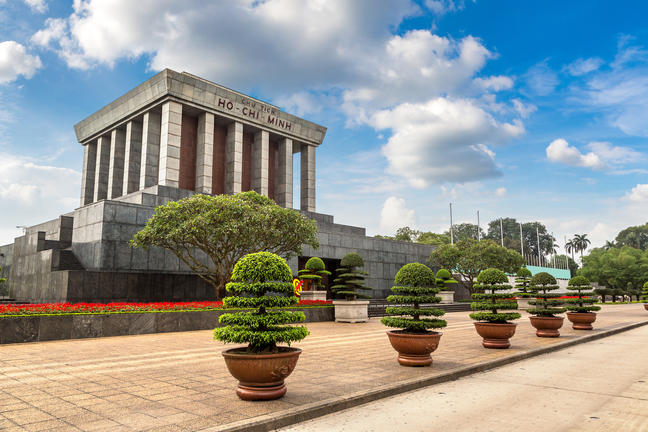
One of Hanoi’s most important political and historical landmarks, the Ho Chi Minh Mausoleum stands at the heart of Ba Dinh Square, where Ho Chi Minh declared Vietnam’s independence in 1945. For many visitors, it is one of the city’s key sights, not only because of its national significance, but because it offers insight into the modern story of Vietnam and the enduring importance of “Uncle Ho” in the country’s public life.
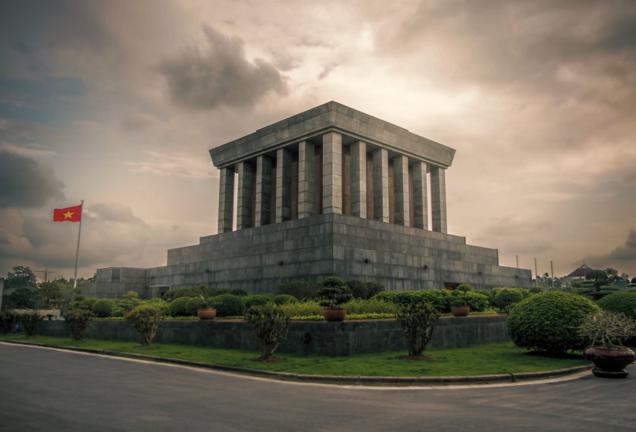
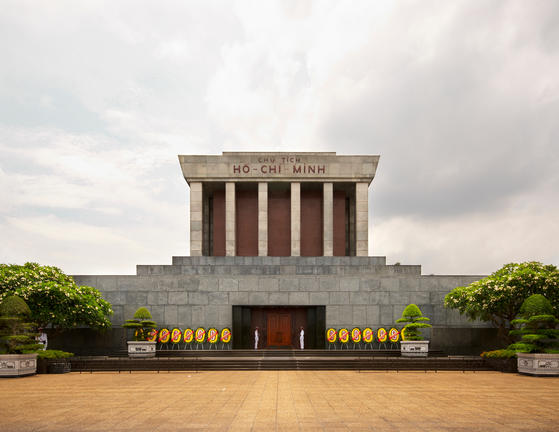
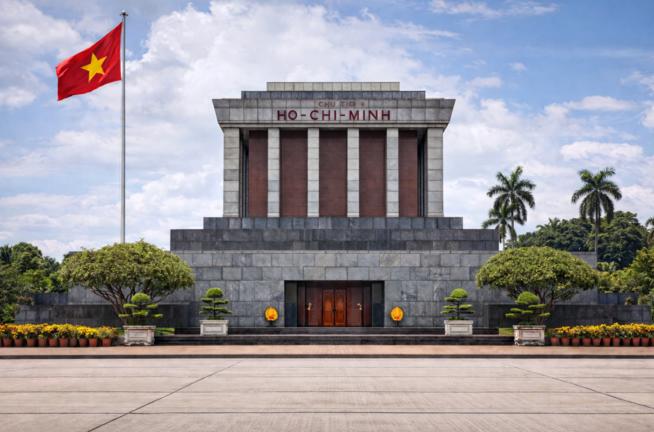
The mausoleum itself is a monumental grey stone building with a formal, imposing presence that reflects the gravity of the site. Visitors come here to pay their respects, and the atmosphere is noticeably more solemn than at many of Hanoi’s other attractions. Entry is carefully managed, queues can be long, and there are strict rules around dress, behaviour and photography, all of which add to the sense that this is a place of real national importance rather than simply a sightseeing stop.
What makes the visit especially worthwhile is that the mausoleum is part of a wider historic complex. Nearby are Ba Dinh Square, the Presidential Palace, Ho Chi Minh’s Stilt House, and the One Pillar Pagoda, so the area works very well as a broader half day of exploring rather than a single short stop. The open spaces and tree-lined grounds also create a calmer atmosphere than the busy streets of the Old Quarter.
The Ho Chi Minh Mausoleum suits travellers interested in history, politics and modern Vietnam, and it is one of those places that helps give context to many other sights in the capital. For first-time visitors especially, it remains one of Hanoi’s true essentials and an important part of understanding the city.