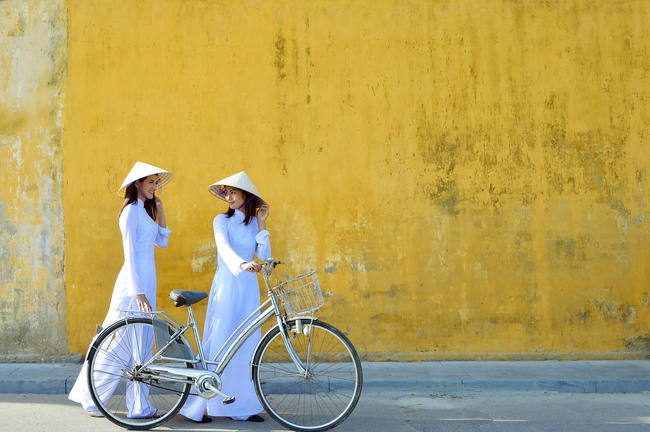
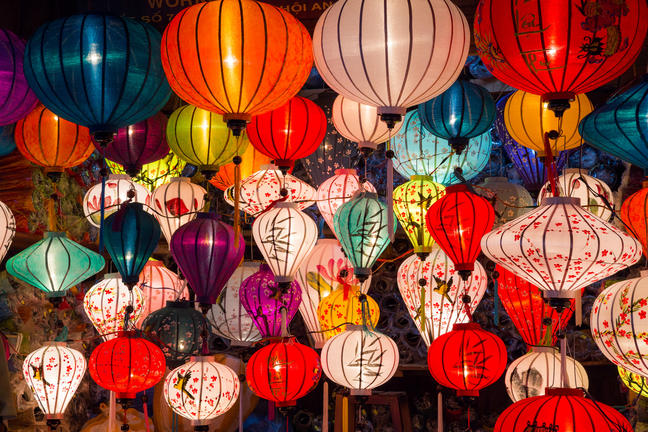
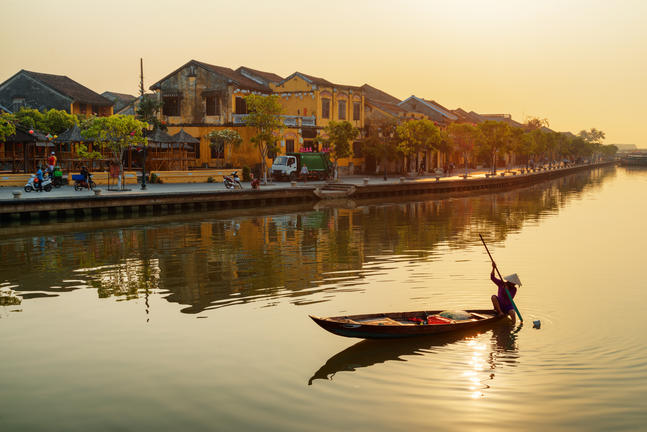
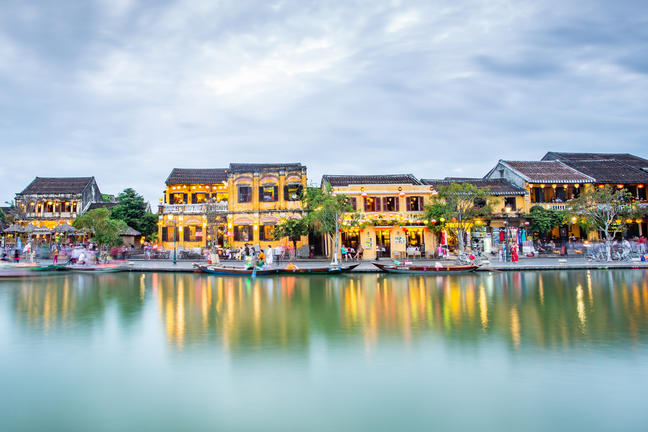
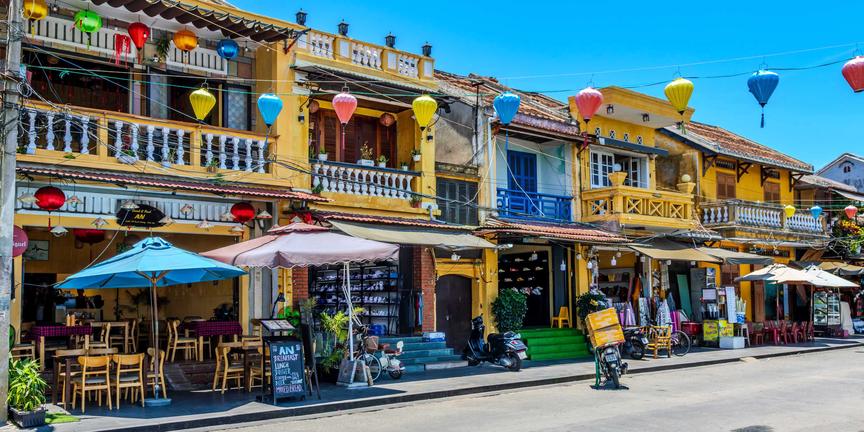
Hoi An is one of Vietnam’s most charming towns, set on the Thu Bon River in central Vietnam, with a beautifully preserved old quarter, lantern-lit streets, riverside cafes, traditional houses and easy access to the coast. It’s often a favourite stop on a Vietnam itinerary because it combines history, atmosphere, food, shopping and beach time in a very easy, enjoyable way.
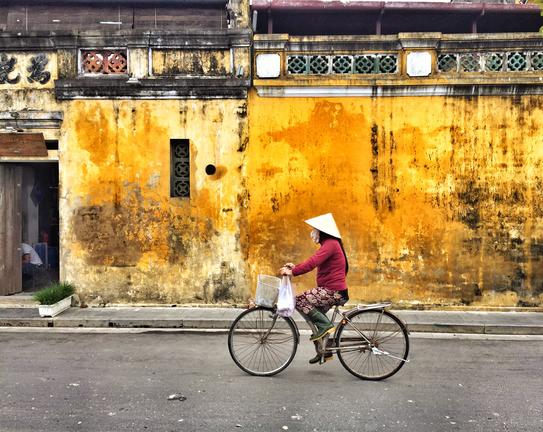
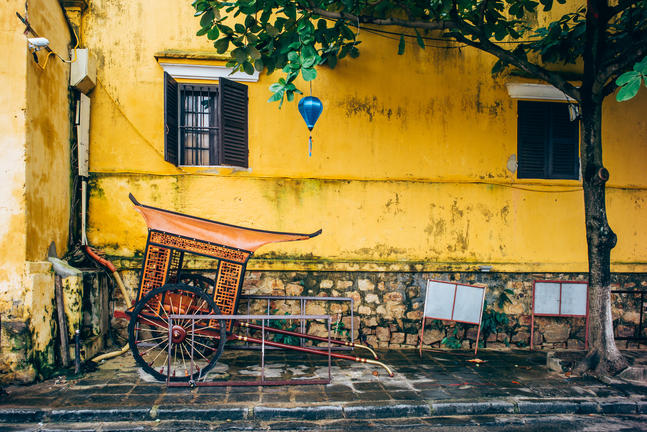
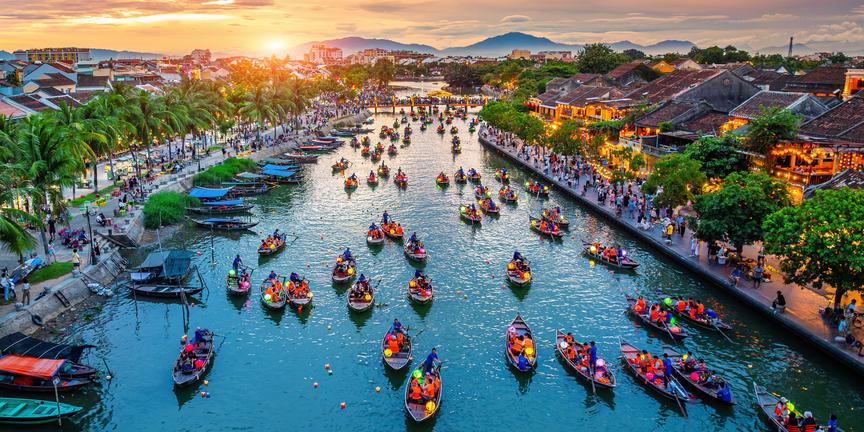
The heart of the town is Hoi An Ancient Town, a former trading port shaped by Vietnamese, Chinese, Japanese and European influences. Its old merchant houses, assembly halls, temples and narrow lanes are best explored on foot, particularly in the morning before the town becomes busier or in the evening when lanterns glow across the river.
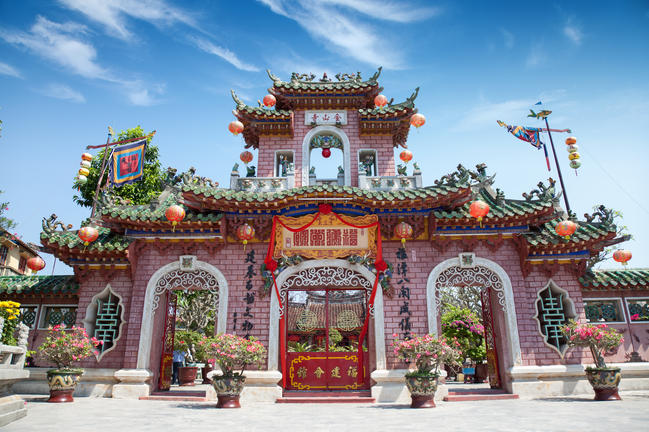
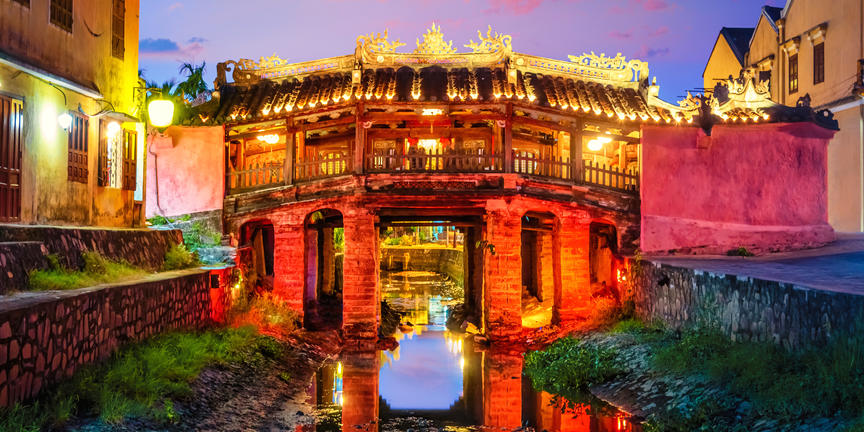
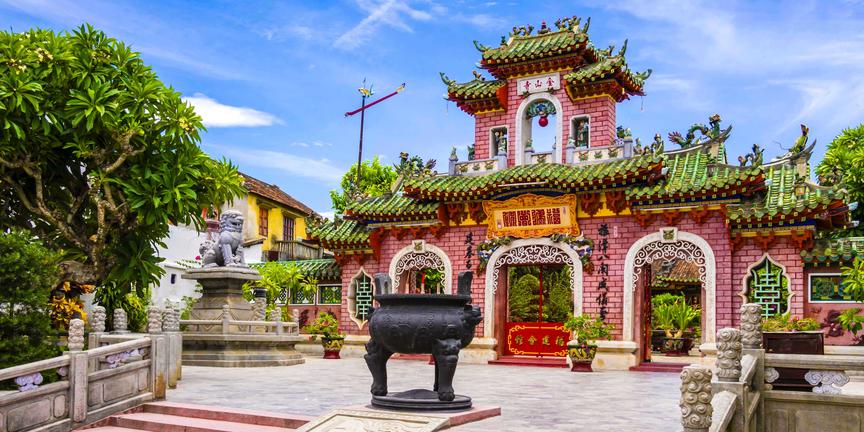
Key sights include the Japanese Covered Bridge, Phuoc Kien Assembly Hall, Quan Cong Temple, Old House of Tan Ky and the lively Hoi An Market. A good guided walk helps bring the town’s trading history to life, but Hoi An is also made for unhurried wandering, with small shops, tailors, galleries and cafes tucked into its historic streets.
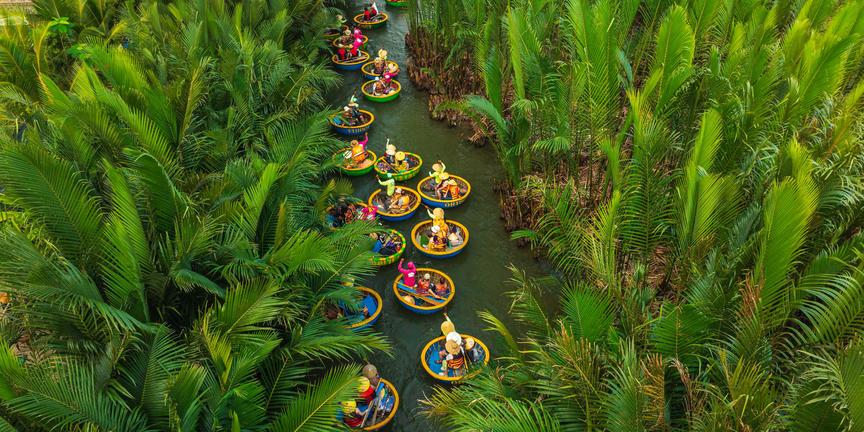
Food is one of Hoi An’s great pleasures. Local specialities include cao lau, white rose dumplings, banh mi and fresh seafood from the nearby coast. Cooking classes are especially popular here, often combining a market visit, basket boat ride and hands-on lesson in a village setting.
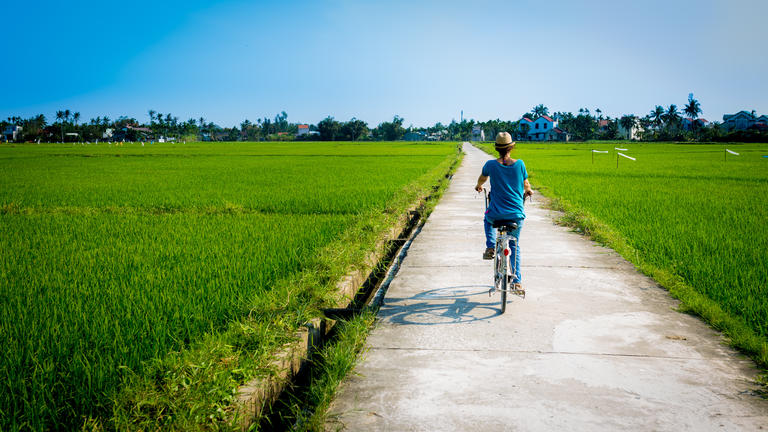
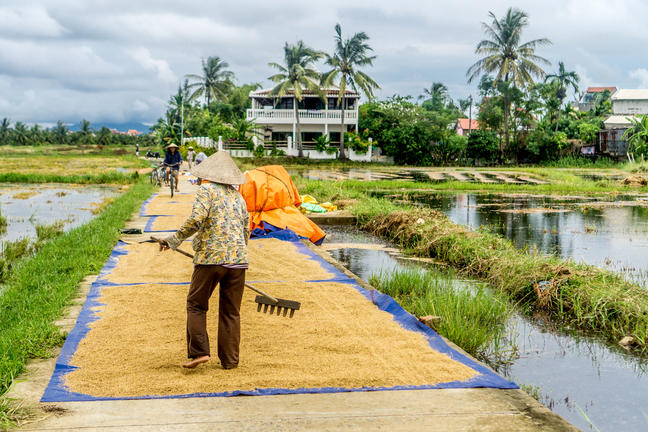
Hoi An also offers easy access to An Bang Beach, the countryside of Cam Thanh and Tra Que Vegetable Village, plus the Cham temple ruins of My Son Sanctuary. This makes it a very flexible base, with enough to fill several days without feeling rushed.
Hoi An is popular, so it’s not undiscovered, but its appeal is genuine. With a well-located hotel, time to explore beyond the busiest streets and a little space for beach or countryside, it remains one of the most rewarding and enjoyable places to stay in Vietnam.