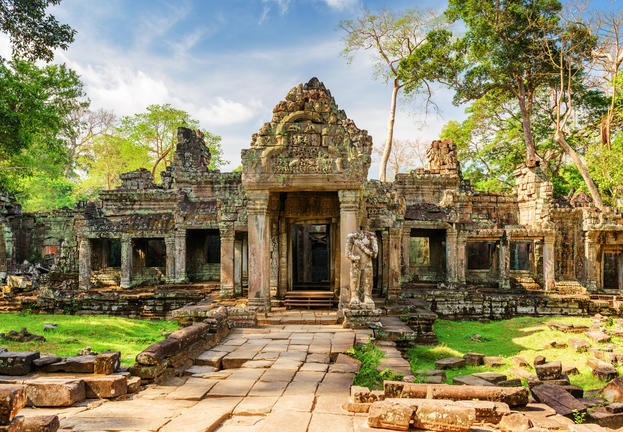
One of the most rewarding temples in the Angkor area, Preah Khan is a large and atmospheric monastic complex built by King Jayavarman VII in the late 12th century. Less formally composed than Angkor Wat and less crowded than some of the headline sights, it has a more exploratory feel, with long galleries, courtyards, carvings and ruined passageways unfolding gradually as you move through the site.
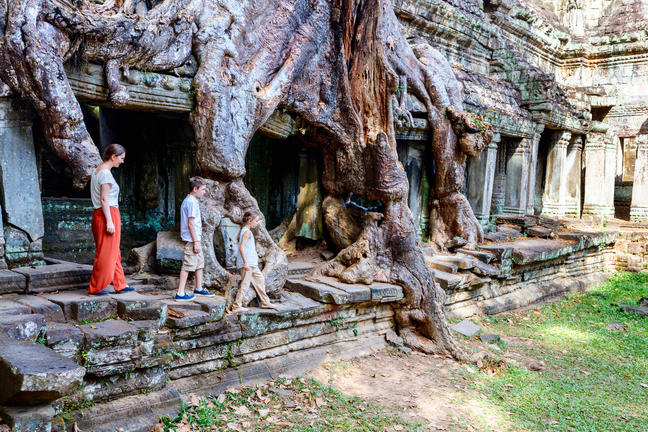
What makes Preah Khan especially appealing is its combination of scale and atmosphere. It was originally both a temple and a major centre of learning, and the complex once supported a very large religious and administrative community. Today, many parts of the structure remain partly overgrown, which gives it some of the romance of Ta Prohm, but in a broader and often quieter setting.
Architecturally, Preah Khan is rich in detail, with carved lintels, guardian figures, tree-framed doorways and a long processional axis that hints at its former importance. It feels less polished than some of the more fully restored monuments, but that is very much part of its charm. There is a strong sense of discovery here, and it rewards travellers who take their time rather than rush through.
For most visitors, Preah Khan works very well as part of the wider Angkor circuit, often combined with Neak Pean, Ta Som or Banteay Kdei. For many travellers, it becomes one of the most memorable temples in Siem Reap, precisely because it feels spacious, atmospheric and slightly less obvious than the big headline names.