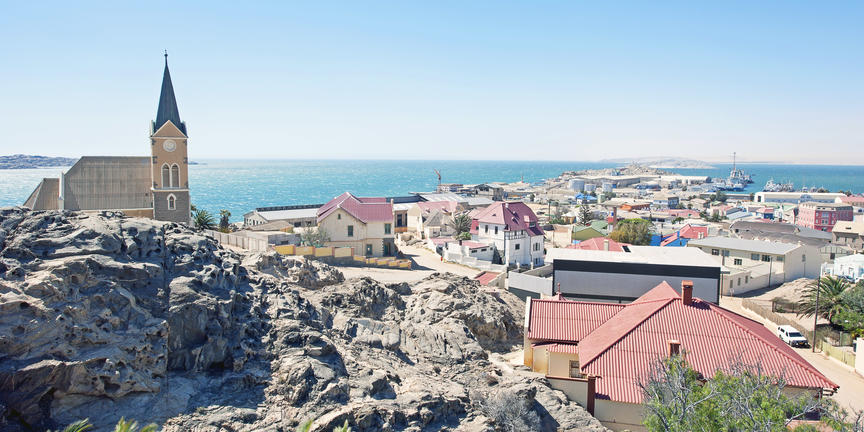
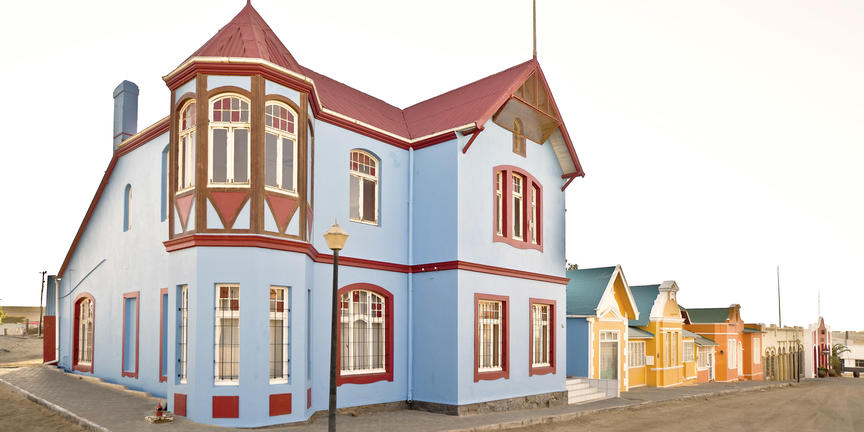
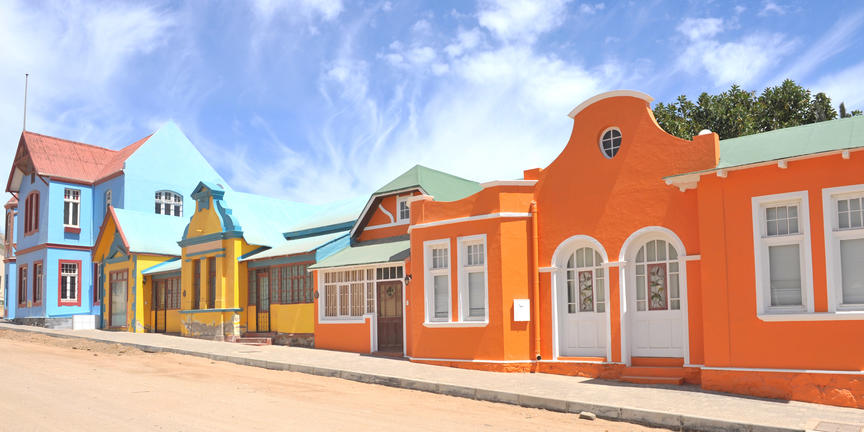
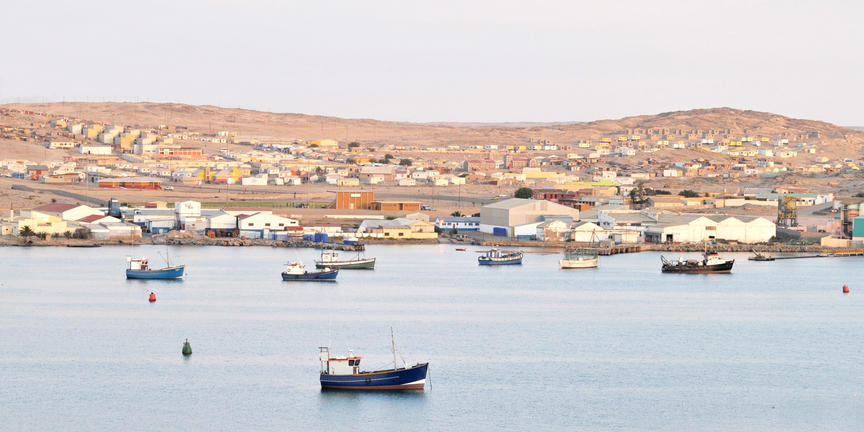
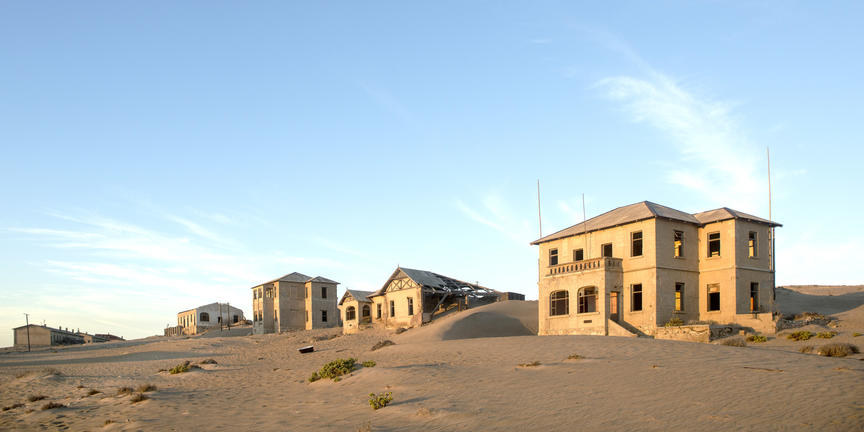
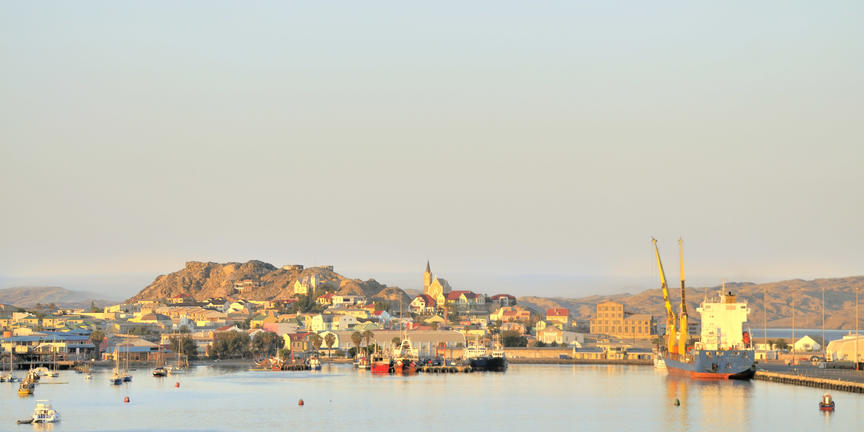
The town of Lüderitz stands in isolation on a great frontier between the desert and ocean. Beyond the structures huddled together beside the bay and a lighthouse on the peninsula, the surroundings are much as Bartolomeu Dias found them in 1487, when his flotilla of three small ships first sailed into the uncharted anchorage. The townlands form an enclave in the Sperrgebiet, 26 000 km² of coastal desert rich in diamonds. The greater part of the Sperrgebiet lies to the south. Northward the dune fields of the Great Sand Sea sprawl overland to the horizon and far beyond. In streets almost devoid of trees, the townscape today still reflects the colonial past, a remnant of Germany in Africa: edifices with domes, towers and turrets, steep roofs with oriel windows, embellished gables, bay windows on ground level and, for shelter from the wind, Wintergärten or sunrooms in homes. Uniquely in Africa, the predominant architectural style of public, business and residential buildings, especially in Ring, Bismarck, Berg and Bahnhof streets, is straight out of late 19th century Germany.