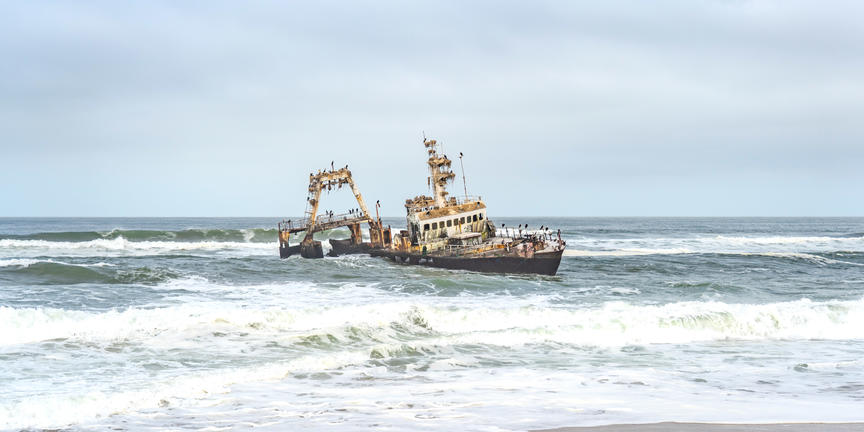
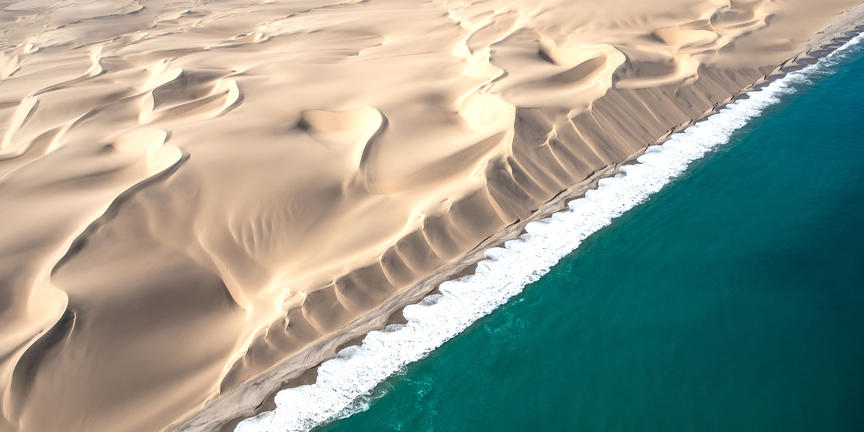
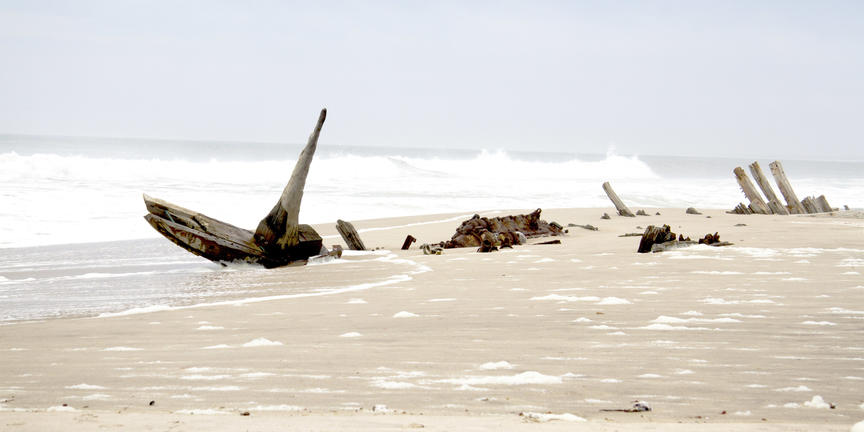
Skeleton Coast National Park, 30 to 40 km wide, extends 500 km along the Atlantic Ocean between Kunune in the north and Ugab in the south. At 1,600 km ², it is the third largest national park in the country. The Skeleton Coast owes its name to the fog fields caused by the cold Benguela River. Ship captains were always surprised by the fog and pilots underestimated the visibility and crashed. Due to the numerous accidents, this coastal strip got its sad name. The survivors of these accidents are then mostly thirsty and starved to death in the desert climate.
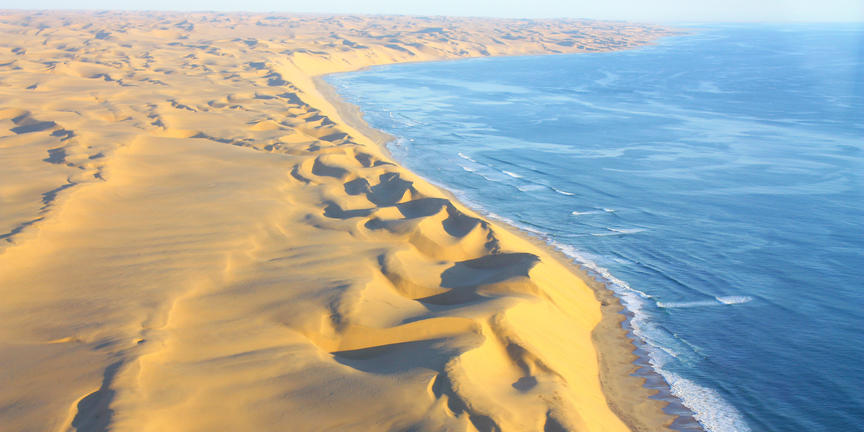
Skeleton Coast is the northern part of the seacoast of Namibia and its hinterland, which extends from Swakopmund to Kunene, the border river to the north of Angola. The hostile, extremely dry Namib Desert begins along the skeleton coast directly on the Atlantic Ocean and is therefore also called the coastal desert. Although the southernmost part of the Namibian desert begins directly by the sea and has similar conditions, this section is not included in the skeleton coast. The shipwrecked, who had still been able to rescue themselves from the wrecks shattered or stranded on the coast, had no chance of survival and thirst in the unpopulated, extremely dry coastal desert. The name therefore refers both to the ship's "skeletons," the real skeletons of the stranded, but also to the numerous skeletons of whales washed ashore.
The cold Benguela stream coming from Antarctica is also the cause of the coastal desert starting directly on the beach.
Geologically, much of the Skeleton Coast, up to 1.5 billion years old, is one of the oldest landscape formations on Earth. Fog, violent surf and unpredictable, strong currents - due to the Benguela River flowing northward on the coast - have always made the coast dangerous for seafaring.
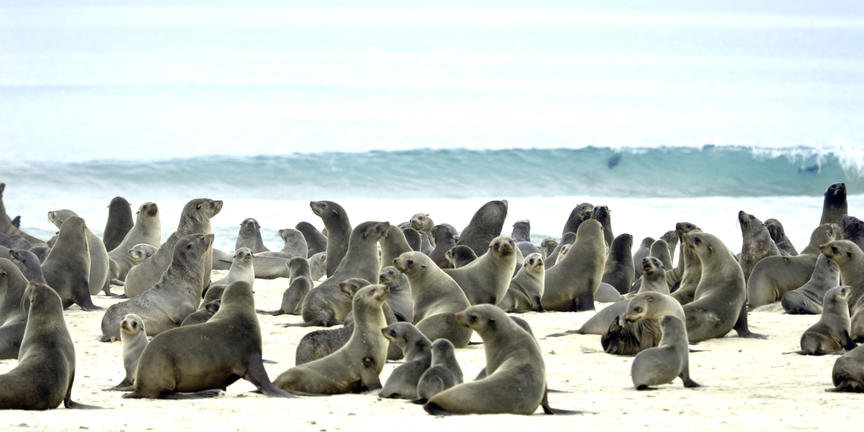
The seal reserve, Cape Cross Seal Reserve, is only one of 24 colonies on the South West African coast. In total, the seal deposit on the whole Namibian coast is estimated at about 650,000 animals. Between 80,000 and 100,000 dwarf fur seals stroll along the Cape Cross on the rocks. Especially during the mating season between September and December, enormous advent of this species belonging to the family of ear seals is to be expected. At this time you can also see the huge cops coming ashore to occupy an area for their mating ladies.