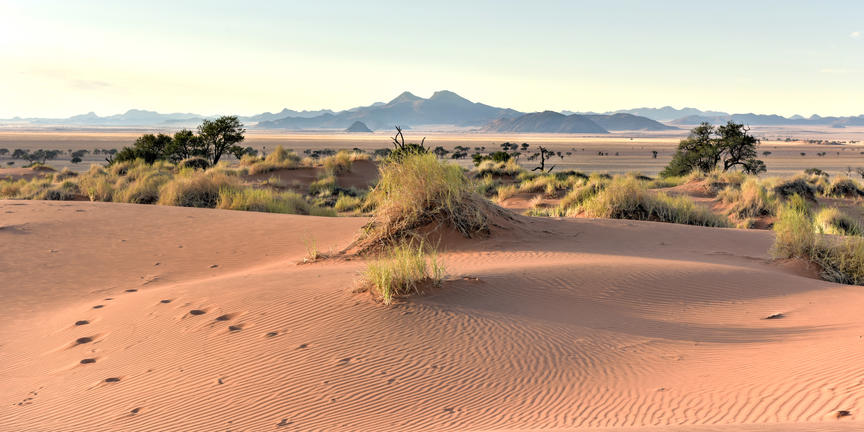
NamibRand Nature Reserve in southern Namibia is a private nature reserve established to protect and conserve the unique ecology and wildlife of the southwestern Namib Desert.
The preservation of the Pro-Namib, the area along the eastern edge of the Namib Desert, is of vital importance to facilitate seasonal migration routes and to protect biodiversity.
It is likely the largest private nature reserve in southern Africa, covering an area of 188,980.16 hectares.
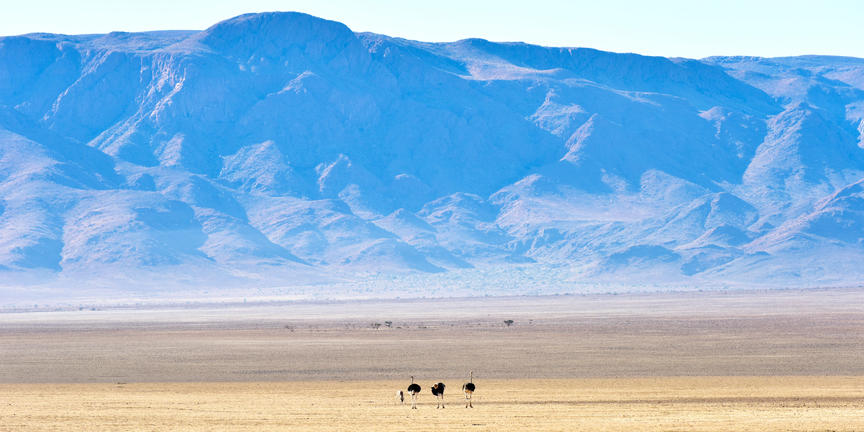
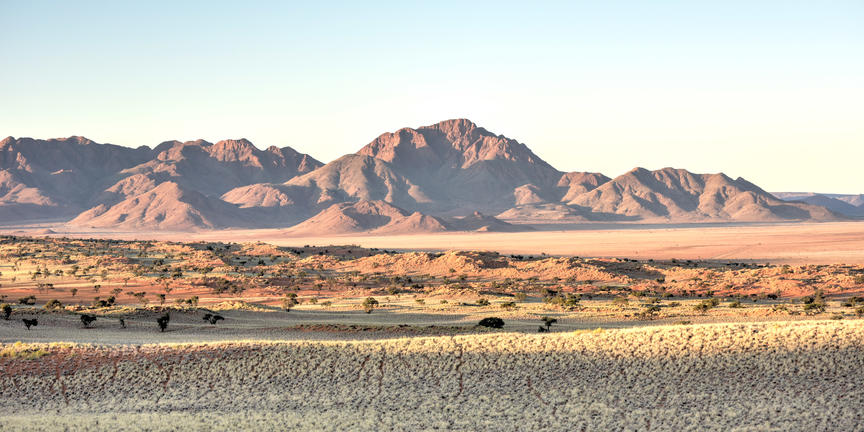
The reserve borders the Namib-Naukluft National Park for 100 km to the west and the impressive Nubib Mountains to the east.
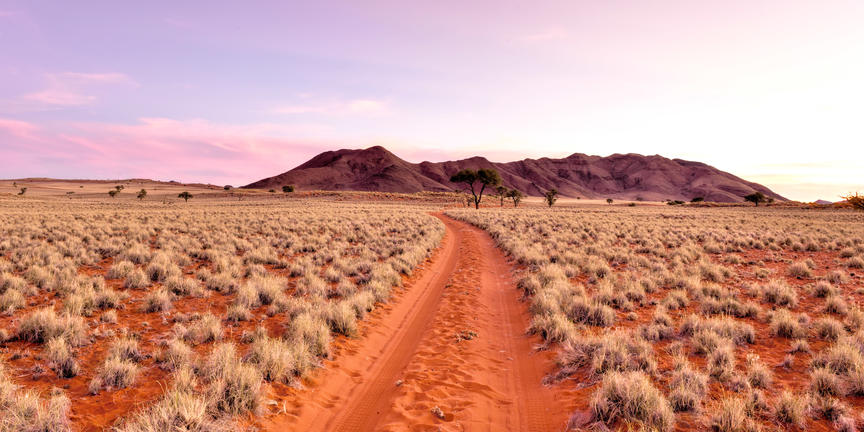
Virtually all facets of the Namib Desert are represented within the reserve — sand and gravel plains and savanna sections alternate with mountain ranges, inselbergs, and vegetated dune belts.
In the early days of the NamibRand Nature Reserve, there was very little wildlife. However, as the habitat recovered, the number of wild animal populations began to stabilize, and seasonal migration routes for wildlife were re-established.
From fewer than 1,000 springbok, the population grew to over 11,000 within about 20 years. The reserve is now operating at carrying capacity for most non-migratory species.
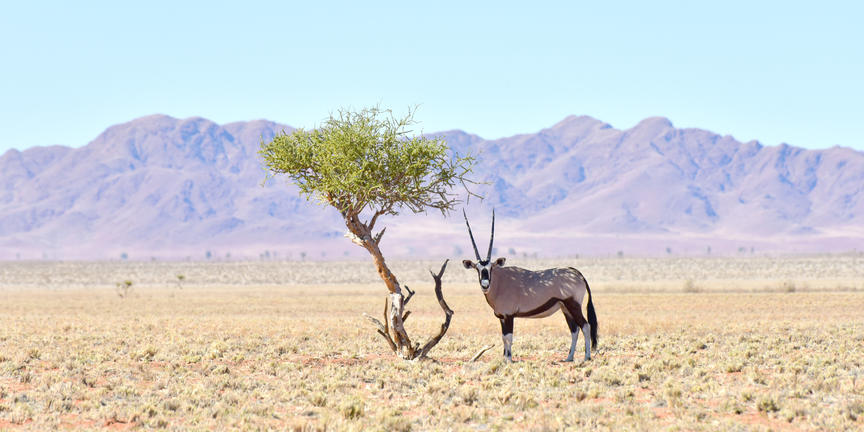
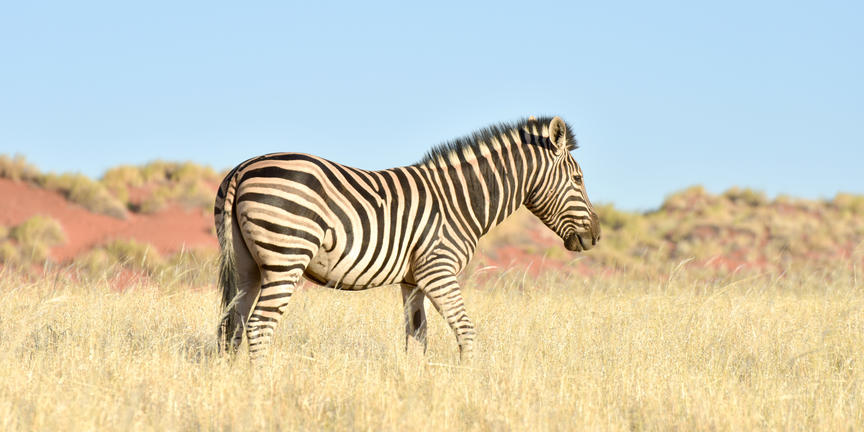
The predominant large mammals in the reserve are oryx (Oryx gazella) and springbok (Antidorcas marsupialis). Other large mammals include kudu, Hartmann’s and Burchell’s zebra, giraffe, klipspringer, steenbok, hartebeest, and baboon.
Predators found in the area include leopard, spotted and brown hyena, black-backed jackal, aardwolf, bat-eared fox, Cape fox, African wildcat, caracal, and genet.
To date, around 170 bird species have been identified, including Namibia’s only true endemic bird, the Dune Lark. The dunes are home to a rich and diverse microfauna, and ongoing studies are cataloguing the region’s rodents, reptiles, amphibians, and invertebrates.