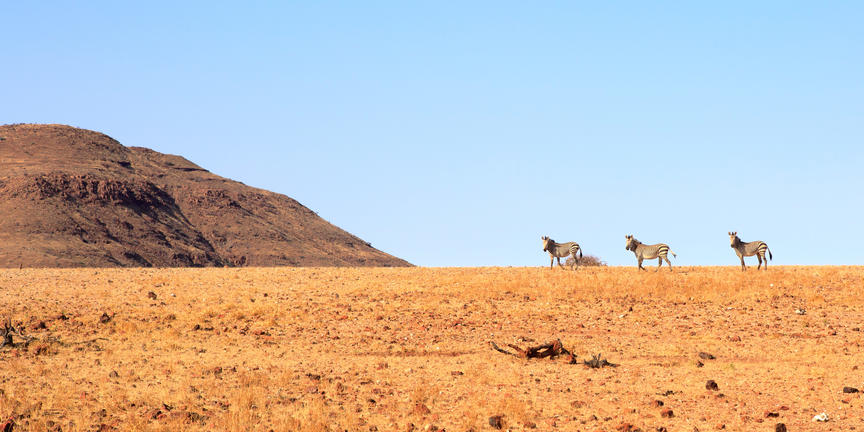
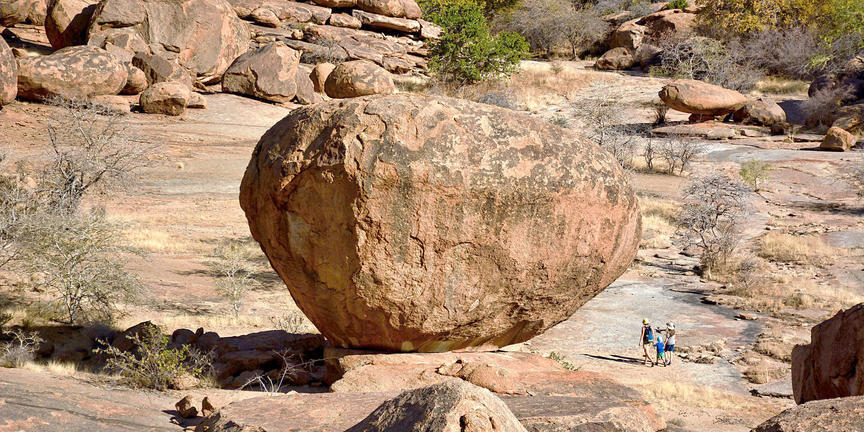
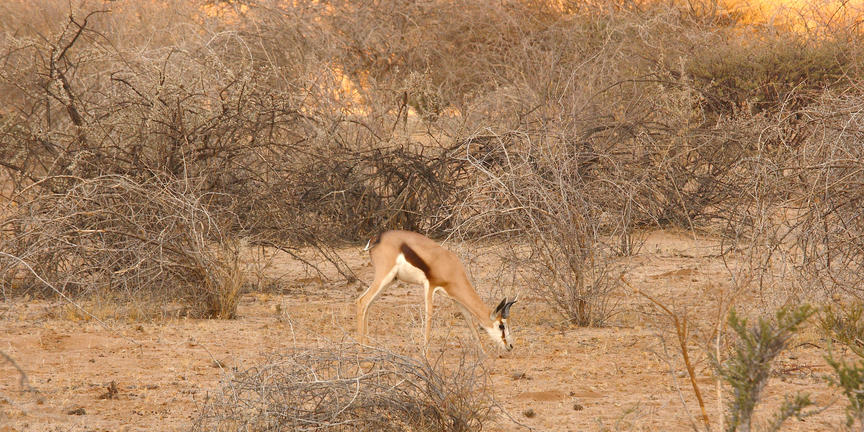
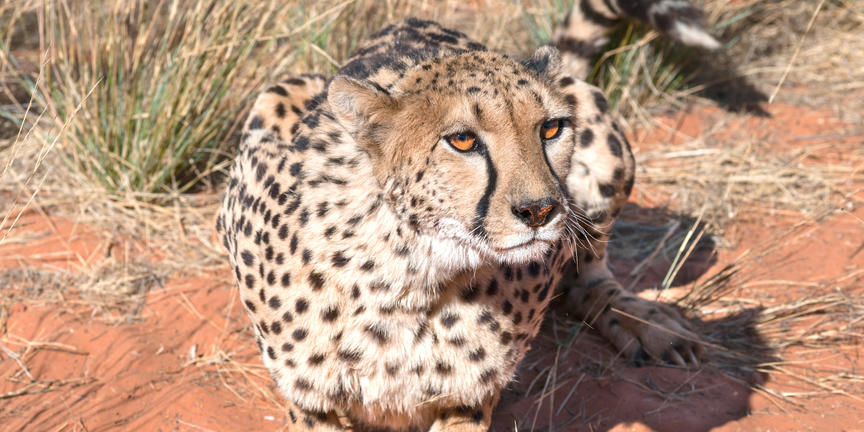
North of Karibib and Usakos, is one of Namibia's most popular tourist drawcards, the volcanic Erongo mountain range, of which the western peaks rise 2,320 m above sea level. This roughly circular massif, dominates the flat plains west of Omaruru and gives the Erongo region its name. The mountain is an eroded relic of a volcano that was active some 140-150 million years ago. It collapsed in on its magma chamber, allowing the basin to fill with slow-cooling igneous material. The resulting hard granite-like core, that withstood the erosion, washed away the surrounding rock. This rare confluence of ecosystems are home to a vast array of plant, reptile, mammal and bird species, some endemic to Namibia. Apart from the fantastic scenery and flora and fauna, rock paintings are also a lure for visitors to the area. Geologists would tell you that the Erongo Mountains are rich with minerals and gemstones like aquamarine, schorl, jeremejevite, quartz, fluorite and garnets (amongst others), but we have news for you. These mesmerizing mountains are full of magnetic rocks. They must be magnetic because they are so awesome they draw you back to them time and again, to the sheer beauty and majesty of the dramatic granite boulders, valleys and incredible landscapes it cannot be beaten.
The Erongo Mountain Nature Sanctuary is a private nature reserve in the Erongo region of Namibia. The Erongo Mountain Nature Sanctuary (EMNS) aims to protect the region's native fauna and flora and reintroduce species that were historically part of the natural biodiversity, such as the black rhino, giraffe and black-faced impala.
The EMNS consists of numerous private landholdings whose owners have decided to make their land available for this project. This has led to the unprecedented situation that almost all internal fences and individual boundary fences have been removed to allow wildlife to roam freely. In addition, the principles of the EMNS stipulate that no livestock may be kept for commercial purposes – a further step towards restoring the Erongo Mountains to their original state.
This large area – almost 180,000 hectares – covered by the EMNS is now almost completely ‘fence-free’ and is therefore fully available for the protection and conservation of the animal and plant species found there. Within these 180,000 hectares, wildlife can roam freely. Only at the boundaries of the EMNS, where there are no mountains, is there a fence to prevent the reintroduced black rhinos from leaving the area and entering neighbouring farmland.